
- Published on
The Quarterly Reset: A 10-Step Checklist
You started the year with big ambitions. You had the perfect planner, a list of habits you swore you would keep, and enough motivation to conquer the world. Then, life happened.
Within a few weeks, unexpected projects piled up, your sleep schedule slipped, and those daily habits became weekly exceptions. If this sounds familiar, you are not alone.
The mistake is not that you lost focus; the mistake is waiting until next January to fix it. Twelve months is simply too long for the human brain to maintain intense focus without a pause. That is where the quarterly reset comes in. By breaking your year into 90-day chapters, you give yourself four fresh starts instead of one.
Here is the thing. A quarterly reset is not just about changing your calendar. It is a psychological pit stop that allows you to realign your daily habits with your long-term vision before you drift too far off course.
Let us break down why this 90-day cycle works so well, and how you can run your own quarterly reset today.
Why 90 Days is the Ultimate Sweet Spot
There is a psychological reason why annual goals fail so often. January is too far away to create any sense of urgency. When a deadline is 300 days in the future, your brain naturally tells you that you have plenty of time to start tomorrow.
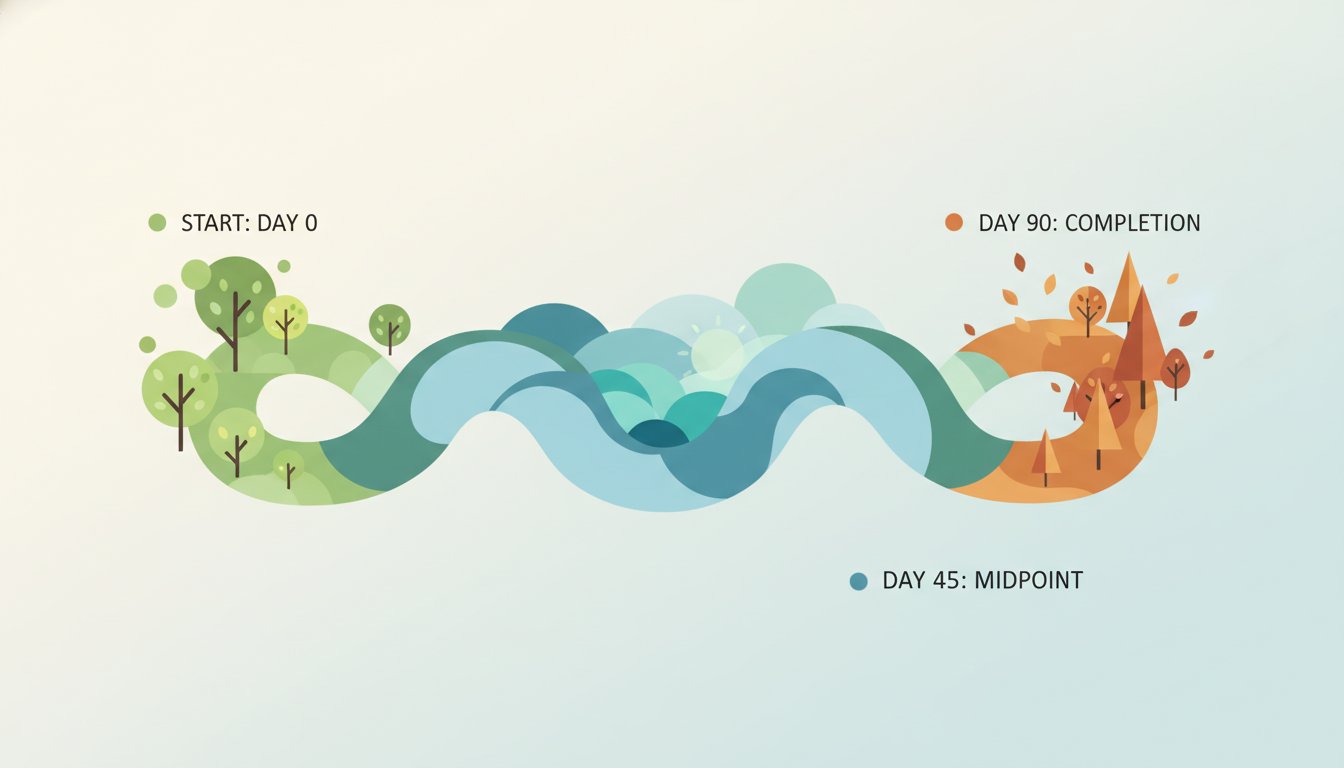
But there is a catch. When you switch to a 90-day horizon, everything changes. Ninety days is long enough to make massive, measurable progress on a goal, but short enough to keep you focused. You can see the finish line from day one.
Behavioral scientists often talk about "temporal landmarks"—dates that stand out as new beginnings, like Mondays, the first of the month, or the start of a new season. These landmarks create a clean slate in our minds. By conducting a reset every three months, you tap into this psychological phenomenon four times a year. It gives you a natural moment to pause, assess, and adjust.

The 10-Step Quarterly Reset Checklist
To get the most out of your reset, set aside two hours this weekend. Turn off your notifications, grab a cup of coffee, and work through these ten practical steps.
1. Conduct a "Brain Dump" to Clear Mental Clutter
Before you can plan the future, you need to clear out the present. Mental fatigue often comes from trying to hold too many loose ends in your head at once.
Grab a blank sheet of paper and write down everything occupying your mind. Write down the unfinished tasks, the half-baked ideas, the worries about your career, and even the minor chores you have been avoiding. Do not try to organize them yet. Just get them out of your head.
Note: If you are struggling with severe burnout or mental exhaustion, please reach out to a professional or a trusted person in your life.
2. Review Your Last 90 Days
Look back at the last three months with honest curiosity, not judgment. Open your calendar, check your camera roll, and look at your bank statements to remind yourself of what actually happened.
Ask yourself three simple questions:
- What went incredibly well?
- What caused the most friction or stress?
- Which habits did I actually stick to?
Celebrate the small wins. We tend to focus entirely on what we failed to do, completely ignoring the quiet progress we made.
3. Audit Your Daily Habits
Our lives are the direct result of our daily routines. If your habits do not match your goals, your goals will always lose.
List your current daily habits. Be brutally honest. Are you spending the first 30 minutes of your morning scrolling through news feeds? Are you staying up too late watching television?
Identify one habit that is actively draining your energy and one habit that makes everything else easier when you do it. Your goal for the next quarter is to eliminate the drainer and protect the builder.
4. Choose Only Three Core Goals
The biggest mistake people make during a reset is trying to change twenty things at once. This leads straight to overwhelm and habit decay.
Instead, select exactly three core goals for the next 90 days. For example, you might choose one career goal, one health goal, and one personal goal. If everything is important, nothing is. Limiting your focus forces you to put real energy into the things that actually matter.
5. Break Goals Into Weekly Milestones
A goal without a plan is just a wish. Once you have your three core goals, work backward to break them into manageable pieces.
If your goal is to write a 10,000-word guide, that sounds intimidating. But when you break it down, it is just 830 words a week, or about 120 words a day. Suddenly, the impossible becomes completely achievable. Write down exactly what you need to accomplish each week of the quarter to stay on track.
6. Declutter Your Digital and Physical Spaces
Your environment constantly nudges your behavior. A cluttered desk or a chaotic phone screen creates silent, visual friction that drains your willpower.
Spend 30 minutes cleaning your physical workspace. Wipe down your desk, file away loose papers, and put away items you do not use daily. Then, move to your phone and computer. Delete unused apps, organize your desktop, and turn off non-essential notifications that steal your attention.
7. Set Up Your Tracking Systems
If you do not track your progress, you are relying entirely on memory and willpower. Both of those are highly unreliable when you are tired.
Decide today how you will measure your daily habits and countdown to your milestones. You might use a paper calendar on your wall, a simple spreadsheet, or dedicated habit tracking apps. Seeing your daily streak grow or watching a countdown timer tick closer to your milestone creates visual momentum that keeps you showing up, even on days when your motivation is low.
8. Schedule Your Non-Negotiable Rest
Most people plan their work first and then try to fit rest into whatever time is left over. This is a direct recipe for burnout.
Flip the script. Open your calendar for the next 90 days and block out your rest days, weekends off, and evening wind-down times first. Treat these blocks of time as non-negotiable appointments. When you know you have dedicated rest coming up, you can work much more intensely during your focus blocks.
9. Design Your Daily Morning and Evening Anchors
You do not need to control your entire day, but you should control how you start and end it. These are your daily anchors.
Create a simple, three-step morning routine that prepares your mind for focus. This could be as simple as drinking a glass of water, stretching for five minutes, and writing down your top priority for the day. Then, design an evening routine that helps you wind down, such as turning off screens 45 minutes before bed and reading a book.
10. Write a Letter to Your Future Self
This might feel a little unusual, but it is an incredibly powerful way to build self-trust. Write a short note to the person who will be sitting down for the next quarterly reset in 90 days.
Describe how you feel right now, why these goals matter to you, and what you hope they have achieved by the time they read the note. Save this letter in your tracking system or set a reminder to open it at the end of the quarter. It serves as a beautiful bridge of continuity between your present efforts and your future identity.
How to Keep Your Reset Momentum Alive
The excitement of a reset naturally wears off after a week or two. That is completely normal. The key to long-term success is not trying to feel motivated all the time; it is building a system that keeps you honest when motivation fades.
Think about it this way. Your 90-day plan is a map, but you still need to check the compass every single week. Set a recurring appointment with yourself every Sunday morning for a 15-minute weekly review.
During this weekly check-in, look at your progress. Did you hit your habit streaks? Are your countdowns to your milestones still realistic? If you had a bad week, do not panic. The two-day rule is incredibly helpful here: never allow yourself to miss a habit two days in a row. One miss is an accident; two misses is the start of a new, bad habit.
By staying consistent with your weekly reviews, you ensure that your quarterly reset actually translates into daily action.
Key Takeaways
- Embrace the 90-day cycle: Annual planning is too distant. Breaking your year into three-month chapters creates natural urgency and focus.
- Focus on the vital few: Choose no more than three core goals per quarter to avoid overwhelm and protect your mental energy.
- Control your environment: Clean your physical workspace and curate your digital notifications to remove daily friction.
- Visual tracking is essential: Use countdown tools or habit tracking apps to keep your progress visible and your motivation high.
- Reset consistently: Set up a 90-day countdown to your next quarterly reset today so you always know when your next fresh start is coming.
Build Better Habits — Track Your Streaks
Set goals, build streaks, and transform your life one habit at a time.