
- Published on
The 30-Day 5 AM Challenge: Build Morning Discipline
You told yourself you would get up early to write, exercise, or simply sit with your thoughts. Then the alarm went off at 5:00 AM, and your warm bed made a highly persuasive argument to stay asleep. You hit snooze, woke up at 7:30 AM, and spent the rest of the day feeling like you were running late for your own life.
Here's the thing. Waking up early is not an innate genetic trait; it is a learned discipline. The 30-day 5 AM challenge is not about torturing yourself with sleep deprivation. Instead, it is a structured system to reclaim the most peaceful, productive hours of the day before the rest of the world demands your attention.
If you are tired of starting your days in a reactive scramble, this challenge is your chance to reset your biological clock and build unbreakable morning discipline.
The Psychology of the Quiet Hours
Why 5:00 AM specifically? Why not 6:00 AM or 7:00 AM?
The answer lies in cognitive psychology. In the early morning, your brain experiences a unique state of focus. Research in neuroscience suggests that early morning wakefulness is associated with "transient hypofrontality." This is a temporary state where your prefrontal cortex—the part of the brain responsible for overthinking, self-doubt, and stress—is relatively quiet.
When you wake up at 5:00 AM, you are ahead of the digital noise. Your phone is silent because the world is asleep. No one is emailing you, and no one is texting. This psychological safety net allows you to focus purely on your personal growth without the constant pull of reactive tasks.
By waking up before everyone else, you earn a psychological victory before your day even begins. You start your morning proactive, not reactive. This builds a foundation of self-trust that influences every decision you make for the rest of the day.

The Rules of the 30-Day Challenge
To make this challenge work, you need clear parameters. This is not just about dragging yourself out of bed; it is about a systematic lifestyle shift.
- The Out-of-Reach Alarm: Your phone or alarm clock must be placed across the room. If you can reach it without standing up, you have already lost the battle.
- The 10-Minute Movement Rule: As soon as you get up, move. Walk to the kitchen, drink a glass of water, or do three light stretches. Do not sit on the couch immediately.
- No Screens for the First Hour: Do not check email, news, or social media. This hour is reserved for your mind, not for other people's agendas.
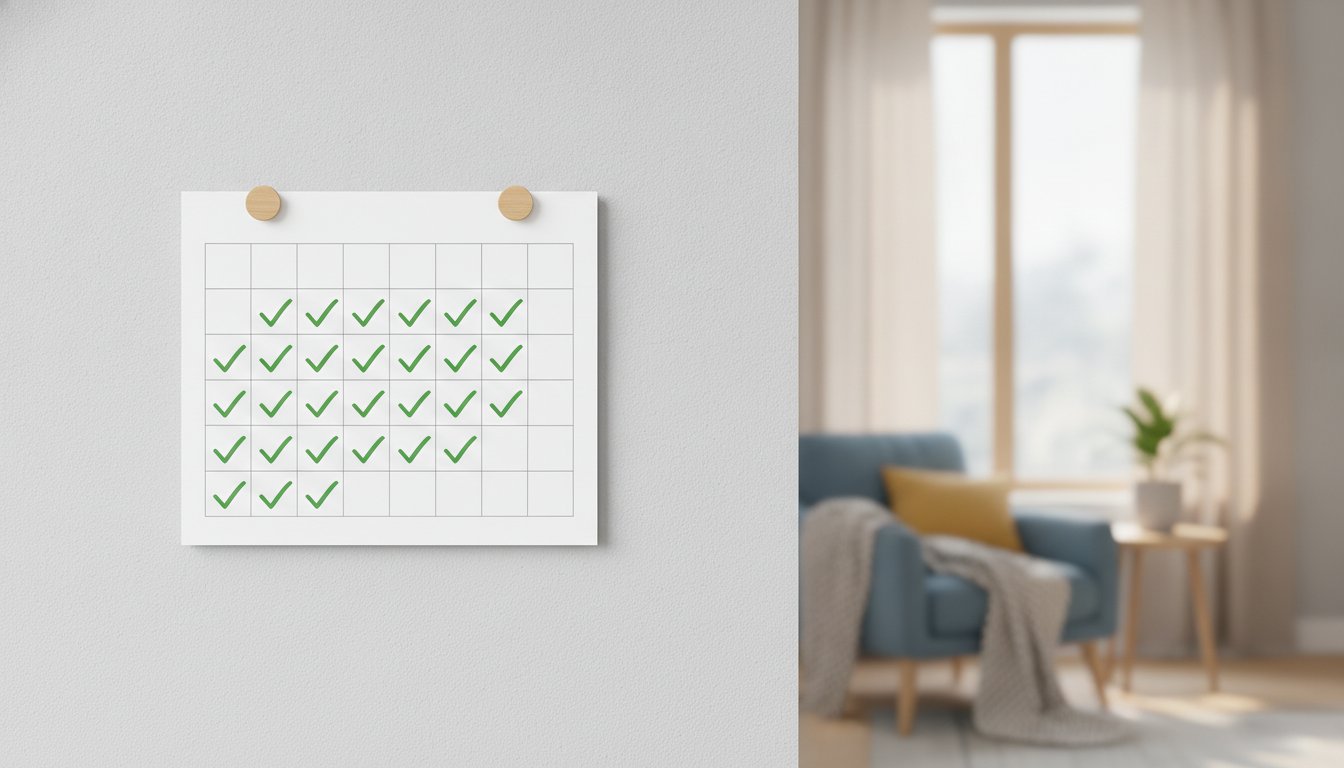
- Track Your Progress: Keep a visual log of your waking times. Seeing your daily streak grow acts as a powerful psychological barrier against hitting snooze.
Phase 1: Week 1 — The Shock (Days 1 to 7)
The first week is brutal. Let's be honest about that. Your body is accustomed to a specific circadian rhythm, and you are suddenly shifting it by two or three hours.
During these first few days, you will likely feel a wave of intense fatigue around 2:00 PM. This is normal. Your body is adjusting its hormonal cycles. The temptation to quit will be at an all-time high on Day 3 and Day 4.
To survive Week 1, focus entirely on the physical act of getting out of bed. Do not worry about being hyper-productive yet. If you get up at 5:00 AM and simply read a book, journal, or drink tea, that is a victory. You are training the wake-up habit first; the productivity habit comes later.
Phase 2: Week 2 — The Friction (Days 8 to 15)
By Week 2, the initial novelty of the challenge has worn off. This is where the real discipline begins.
You will start to experience "sleep debt" if you have not adjusted your bedtime. Many people try to wake up at 5:00 AM while still going to sleep at midnight. This is unsustainable. If you want to wake up at 5:00 AM, you must be in bed by 10:00 PM to ensure you get seven hours of sleep.
Think about it this way: morning discipline actually starts the night before. Your evening wind-down routine is the foundation of your morning success. If you struggle in Week 2, look closely at your evening habits. Are you staring at screens late at night? Are you eating heavy meals close to bedtime?
Phase 3: Week 3 — The Rhythm (Days 16 to 22)
This is the turning point. Around Day 15, something remarkable happens. Your internal clock begins to realign.
You might find yourself waking up at 4:55 AM, just minutes before your alarm goes off. Your morning fatigue starts to lift faster, replaced by a sharp, calm clarity.
Now is the time to optimize your morning routine. Use this quiet time for high-value activities: exercise, planning your week, studying, or working on a side project. Because your brain is free from the day's accumulated decision fatigue, your ability to solve complex problems is at its peak.
Phase 4: Week 4 — The Identity Shift (Days 23 to 30)
In the final week, you are no longer "trying" to wake up early. You are simply someone who wakes up at 5:00 AM.
The cognitive benefits are now fully visible. You feel less stressed throughout the day because you have already accomplished your most important tasks before most people have even had their coffee. Your productivity has spiked, and your evening sleep quality has dramatically improved because of your consistent sleep-wake schedule.
How to Adjust Your Sleep Cycle Safely
Shifting your sleep cycle requires a biological approach. You cannot simply force your brain to sleep earlier through willpower alone.
First, leverage natural light. Your circadian rhythm is heavily regulated by light exposure. Get bright light—ideally natural sunlight—in your eyes within 15 minutes of waking up. This stops melatonin production and sets a biological timer for you to feel sleepy 16 hours later.
Second, establish a strict digital sunset. Turn off bright screens at least 60 minutes before bed. Blue light from phones mimics daylight, tricking your brain into thinking it is midday and delaying deep sleep cycles.
If you struggle with chronic insomnia, sleep disorders, or mental health challenges, please consult a medical professional before making drastic changes to your sleep schedule.
The Power of Tracking Your Morning Streak
Building a difficult habit like this requires visual proof of your progress. When you rely solely on your memory, it is easy to dismiss a missed day as a minor setback.
But when you track your consecutive days using a habit tracking tool, something shifts. You build momentum. Day 3 becomes Day 7, and suddenly you are on Day 18. The psychological desire to protect your streak becomes stronger than the temporary comfort of hitting the snooze button.
Seeing your visual progress grow day by day gives your brain a small hit of dopamine every time you log a successful morning. It transforms a difficult chore into a game you want to win.
Key Takeaways
- Start with the wake-up, not the work: In the first week, focus solely on getting out of bed at 5:00 AM. Optimize your productivity only after the wake-up habit is secure.
- Morning discipline is built at night: A successful 5:00 AM wake-up requires a consistent bedtime and a screen-free wind-down routine.
- Leverage biological triggers: Use morning sunlight and an evening digital sunset to naturally shift your sleep hormones.
- Visualize your progress: Using a streak tracking tool to log your consecutive early mornings builds the momentum needed to turn a 30-day challenge into a lifelong identity.
Build Better Habits — Track Your Streaks
Set goals, build streaks, and transform your life one habit at a time.