
- Published on
The Monthly Reset: 15 Checklist Ideas to Refocus
You know that feeling when it’s the 28th of the month and you realize you haven’t touched half the goals you set? It’s not that you’re lazy or incapable. It’s just that life has a way of getting noisy. We start the month with high intentions, but then emails pile up, laundry overflows, and the daily grind slowly erodes our focus. Before you know it, you're just reacting to life instead of leading it.
That’s where the monthly reset comes in. Think of it as a pit stop in a long race. If you never pull over to check the tires or refuel, you’re eventually going to break down on the side of the road. A monthly reset is a dedicated window of time—usually just two or three hours—where you zoom out, clean up the messes (both physical and mental), and decide exactly where you’re heading for the next 30 days.
The Psychology of the Fresh Start
There is a real psychological reason why we feel more motivated on Mondays, the first of the month, or New Year’s Day. Researchers call this the "Fresh Start Effect." These dates act as temporal landmarks, allowing us to relegate our past failures to a previous "time period" and start fresh with a clean slate.
When you perform a monthly reset, you are effectively giving yourself permission to let go of the person you were last month. If you missed your gym sessions or spent too much money, that was "Last Month You." The "New Month You" has a clear plan and a fresh burst of energy. By creating this mental divide, you reduce the weight of past mistakes and make it easier to commit to new habits.
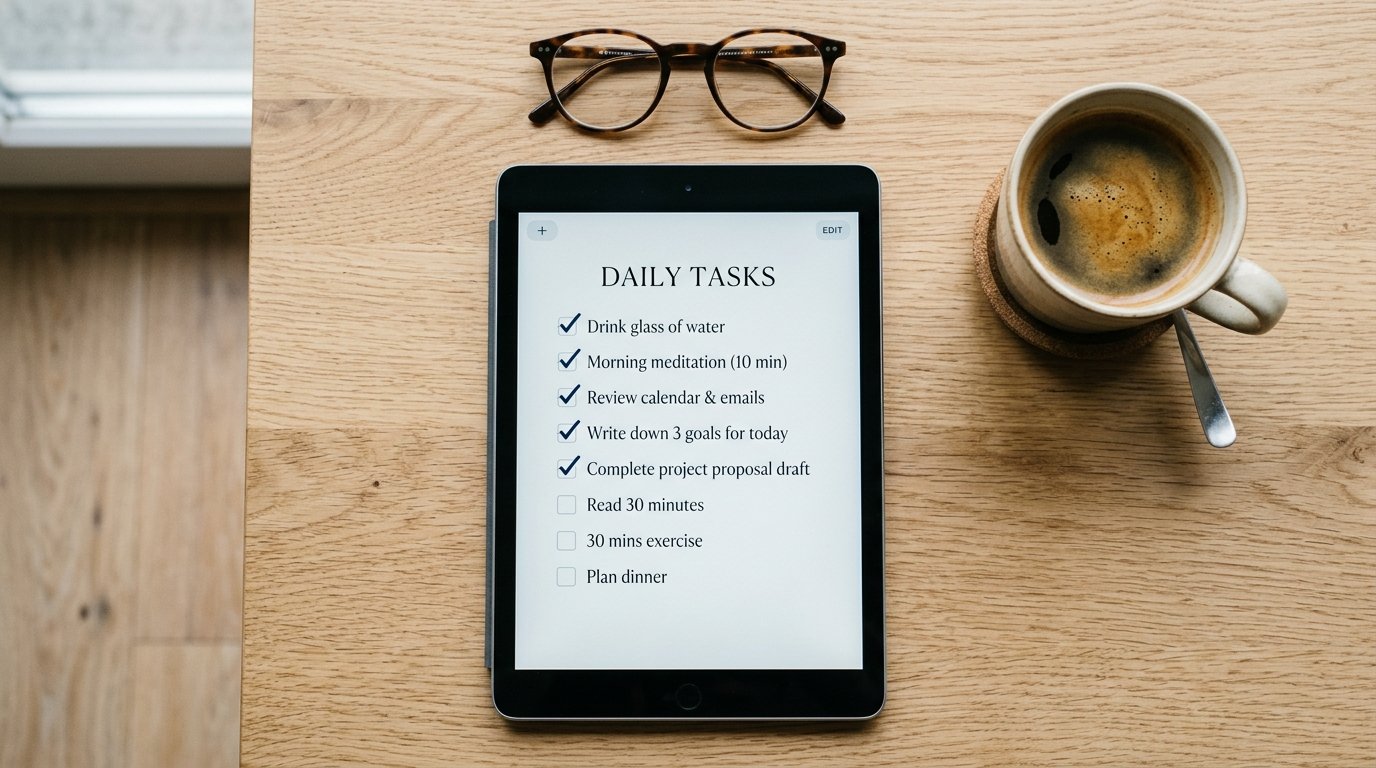
15 Checklist Ideas to Refocus Your Life
You don't have to do every single one of these every month. Instead, pick the ones that address your current "pain points." If your house is a mess, focus on the physical. If you feel overwhelmed by your schedule, focus on the digital and administrative.
1. Review Your Previous Month’s Wins
We are often our own harshest critics. Before you look at what you didn't do, list at least three things you actually accomplished. Did you stick to your morning routine for 10 days? Did you finish a difficult project at work? Acknowledging progress builds the confidence you need to tackle the next month.
2. Audit Your Calendar
Look at the month ahead. Identify the "Big Rocks"—the non-negotiable events like birthdays, deadlines, or doctor appointments. When you see these visually, you can plan your rest days around them. This prevents the "how did I get so busy?" panic that usually hits mid-month.
3. Perform a "Digital Dusting"
Our digital environments are just as real as our physical ones. Spend 15 minutes deleting blurry photos from your phone, clearing your computer’s "Downloads" folder, and organizing your desktop icons. A clean screen leads to a clean mind.
4. The "Open Loop" Brain Dump
An "open loop" is anything that is taking up mental space but hasn't been finished. It could be "buy a new lightbulb" or "email the accountant." Write everything down until your brain feels empty. Once it's on paper, your brain can stop using energy to "remind" you about it.
5. Review Your Finances
You don't need a complex spreadsheet. Just look at where your money went. Are there subscriptions you're paying for but not using? Seeing the numbers helps you regain control and ensures your spending aligns with your actual priorities.
6. Clean One "Neglected" Space
We all have that one drawer, the car trunk, or the pantry shelf that is a disaster zone. Pick just one. The act of bringing order to a small chaotic space provides a surprising amount of momentum for the rest of your reset.
7. Update Your Habit Streaks
If you’ve been tracking your progress, now is the time to look at the data. Maybe you realized you’re great at reading on weekdays but lose the streak on weekends. Seeing your streak grow over 30 days is incredibly motivating, and it helps you adjust your strategy for the coming month.
8. The Subscription Purge
Go through your inbox and search for the word "unsubscribe." We often sign up for newsletters or promotional emails that just add to our daily decision fatigue. If you haven't opened an email from a brand in 30 days, let it go.
9. Restock Your Essentials
There is nothing more frustrating than starting a busy week and realizing you’re out of toothpaste, vitamins, or coffee. Use your reset to do a "bulk" restock. This removes small, annoying frictions from your daily life.
10. Set Three "Big Rocks" for the New Month
What are the three things that, if accomplished, would make the next 30 days a success? Don't pick 10 things. Pick three. Focus is about saying no to the "good" ideas so you can say yes to the "great" ones.
11. Plan a Social Connection
As we get older, friendships require intentionality. Reach out to one person and put a coffee date or a phone call on the calendar for the upcoming month. Don't wait for "when we're both free"—create the time now.
12. Review Your "Days Since" Milestones
If you are working on quitting a bad habit, like smoking or excessive social media use, take a moment to acknowledge your "days since" count. Seeing that number climb provides a sense of identity shift. You aren't "trying to quit" anymore; you are someone who hasn't done that habit in 45 days.

13. Meal Plan for Week One
You don't have to meal prep for the whole month, but planning just the first week of the new month can prevent the "Day 1" takeout temptation. It sets a tone of discipline that carries through the following weeks.
14. Check Your "Someday" List
We all have dreams we've put on the back burner. Once a month, look at that list. Is there one small step you can take toward a "someday" goal this month? Maybe it's just 20 minutes of research.
15. Set a Visual Countdown
If you have a major event coming up—a vacation, a wedding, or a big project deadline—set a countdown. Visualizing the time remaining makes the goal feel real and helps you pace your effort so you don't end up sprinting at the last minute.
How to Make the Reset Stick
The biggest mistake people make is trying to do a "Perfect Reset." They think if they don't spend five hours deep-cleaning and meditating, it doesn't count.
Here’s the thing: A messy reset is better than no reset.
If you only have 30 minutes, just do the brain dump and set your three "Big Rocks." The goal isn't perfection; the goal is alignment. You are checking your compass to make sure you aren't walking in the wrong direction.
Think about it this way: If you were driving from New York to Los Angeles and you were off by just one degree at the start, you’d end up in Mexico. Small adjustments made once a month prevent you from ending up miles away from where you actually want to be in life.
Staying Consistent Through the Month
Once the reset is over, the challenge is maintaining that clarity. This is where tracking becomes your best friend. Whether you are counting down to a goal or maintaining a streak of daily exercise, having a visual representation of your progress keeps the "Fresh Start" feeling alive long after the first of the month has passed.
If you find yourself struggling mid-month, don't wait for the next 1st to start over. You can do a "Mini-Reset" any Sunday. The tools are the same; the scale is just smaller.
Note: If you find that your "brain dump" consistently reveals deep levels of anxiety or feelings of being unable to cope with daily life, please reach out to a professional or a trusted person in your life. A checklist can help with organization, but mental health support is essential for true well-being.
Key Takeaways
- Utilize the Fresh Start Effect: Use the beginning of the month as a psychological landmark to leave past mistakes behind.
- Clear the Mental Clutter: Use a brain dump to close "open loops" and reduce decision fatigue.
- Prioritize the "Big Rocks": Choose only three major goals for the month to maintain focus and avoid burnout.
- Track Your Progress: Seeing your streak grow or watching a countdown can provide the visual motivation needed to stay consistent when willpower fades.
- Focus on Alignment, Not Perfection: A short, focused reset is more effective than a long, overwhelming one that you never actually finish.
Tracking your progress daily ensures that the goals you set during your monthly reset actually become your reality. Seeing those numbers move forward is the best way to prove to yourself that you are changing.
Build Better Habits — Track Your Streaks
Set goals, build streaks, and transform your life one habit at a time.