
- Published on
The 2-Day Rule: Never Break Your Habit Streak Again
We’ve all been there. You’ve got a solid 15-day streak going. You’re eating clean, you’re hitting the gym, or maybe you’re finally writing that book. Then, Tuesday happens. You stay late at work, the kids are fussy, or you’re just plain exhausted. You skip your habit "just for tonight."
When Wednesday rolls around, something strange happens. That fire you had on Monday is gone. Instead of jumping back in, you feel a sense of defeat. You think, "Well, the streak is broken anyway. I might as well start over next week." This is the perfectionism trap, and it’s the number one reason why most New Year's resolutions are dead by February.
The problem isn't your willpower; it's your strategy. Most of us treat our habits like a glass vase—once there’s a single crack, we feel the whole thing is ruined. But what if you treated your habits like a rubber ball instead? If it drops, it bounces. This is where the 2-Day Rule comes in. It’s a simple, psychological framework that allows for human error while ensuring long-term consistency.
What is the 2-Day Rule?
The 2-Day Rule is a simple commitment: You can miss one day, but you are never allowed to miss two days in a row.
It sounds almost too simple to be effective, but that’s exactly why it works. It was popularized by filmmaker Matt D'Avella, and it’s based on the idea that consistency is more important than perfection. When you’re building a new identity—whether that’s becoming a "runner," a "meditator," or a "writer"—the most important thing is the frequency of the action.
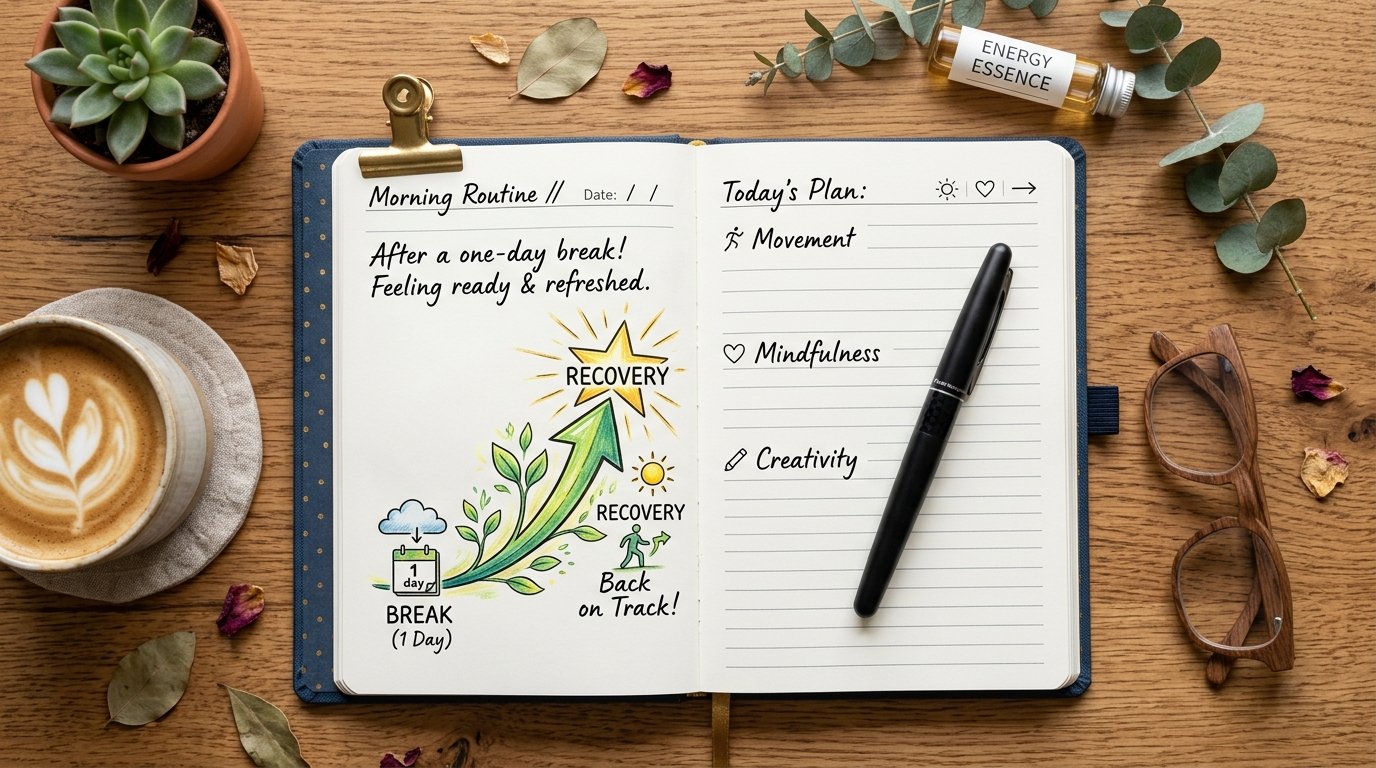
The 2-Day Rule acknowledges that life is unpredictable. You will get sick. You will have emergencies. You will occasionally just have a bad day where your brain refuses to cooperate. By allowing yourself a "buffer day," you remove the crushing guilt that usually follows a missed session. This guilt is often what causes people to quit entirely. When you use the 2-Day Rule, a missed day isn't a failure; it’s a scheduled break that requires an immediate return to form the next day.
The Psychology of the "What the Hell Effect"
To understand why the 2-Day Rule is so powerful, we have to look at a psychological phenomenon called the "What the Hell Effect." Researchers first noticed this in dieters. If a person on a strict diet ate a single slice of pizza, they often felt so bad about "breaking the rules" that they would decide to eat the entire pizza, followed by a tub of ice cream. Their logic was: "Well, I already ruined my diet. What the hell, I might as well enjoy myself today."
This happens with every type of habit. If you miss one day of meditation after a 20-day streak, your brain interprets that as a total system failure. The momentum feels gone. The 2-Day Rule acts as a circuit breaker for this line of thinking. It tells your brain, "The streak isn't actually dead until Day Two."
By focusing on never missing twice, you shift your focus from "being perfect" to "being resilient." You start to realize that one "off" day doesn't define you, but how you respond to that off day does. Resilience is a much more sustainable fuel for personal growth than perfectionism ever will be.
How to Implement the Rule in Your Daily Life
Implementing this rule requires a shift in how you track your progress. Instead of just looking at a total number of days, you start looking at the gaps.
1. Define Your Non-Negotiables
The 2-Day Rule works best when applied to high-impact habits. Choose one or two habits that are central to your growth. Maybe it’s your morning routine or your daily exercise. When you know exactly which habits fall under this rule, you can’t make excuses when that second day rolls around.
2. Use Visual Cues
It’s hard to remember your streak when it’s only in your head. Using a calendar or a streak tracking tool is essential. When you see a single "X" on a calendar followed by a blank space, that blank space becomes a call to action. It creates a visual tension that pushes you to get back on track. Seeing your progress visualized can be incredibly motivating, especially when you can see that a single missed day is just a tiny blip in a sea of successful days.
3. The "Low-Floor" Strategy
On the days when you really don't want to show up for Day Two, use the "Low-Floor" strategy. This means doing the absolute bare minimum version of your habit. If your habit is to work out for 45 minutes, but you’re exhausted, your low-floor version might be doing five push-ups. If your habit is writing 1,000 words, write one sentence. The goal isn't the output; the goal is to keep the streak alive. Showing up when you don't want to is what actually builds the habit muscle.
Real-World Scenarios: When Life Gets in the Way
Let’s look at how this plays out in real life. Imagine you are trying to build a habit of reading for 30 minutes every night before bed.
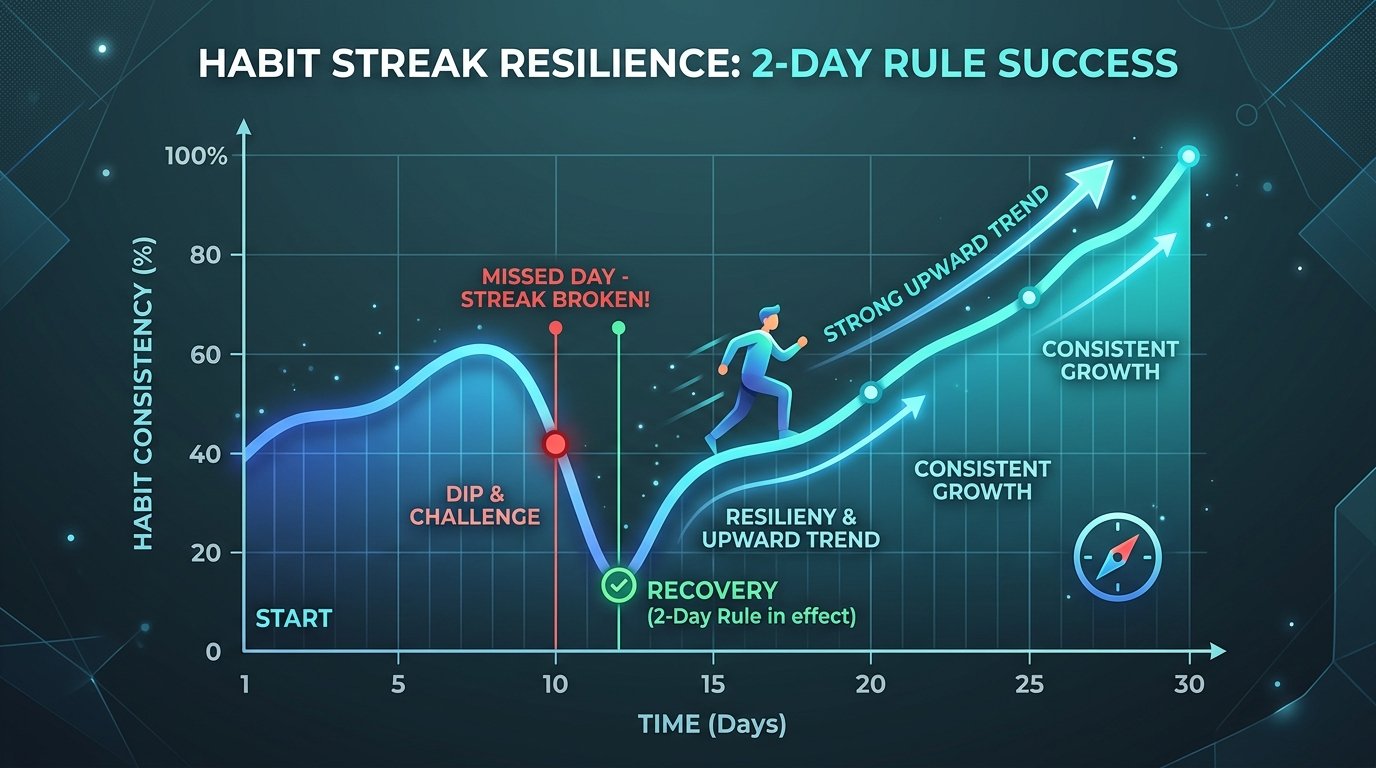
Monday: You read for 30 minutes. (Success) Tuesday: You get home late from a friend's house and collapse into bed. You don't read. (The Buffer Day) Wednesday: You feel tired again. You think about skipping. But then you remember the 2-Day Rule. You can't miss two in a row. You pick up the book and read for just five minutes. (Success)
By reading on Wednesday, you’ve prevented a lapse from becoming a collapse. You’ve proven to yourself that you are still someone who reads. If you had skipped Wednesday, Thursday would have been even harder, and by Friday, the habit would likely be dead.
This applies to bigger goals too. If you’re working toward a major milestone—maybe a professional certification or a fitness goal—a countdown can make the future feel more real. Tracking your progress daily ensures that the countdown continues to move forward, even if you had to take a "buffer day" earlier in the week.
The Long-Term Impact on Your Identity
The most profound benefit of the 2-Day Rule isn't the habits themselves; it's the change in your self-image. Every time you show up on "Day Two" after a miss, you are casting a vote for the person you want to become. You are teaching yourself that you are reliable. You are proving that you can handle setbacks without falling apart.
Over time, these "recoveries" become more important than the streaks themselves. A 100-day streak is impressive, but a person who has maintained a habit for three years with the occasional missed day is far more likely to keep that habit for life. They’ve learned how to integrate the habit into the messiness of real existence.
If you're struggling with a specific bad habit, like smoking or excessive social media use, the 2-Day Rule can be flipped. While "days since" tracking is often the best approach for quitting, the mindset of immediate recovery is the same. If you slip up, you don't throw away all your progress. You acknowledge the slip and commit to a "clean" Day Two. (If you're struggling with addiction, please reach out to a professional or a trusted person in your life.)
Why "Never Miss Twice" Is the Ultimate Productivity Hack
In the world of self-improvement, we often look for complex systems and expensive tools. But usually, the most effective solutions are the simplest ones. The 2-Day Rule is a productivity hack because it eliminates the mental energy spent on guilt and negotiation.
When you miss a day, the decision for the next day is already made. There is no "Should I?" or "Do I feel like it?" The rule is: Never miss twice. That clarity is a gift. It saves your willpower for the actual task at hand rather than wasting it on the decision-making process.
Tracking your consistency through a simple daily check-in or a streak tracker helps you see the big picture. When you look back at a month of tracking, you won't see the individual missed days as failures. You'll see a consistent pattern of showing up, which is the only thing that truly leads to transformation.
Key Takeaways
- Perfection is the enemy of consistency: Don't let a single missed day turn into a week of inactivity.
- The 2-Day Rule: You are allowed to miss one day for any reason, but you must never miss two days in a row.
- Fight the "What the Hell Effect": Recognize that one mistake doesn't ruin your progress; quitting does.
- Lower the bar to stay on track: On hard days, do a "micro-version" of your habit just to keep the streak alive.
- Visualize your journey: Seeing your streak grow every day can be motivating and helps you spot the "Day Two" moments before they happen.
The next time you miss a day, don't beat yourself up. Take a breath, acknowledge that you're human, and remember the rule. Tomorrow is your most important day. Show up, do the work, and keep the momentum moving forward. Your future self will thank you for not giving up.
Build Better Habits — Track Your Streaks
Set goals, build streaks, and transform your life one habit at a time.