
- Published on
The 30-Day Finish What You Start Challenge
You know that feeling of electric excitement when you start something new? Maybe it’s a fresh notebook, a new fitness program, or a business idea that kept you awake until 2:00 AM. In that moment, success feels inevitable. You can see the finish line, and it looks glorious.
But then, the "messy middle" arrives. The initial dopamine hit wears off, the work gets repetitive, and suddenly, a new, shinier idea pops up. You tell yourself you’ll get back to the first project later, but deep down, you know the truth. It’s headed for the graveyard of half-finished dreams, joining the dusty guitar in the corner and the half-written blog post in your drafts folder.
This isn’t a lack of talent or ambition. It’s "Shiny Object Syndrome," and it’s one of the greatest thieves of personal growth. When we constantly start but never finish, we don't just lose time; we lose trust in ourselves. Every abandoned project is a tiny whisper to your subconscious that says, "I don't follow through."
The good news? Finishing is a habit, not a personality trait. You can train your "completion muscle" just like a bicep. That’s where the 30-Day Finish What You Start Challenge comes in.
The Psychology of the "Open Loop"
Why does it feel so heavy to have ten unfinished projects? Psychology points to something called the Zeigarnik Effect. This principle suggests that our brains remember uncompleted tasks much better than completed ones. These "open loops" stay active in the back of your mind, draining your mental energy and causing a subtle, constant state of stress.
When you finally finish something—even something small like putting away a pile of laundry or sending that one "difficult" email—you experience a sense of relief. That’s the loop closing. Your brain can finally stop dedicating resources to keeping that task "online."
The problem is that many of us are addicted to the "Start." Starting provides an immediate hit of dopamine because we’re imagining the results without having done the hard work yet. Finishing, however, requires discipline, grit, and the ability to tolerate boredom. To become a finisher, you have to shift your reward system from the "high" of the new idea to the satisfaction of the final result.

Phase 1: The Great Inventory (Days 1–3)
Before you can move forward, you have to look back. You can't finish everything at once, and trying to do so is a recipe for immediate burnout.
For the first three days of this challenge, your job is to conduct a "Project Audit." Take a piece of paper and list every single unfinished project currently weighing on your mind. This includes:
- Physical projects (the half-painted guest room, the broken shelf).
- Digital projects (the online course you’re 20% through, the unorganized photo folders).
- Creative projects (the half-written song, the abandoned knitting).
- Professional goals (the certification you started, the LinkedIn profile you never finished).
Once you have your list, it’s time for "The Pruning." You are going to look at each item and make a brutal choice: Finish it, or Kill it.
If a project no longer serves your goals or brings you joy, give yourself permission to quit it officially. Delete the file, donate the materials, and close the loop. For the items that remain, choose one major project or three tiny projects to be the focus of your 30-day streak.
Phase 2: Building the Completion Streak (Days 4–15)
Now that you’ve narrowed your focus, the real work begins. The goal of this phase is to build a streak of daily action. It doesn't matter if you work for ten minutes or two hours; what matters is that the project moves forward every single day.
Here’s the thing: you will want to quit around Day 10. This is the "Boredom Threshold." The novelty is gone, and the end is still out of sight. This is exactly where most people fail.
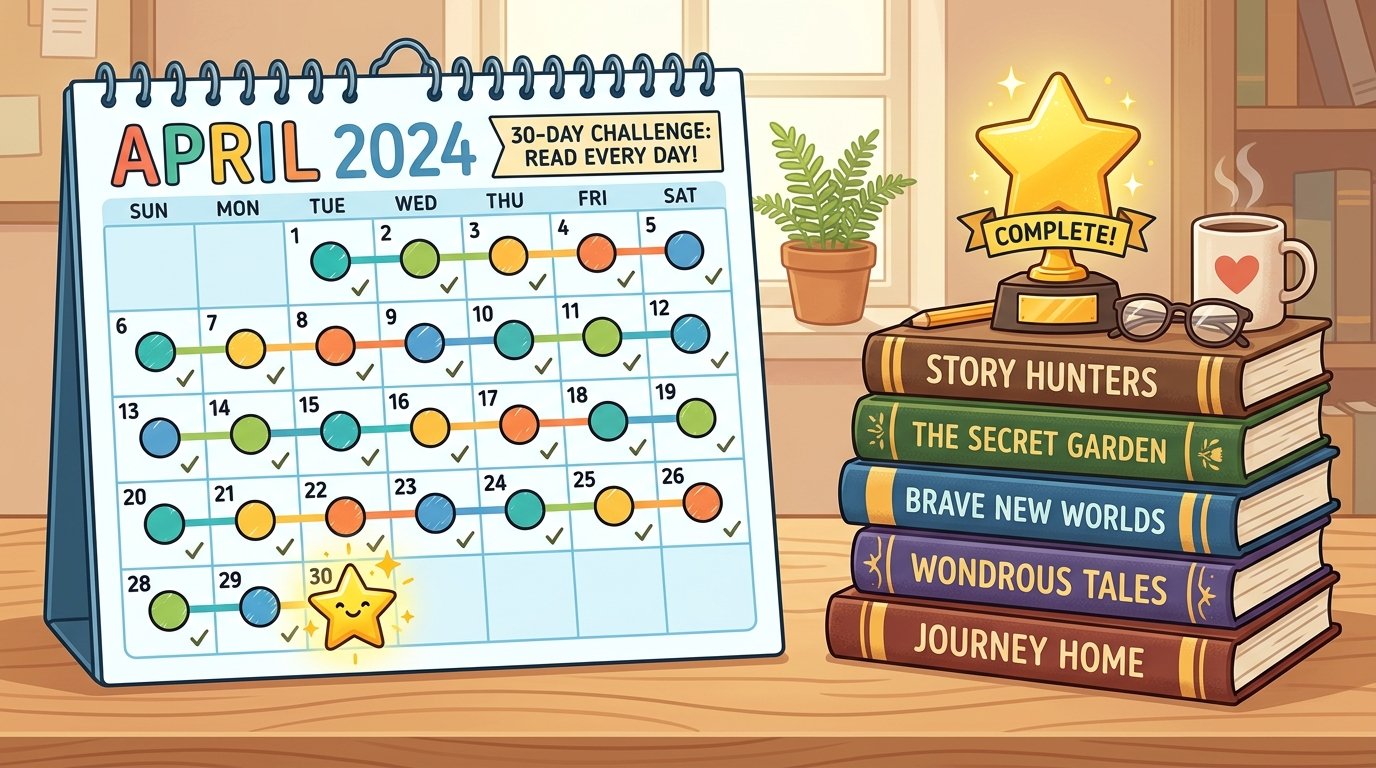
To get through this, stop looking at the final outcome and start looking at your progress. Using a visual streak tracker can be incredibly powerful here. When you can see a physical or digital representation of your "days worked" growing longer, it creates a psychological desire to "not break the chain." Seeing that you’ve shown up for eight days straight makes you much more likely to show up on day nine, even when you’re tired.
Think about it this way: you aren't just working on a project; you are building an identity as someone who finishes things. Every day you add to your streak, that identity becomes more solid.
Phase 3: Navigating the Messy Middle (Days 16–25)
By the third week, you’ll likely encounter a technical hurdle or a creative block. This is where "Shiny Object Syndrome" is most dangerous. Your brain will try to convince you that this project is actually "bad" and that a different idea is much more important.
When this happens, use the "Rule of Three":
- Lower the bar: If you're stuck, do the smallest possible version of the task. If you can't write a chapter, write a paragraph. If you can't paint the whole wall, tape the edges.
- Ignore the "New": Keep a "Parking Lot" notebook. When a new, shiny idea pops into your head, write it down and tell yourself, "I can look at this after Day 30."
- Track the countdown: If your project has a clear endpoint, start a countdown. Seeing that you only have 12 days left until your deadline can provide a much-needed burst of "finish-line fever."
Phase 4: The Final Push (Days 26–30)
The last five days are about the "Last 10%." In any project, the last 10% often takes 50% of the effort. It’s the polishing, the formatting, the cleaning up, and the final delivery. It’s the least glamorous part of the process, which is why so many projects sit at 90% completion forever.
During these final days, eliminate distractions. Say no to social outings, clear your schedule, and focus entirely on the "Done" state. Remember, "done" is better than "perfect." Perfectionism is often just a sophisticated form of procrastination. It’s a way to avoid the vulnerability of actually finishing and putting your work out into the world.
As you approach the end of the 30 days, notice how your energy shifts. The weight of that "open loop" is lifting. You’re no longer someone who "has a great idea for a book"; you’re someone who "wrote a book."
Why Tracking Matters
The reason most people fail at finishing isn't a lack of desire; it's a lack of visibility. We lose track of how far we’ve come and how little is left to go. This is why habit tracking tools are so effective. Whether you’re tracking "days since I started" or "days until I finish," having a visual representation of time makes the abstract feel concrete.
A countdown tool can turn a vague goal into a ticking clock, creating a healthy sense of urgency. Meanwhile, a streak counter turns your effort into a game. You start to value the streak itself, sometimes even more than the task at hand. That external motivation is often exactly what you need to bridge the gap between "wanting to finish" and "actually finishing."
If you find yourself struggling with deep-seated habits or if procrastination is affecting your mental health, please reach out to a professional or a trusted person in your life for support. Sometimes, the inability to finish is tied to anxiety or other hurdles that are easier to clear with help.
Life After the Challenge
What happens on Day 31? You’ll likely find that you have more energy than you did a month ago. Closing those open loops releases mental bandwidth you didn't even know you were using.
But the real reward isn't the finished project itself. It’s the shift in your self-image. You have proven to yourself that you can handle the boredom, the frustration, and the "messy middle." You are now a finisher.
From here, you can start your next project with a new sense of confidence. You know that when things get tough—and they will—you have the tools and the discipline to see it through to the end.
Key Takeaways
- Audit your open loops: List every unfinished task and decide whether to "Finish it" or "Kill it" to free up mental energy.
- Focus on one thing: Pick one major project to finish over the next 30 days to avoid overwhelm.
- Embrace the boredom: Understand that the "messy middle" is a natural part of the process where the dopamine of starting fades.
- Use visual progress: Tracking your streak or using a countdown can provide the external motivation needed to stay consistent.
- Prioritize "Done" over "Perfect": The last 10% of a project is the hardest; focus on completion rather than flawless execution.
Tracking your progress daily is the simplest way to ensure you don't fall back into old patterns. Seeing your commitment grow in real-time can be the difference between a graveyard of ideas and a gallery of completions.
Build Better Habits — Track Your Streaks
Set goals, build streaks, and transform your life one habit at a time.