
- Published on
The 7-Day Time Audit: Reclaim 10 Hours a Week
You’ve probably noticed that your days feel like a blur of notifications, "just five more minutes" on social media, and the constant feeling that you're running behind. You tell yourself you’ll start that new workout routine or finally finish that book once things "settle down." But they never do. The truth is, we don't usually lack time; we lack awareness of where it's actually going.
The "I don't have time" excuse is the most common barrier to personal growth. It feels real because, at the end of the day, you truly are exhausted. However, most of us are losing hours to "leaky" habits—small pockets of time that disappear into mindless scrolling, over-extended breaks, or inefficient transitions between tasks. By performing a 7-day time audit, you can plug those leaks and reclaim at least 10 hours a week for the things that actually matter.
The Psychology of Time Blindness
Most of us suffer from what psychologists call "time blindness." We are notoriously bad at estimating how long a task will take and even worse at remembering how we spent our afternoon. This is often linked to the "planning fallacy," a cognitive bias where we underestimate the time needed for future tasks while ignoring how long similar tasks took in the past.
When you don't track your time, your brain tends to "smooth over" the gaps. You remember the two hours you spent working on a project, but you conveniently forget the four 15-minute windows you spent checking your email or the 20 minutes you spent deciding what to eat for lunch. These "micro-leaks" are where your 10 hours are hiding.
Phase 1: The Three-Day Raw Data Collection
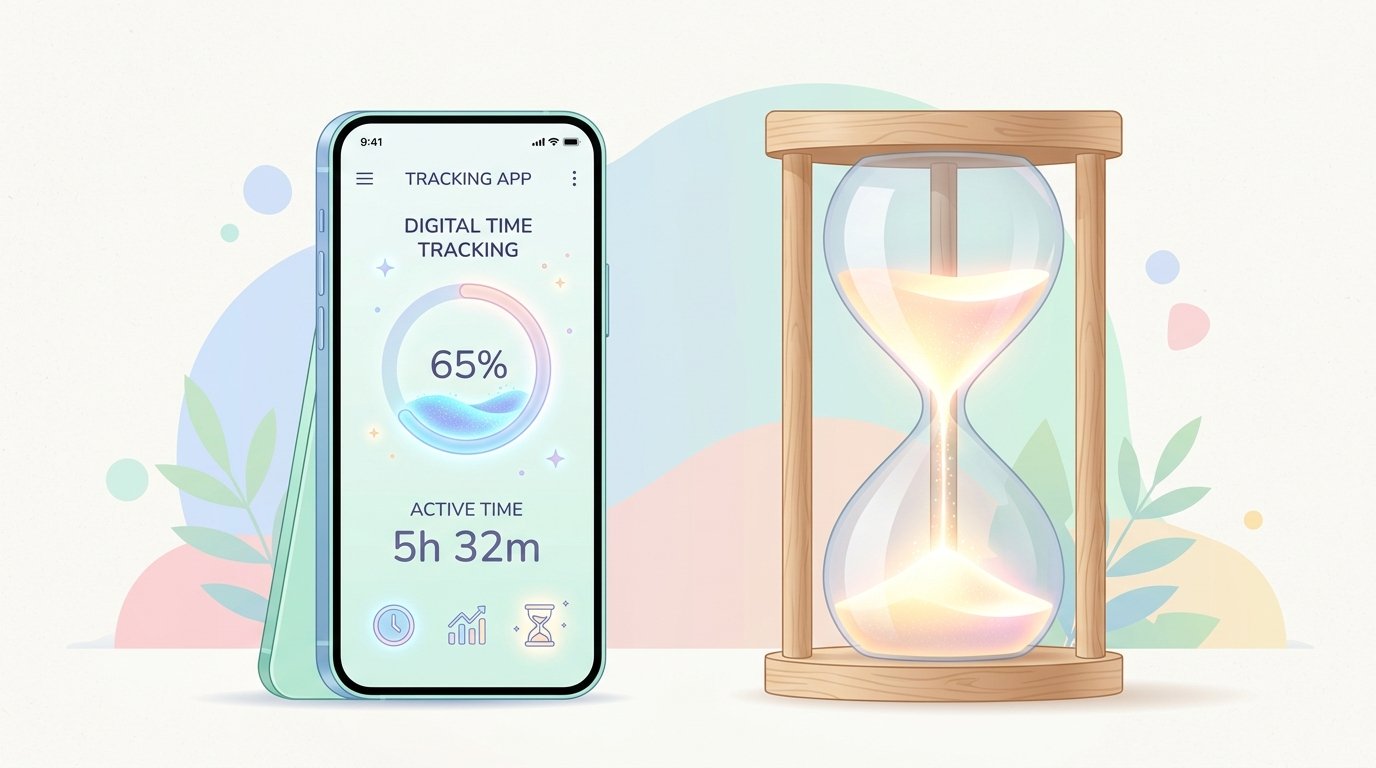
The first step isn't to change anything. In fact, if you try to be "productive" during the first three days of an audit, you'll ruin the data. You need to see the "real" you, not the "aspirational" you. For the first 72 hours, your only job is to record everything you do in 15-to-30-minute increments.
Here's the thing: you don't need a complex system. A simple notebook or a basic note-taking app on your phone works best. Every time you switch tasks—from waking up to scrolling, from breakfast to commuting, from deep work to a coffee break—write it down. Be brutally honest. If you spent 45 minutes looking at travel photos on Instagram, write it down.
The goal here is to create a "days since" baseline for your current habits. You might find that it's been zero days since you spent two hours on YouTube before bed. Seeing the raw numbers on paper creates a necessary friction that forces you to acknowledge your current reality.
Phase 2: Categorizing the "Big Three"
Once you have three days of data, it’s time to categorize your time. Look at your logs and assign every activity to one of three buckets:
- Maintenance: Essential tasks like sleeping, eating, commuting, and hygiene.
- Productive/Meaningful: Work, studying, exercise, quality time with family, or working on a hobby.
- The "Void": Mindless scrolling, channel surfing, "waiting" for things to happen, and procrastination.
When you total up the hours in "The Void," most people are shocked. It’s rarely one big block of wasted time. Instead, it’s usually 10 minutes here and 20 minutes there. This is where your hidden 10 hours live. If you find you’re spending 90 minutes a day in the Void, that’s already 10.5 hours a week you could be using for habit building.
Phase 3: The "Cut and Swap" Strategy
By Day 4 and 5, you have the data. Now you need to make the swap. You aren't "finding" time; you are "reallocating" it. Look at your "Void" categories and pick the two biggest offenders. For many, it’s the "morning scroll" (checking your phone while still in bed) and the "evening slump" (mindless TV or phone use after dinner).
Instead of trying to eliminate these entirely, swap them for a high-value habit. If you reclaim 30 minutes in the morning and 60 minutes in the evening, you’ve just found 1.5 hours a day. Over a week, that's 10.5 hours.
Think about it this way: 10 hours a week is enough to train for a 10K, learn the basics of a new language, or read two books a month. The transition feels easier when you view it as a trade-off. You aren't losing your phone time; you're buying your future self a new skill.
Phase 4: Using Tools to Maintain Momentum
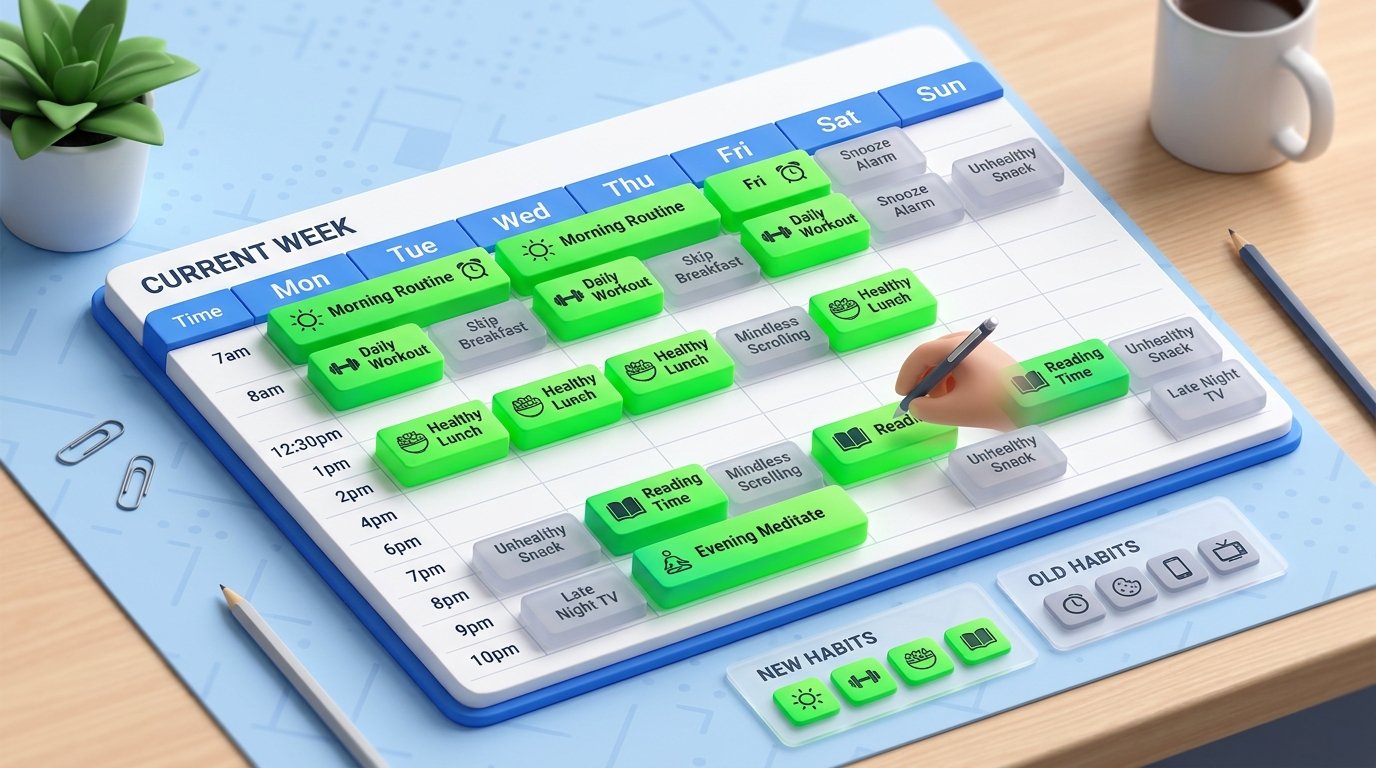
The hardest part of a time audit isn't the first week—it's the second. Once the novelty wears off, the "Void" will try to suck you back in. This is where visual progress becomes your best friend.
Using a countdown tool for your most important tasks can help you stay focused. If you've allocated 45 minutes to reading, set a countdown. Seeing the time tick away creates a healthy sense of urgency that prevents "Parkinson’s Law"—the idea that work expands to fill the time available for its completion.
Similarly, tracking your "clean days" or habit streaks can provide the dopamine hit you used to get from social media. Seeing a "7-day streak" of reclaimed evening hours makes you much less likely to waste that time on Day 8. You've built something valuable, and you won't want to break the chain.
How to Stay Consistent After the Audit
A time audit is like a physical for your life. You don't need to do it every week, but you should do it whenever you feel "too busy" again. To keep your 10 reclaimed hours, follow these three rules:
- The 15-Minute Rule: If you find yourself in the "Void" for more than 15 minutes, physically stand up and change rooms. This breaks the neurological loop of mindless behavior.
- Audit Your Transitions: Most time is lost between tasks. Have your gym clothes ready or your book on your pillow so there is no "decision gap" where you might reach for your phone.
- Track Your Wins: Every time you use your reclaimed hour for a good habit, acknowledge it. Seeing your progress grow every day is the best way to stay motivated.
If you're struggling with deep-seated habits or feel that your time management issues are linked to your mental health, please reach out to a professional or a trusted person in your life. Sometimes "time blindness" can be a symptom of larger challenges that deserve expert attention.
Key Takeaways
- Identify the "Void": Use the first three days to honestly track every 15-minute block to find where your time is leaking.
- Reallocate, Don't Just Cut: Swap your biggest time-wasters for specific, high-value habits to make the change sustainable.
- Use Visual Cues: Leverage countdowns for tasks and streak tracking for your new habits to keep your momentum high.
- Respect the Transitions: Prepare for your new habits in advance to close the "decision gaps" where time is usually lost.
Reclaiming 10 hours a week isn't about becoming a productivity robot. It’s about making sure that the limited time you have is spent on things that make you feel proud, energized, and alive. Start your audit today—your future self is waiting.
Build Better Habits — Track Your Streaks
Set goals, build streaks, and transform your life one habit at a time.