
- Published on
The 6-Month Review: Using Mid-Year Countdowns to Realign
You reach the middle of the year and suddenly realize that January feels like a lifetime ago. The resolutions you scribbled on a napkin or typed into a note-taking app now feel like relics from a different version of yourself. Maybe you hit some of your goals, but others have quietly slipped off your radar, buried under the weight of daily responsibilities and unexpected life events.
This is not a failure; it is a natural part of the human experience. Research into goal attainment suggests that motivation often wanes as the novelty of a new year wears off. The real question is: what are you going to do about the remaining six months? You don't need a calendar flip to start over. You just need a mid-year check-in to pivot.
Why the Mid-Year Mark Matters
Think of your year as a long-distance race. If you run for six months without checking your pace, your route, or your hydration levels, you might end up miles away from the finish line you originally envisioned. A 6-month review is your opportunity to step off the track, catch your breath, and look at the map again.
Psychologically, we suffer from "present bias," where we prioritize immediate comfort over long-term gains. By forcing yourself to look at the six-month mark through a countdown, you bridge the gap between your current reality and your future desires. It makes the remaining time feel finite and valuable. When you can see the number of days left in the year, those days stop feeling like an endless supply and start feeling like a limited resource.
Step 1: The Honest Audit
Before you can realign, you need to know exactly where you are standing. Start by listing what you actually accomplished, not just what you intended to do. It is easy to beat yourself up over missed targets, but acknowledging small wins is crucial for maintaining momentum.
Did you read five books instead of twelve? Did you start going to the gym twice a week, even if it wasn't the daily habit you hoped for? Write these down. This list serves as proof that you are capable of change. If you find that you have been struggling significantly with your mental well-being or are feeling stuck in a cycle you cannot break, remember that support is available. If you're struggling, please reach out to a professional or a trusted person in your life.
Step 2: Defining Your "Why" for the Next Six Months
Once you have audited your progress, ask yourself if your original goals still matter. People change, and your priorities from January might not be the same ones you hold today. It is perfectly acceptable to abandon a goal that no longer serves your growth.
If you decide to keep a goal, redefine your "why." Instead of saying "I want to get fit," try "I want to move daily so I have the energy to play with my kids" or "I want to build strength so I feel more confident in my body." A goal without a deep, emotional anchor is just a chore. Using a countdown tool to track the days until your next milestone can help keep that "why" front and center in your mind every time you check your progress.
Step 3: Designing Your Mid-Year Reset
Now, simplify. Most people fail because they try to change everything at once. Pick one or two core areas to focus on for the rest of the year. Whether it is your health, your career, or your personal relationships, focus is the antidote to feeling overwhelmed.
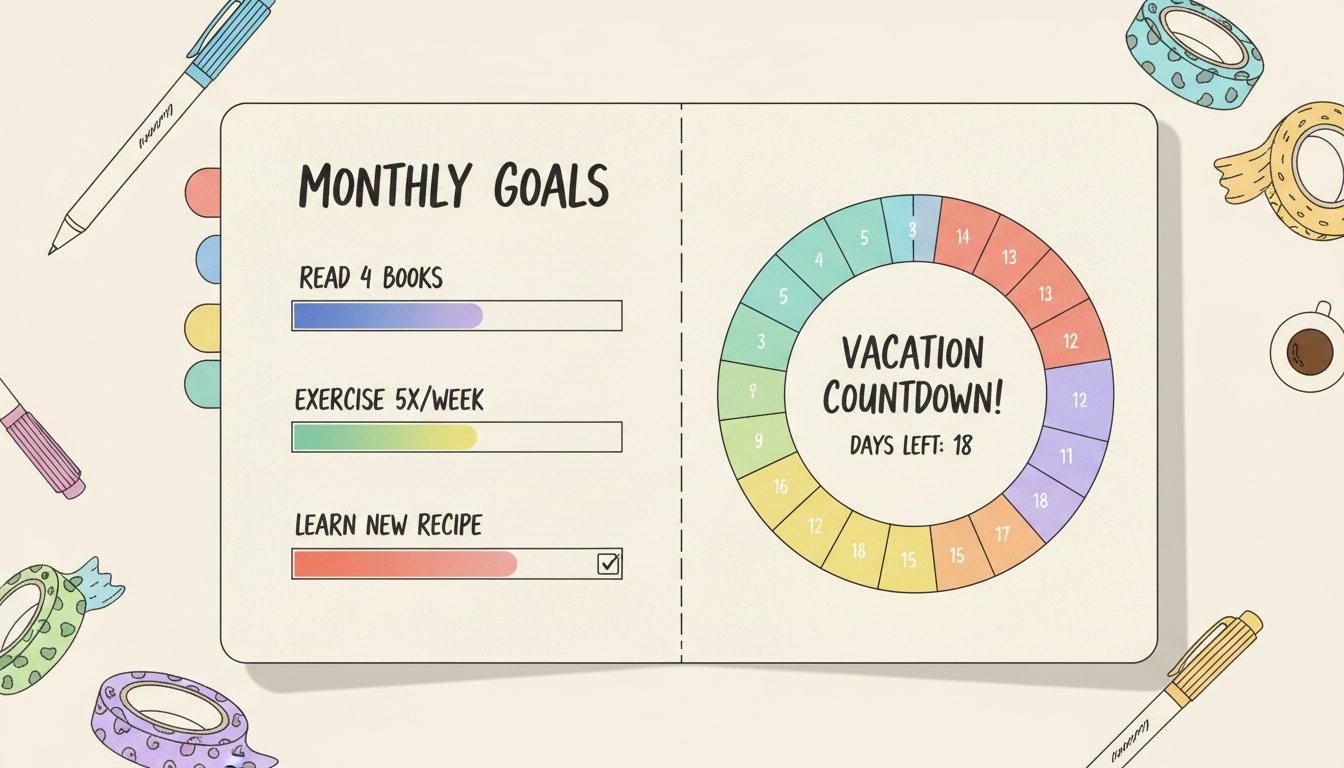
Break these focus areas into small, actionable habits. If you want to write more, don't aim for a novel; aim for one paragraph a day. If you want to save money, don't overhaul your entire budget; pick one category of spending to track. The goal is to build a "streak" of small successes. Seeing a visual representation of your progress—like a calendar with marked days—can be incredibly motivating because it gives your brain a quick hit of dopamine for completing a task.

How to Stay Consistent Through December
The biggest hurdle for the second half of the year is the "holiday slump." We tend to coast from late November onwards, often losing the progress we made in the summer and autumn. To combat this, set a specific countdown for your end-of-year target. Knowing there are, for example, 100 days left until the year ends turns the remaining time into a tangible challenge.
When you track the time remaining, you are more likely to stay committed. It creates a sense of urgency that prevents procrastination. If you miss a day, don't let it become a habit. Everyone has a bad day, but the most successful people are those who recognize the slip-up, forgive themselves, and get back on track the next morning. Consistency isn't about being perfect; it's about not letting a single mistake turn into a total abandonment of your goals.
Navigating Shifts in Perspective
Sometimes, the best part of a 6-month review is realizing you were headed in the wrong direction. You might find that the career goal you were chasing is no longer appealing, or that a habit you thought was "good" for you is actually causing you more stress than happiness.
Use this time to cut the dead weight. If a goal feels like a heavy anchor, it’s okay to cut the rope. Realignment isn't just about pushing harder; it’s about pushing in the right direction. When you view your year as a series of learning experiences rather than a pass-fail test, you remove the pressure that often leads to burnout.
Key Takeaways
The middle of the year is the perfect time to reset your trajectory. By taking the time to audit your progress and adjust your focus, you can make the second half of the year significantly more productive than the first.
- Audit with kindness: Acknowledge what you have achieved, even if it is less than you hoped. Small progress is still progress.
- Re-anchor your goals: Make sure your goals still align with who you are today. If they don't, it is okay to pivot or let them go.
- Use visual tracking: Whether it’s a countdown to the end of the year or tracking your daily habits, visual tools help you stay committed by making your progress feel real.
- Focus on small wins: A streak of small, consistent actions often leads to bigger transformations than a sudden, unsustainable overhaul.
Remember, you don't need a calendar change to start over. You can reset your life any day you choose. Start tracking your progress today, and watch how those small, intentional steps build up over the next six months.
Build Better Habits — Track Your Streaks
Set goals, build streaks, and transform your life one habit at a time.