
- Published on
The 100-Day Decluttering Challenge: Simplify Your Space
You walk into your living room, look at the bookshelf, and realize you haven’t touched half of those titles in years. You look at the junk drawer, the overflowing closet, and the stack of "important" mail from 2022. It feels overwhelming, right? The weight of your physical environment often mirrors the weight in your mind, yet knowing where to start is the hardest part.
Most of us try to tackle a "deep clean" on a Saturday afternoon. We pull everything out, create a massive mess, get tired, and end up stuffing half of it back in just to regain some floor space. It’s a cycle that leads to burnout rather than clarity. The secret isn't a massive overhaul; it’s the quiet power of consistency. By committing to removing just one item every day for 100 days, you aren't just cleaning a room—you are fundamentally changing your relationship with your belongings.
The Psychology of Letting Go
Why does getting rid of a broken mug or an old receipt feel so difficult? Research in behavioral psychology suggests that we fall victim to the "endowment effect." This is our tendency to value an object more simply because we own it. When you hold an item, your brain often assigns it a higher worth than it actually has, making the act of discarding it feel like a loss.
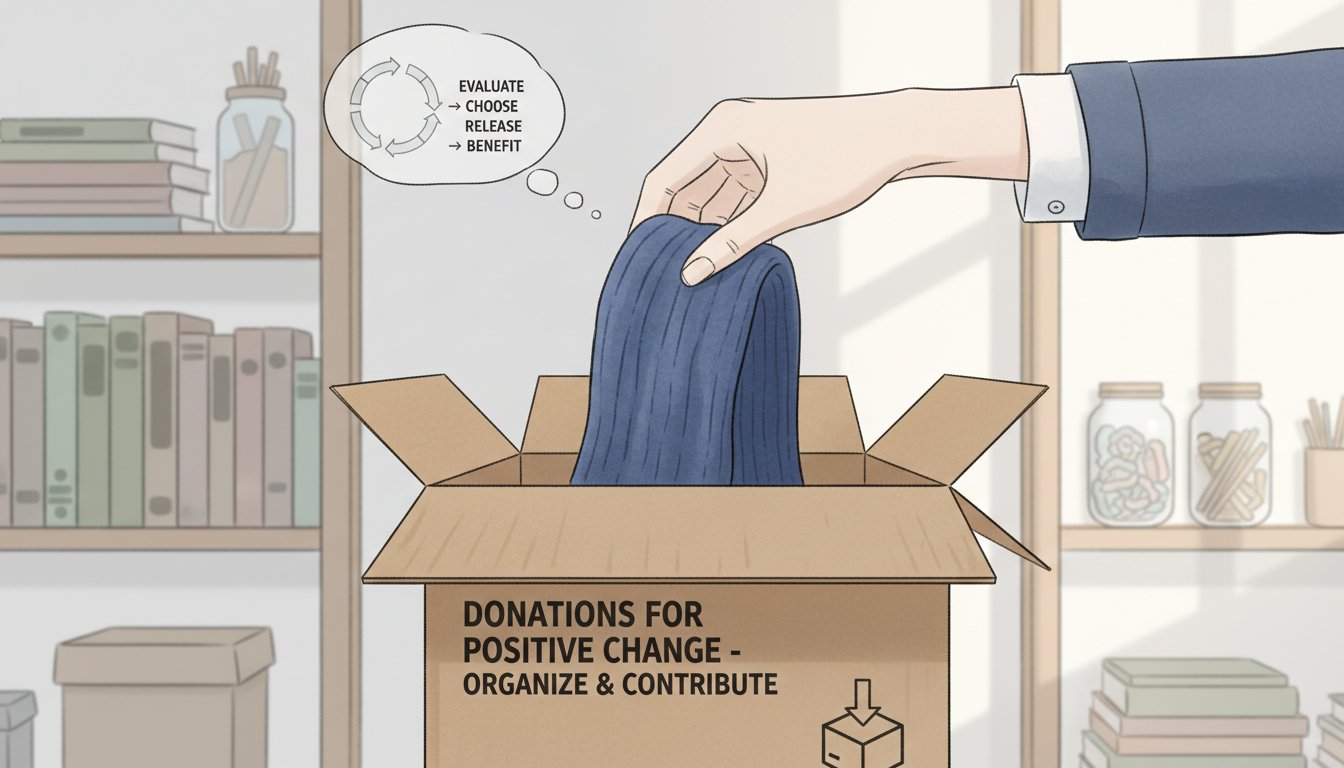
When you commit to a 100-day challenge, you bypass the emotional fatigue of a massive decluttering session. Removing one item is a micro-decision. It’s easy to convince yourself to let go of one pen that doesn't write. This low-friction entry point keeps your dopamine levels steady rather than spiking them with stress. Over time, this practice builds a "decluttering muscle." As you hit day 20, 50, and 80, the act of letting go becomes an identity rather than a chore. You stop being someone who collects things and start being someone who curates their space.
How to Execute Your 100-Day Challenge
You don't need a complex system, but you do need a plan. Start by deciding on your primary goal: are you clearing a specific room, or are you aiming for a whole-home refresh? Once you have your focus, follow these steps:
- Set your threshold: Decide what "one item" means to you. Is it one physical object (a shirt, a book, a kitchen tool) or one category of paper? Keep it simple.
- Choose your time: Pick a consistent time of day, such as when you finish your morning coffee or right before you start your evening routine.
- The "maybe" box: If you are truly struggling to let something go, put it in a box and hide it in a closet. If you don't reach for it in 30 days, it’s clearly not essential.
- Track the progress: Using a simple habit tracking tool can be the difference between finishing and fading out. When you see your streak growing, you’ll find it much harder to skip a day. Watching your progress visually can make the abstract goal of a "clearer home" feel tangible and real.
Navigating the Plateau
Around day 30, you will likely hit a wall. You’ve cleared the obvious trash, and now you’re left with things that have sentimental value or "might be useful someday." This is where the challenge gets interesting. This isn't about becoming a minimalist who owns only a chair and a spoon; it’s about making room for what actually brings value to your life today.
Ask yourself three simple questions when you encounter these items: Does this serve a purpose in my current life? Does it spark a genuine positive emotion? If I saw this in a store today, would I buy it again? If the answer is no, thank the item for its service and let it go. If you are struggling with a high volume of sentimental items that are causing you significant distress or anxiety, please remember that your space should be a sanctuary. If you're struggling, please reach out to a professional or a trusted person in your life. Decluttering is a personal journey, and there is no shame in seeking support.
Why 100 Days?
100 days is long enough to form a permanent habit, but short enough to keep the finish line in sight. By the time you reach the end of this challenge, you will have removed 100 items from your living space. Imagine how much lighter your home would feel if 100 pieces of unnecessary friction were simply gone.
This challenge is less about the items themselves and more about the decision-making process. Every time you choose to remove something, you are practicing discipline. You are proving to yourself that you are in control of your environment, not the other way around. Using a countdown tool to see how many days remain can keep you energized when your enthusiasm starts to dip. It turns the process into a game, making the mundane task of sorting through a drawer feel like a victory lap.
Staying Consistent
The biggest mistake people make is trying to "make up for lost time" if they miss a day. If you miss day 42, don't try to get rid of 43 items on day 43 to compensate. That approach leads to overwhelm and defeat. Just pick back up on day 43. Consistency is about showing up again, not about being perfect.
Remember, the goal isn't a museum-grade home; it's a home that serves your life. If you find yourself enjoying the process, you might even find that you start removing more than one item a day. That’s a bonus, not a requirement. Focus on the daily win, and let the long-term transformation take care of itself.
Key Takeaways
- Start small: Removing one item daily is a low-friction way to build a habit without the burnout associated with massive cleaning projects.
- Track your journey: Using a streak-based tracker helps you visualize your progress and keeps you accountable during the "messy middle" of the challenge.
- Focus on the identity shift: This challenge isn't just about cleaning; it’s about training your brain to stop holding onto items that no longer serve a purpose in your current life.
- Embrace the process: Don't worry about missing a day; consistency is about getting back on track, not maintaining perfection.
- Celebrate the space: As you hit milestones, take a moment to enjoy the newfound room and clarity in your home—it’s a powerful motivator to keep going.
Build Better Habits — Track Your Streaks
Set goals, build streaks, and transform your life one habit at a time.