
- Published on
The 12-Month Life Audit: Annual Growth Countdowns
You look at the calendar and realize another year has slipped by. Maybe you achieved a few things, but you also feel like you’ve been running on a treadmill, moving fast but staying in the same place. It is easy to let months blur together until you wake up one day wondering where the time went.
Most people only evaluate their lives when the clock strikes midnight on New Year’s Eve. But waiting for a single day in winter to assess your progress is a missed opportunity. You need a way to make your personal growth tangible, consistent, and urgent throughout the entire year. This is where the 12-month life audit comes in. By setting up recurring countdowns for your personal milestones, you transform abstract goals into a visible, ticking reality.
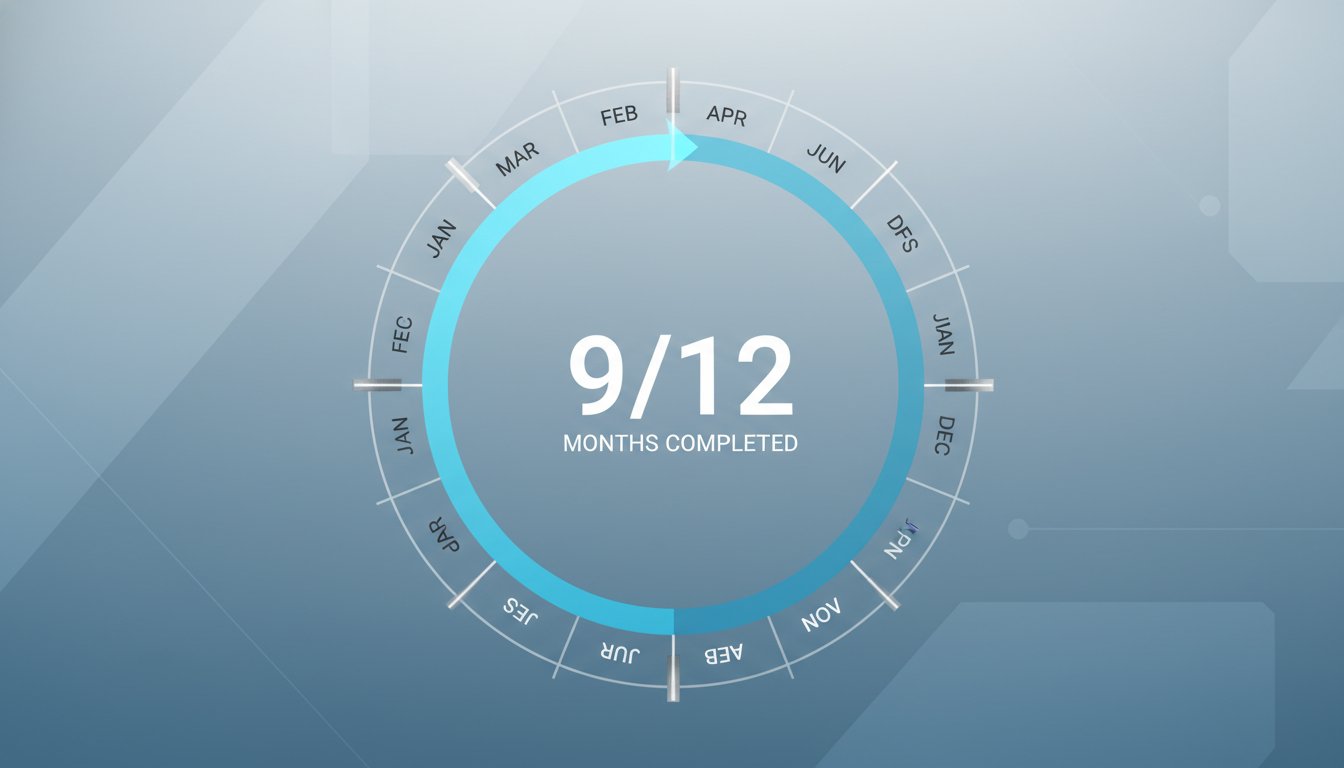
Why a rolling audit beats a New Year’s resolution
Human beings are notoriously bad at estimating time. When we set a goal for "the year," our brains categorize it as a distant, abstract concept. This is why most resolutions fail by mid-February. Psychology suggests that when a deadline feels far away, we lack the "urgency bias" required to take daily action.
A life audit isn't about shaming yourself for what you haven't done. It is about checking in with your future self. When you treat your growth as a series of 12-month cycles rather than a static annual event, you create a feedback loop. You stop asking "What do I want to do this year?" and start asking "What can I accomplish in the next 365 days?"
Think about a goal like learning a new language or building a side project. If you set a countdown for exactly one year from today, the number on your screen acts as a constant, quiet reminder. It doesn't nag you; it simply shows you the reality of your limited time. Seeing that number tick down makes the goal feel real, shifting it from a "someday" dream to a "today" priority.
The structure of an effective life audit
To conduct a meaningful audit, you need to look at your life as an ecosystem. Divide your growth into four pillars: professional, personal, health, and emotional.
For each pillar, pick one core milestone you want to reach in 12 months. Maybe it is saving a specific amount of money, finishing a certification, or reaching a consistent fitness level. Once you have these, create a countdown for each. This creates a "dashboard" of your life. When you see that you have 280 days left to achieve a fitness milestone, you are more likely to make a healthy choice at dinner today.
Consistency is the byproduct of visibility. If you track your progress regularly, you will find that you don't need massive bursts of motivation. Instead, you develop a steady, quiet discipline. By using countdown tools to mark these 12-month milestones, you are essentially gamifying your own existence. You are no longer just living through the days; you are actively steering them.

Managing the emotional weight of time
It is important to remember that life is not a race. Sometimes, an audit will show that you haven't moved as far as you wanted. That is okay. If you find yourself feeling overwhelmed by the pressure of these milestones, take a step back. If you are struggling with deeper issues or feeling stuck in a cycle you cannot break, please reach out to a professional or a trusted person in your life.
The goal of a 12-month audit is to feel empowered, not burdened. If you realize your goal is no longer serving you, change it. The countdown is a tool for you, not a master you serve. You can reset your countdowns at any time. The real value is in the act of checking in and being honest about where you are versus where you want to be.
How to start your audit today
You don't need a complex system to get started. Pick one area of your life where you feel the most "stuck." Define a specific result you want to see 12 months from now. Set a countdown on your phone or computer. Then, break that 12-month window into 3-month segments.
What can you do in the next 90 days to move the needle? When you hit that first 3-month marker, do a mini-audit. Are you on track? Do you need to adjust your approach? This keeps you engaged without making the process feel like a chore. Tracking your progress through these intervals helps you stay consistent, as you can clearly see how far you have traveled since you started.
Key Takeaways
- Make time visible: Use countdown tools to track your 12-month goals. Seeing the days remaining builds a healthy sense of urgency that prevents procrastination.
- Audit in pillars: Don't just focus on one thing. Balance your professional, personal, health, and emotional growth to ensure a well-rounded transformation.
- Consistency over intensity: You don't need to change your life overnight. Small, steady progress tracked over 365 days is far more powerful than a short-lived burst of effort.
- Stay flexible: A life audit is a tool for self-reflection, not a rigid prison. If your priorities change, update your countdowns and keep moving forward.
Small progress becomes visible when you track it daily. By turning your goals into a recurring, visual countdown, you give yourself the best chance to actually reach them. Start your first 12-month audit today, and watch how your perspective shifts when you finally start measuring your growth against the reality of time.
Build Better Habits — Track Your Streaks
Set goals, build streaks, and transform your life one habit at a time.