
- Published on
The 100-Day No-Spend Challenge: Master Your Finances
You’ve probably looked at your bank statement at the end of the month and wondered, "Where did it all go?" It’s a common feeling. You work hard, you earn your paycheck, but somehow, the balance drops faster than expected. We often blame inflation or the cost of living, but often, the silent culprit is the accumulation of small, mindless purchases—the extra latte, the subscription you forgot to cancel, or the "just because" order from an online store.
A 100-day no-spend challenge isn’t about depriving yourself of the things you need to survive. It’s a strategic reset for your financial habits. By committing to a period where you cut out all non-essential spending, you force your brain to break the cycle of impulsive consumption. It’s a way to peel back the layers of your spending habits and see what truly adds value to your life versus what is just filling a void.
Why 100 Days?
Psychologically, 100 days is the perfect window for a transformation. It’s long enough to move past the initial novelty of a challenge and into the phase where new behaviors become your default setting. Most people find that the first two weeks are a struggle against habit loops, but by day 30, the urge to spend starts to diminish. By day 100, you aren't just "not spending"; you have fundamentally changed your relationship with money.
Think about it this way: when you stop the constant flow of small transactions, you create a vacuum. In that space, you start to notice your own triggers. Do you spend when you are bored? Do you shop when you feel stressed? A 100-day challenge acts as a mirror, showing you the emotional drivers behind your financial decisions. Tracking your progress through a simple habit tracking tool can turn this experiment into a visible journey, where every day you resist a non-essential purchase feels like a victory rather than a sacrifice.
Setting the Ground Rules
Before you start, you need clarity. "No-spend" is a subjective term, so you must define what it means for your specific situation. For most people, a successful challenge includes paying for fixed costs—rent, utilities, insurance, and basic groceries—while eliminating discretionary spending. This means no eating out, no new clothes, no streaming service sign-ups, and no impulse buys at the checkout counter.
The key is to set your rules before you begin. If you decide that you are allowed one "cheat" day per month, write it down. If you decide that social events are off-limits for non-essential spending, be clear about how you will handle those situations. The goal is not to be a martyr; the goal is to practice discipline. If you’re struggling with severe financial distress or debt that feels unmanageable, please reach out to a professional or a trusted person in your life. This challenge is about building better habits, not ignoring financial emergencies.
The Power of Tracking Your Financial Discipline
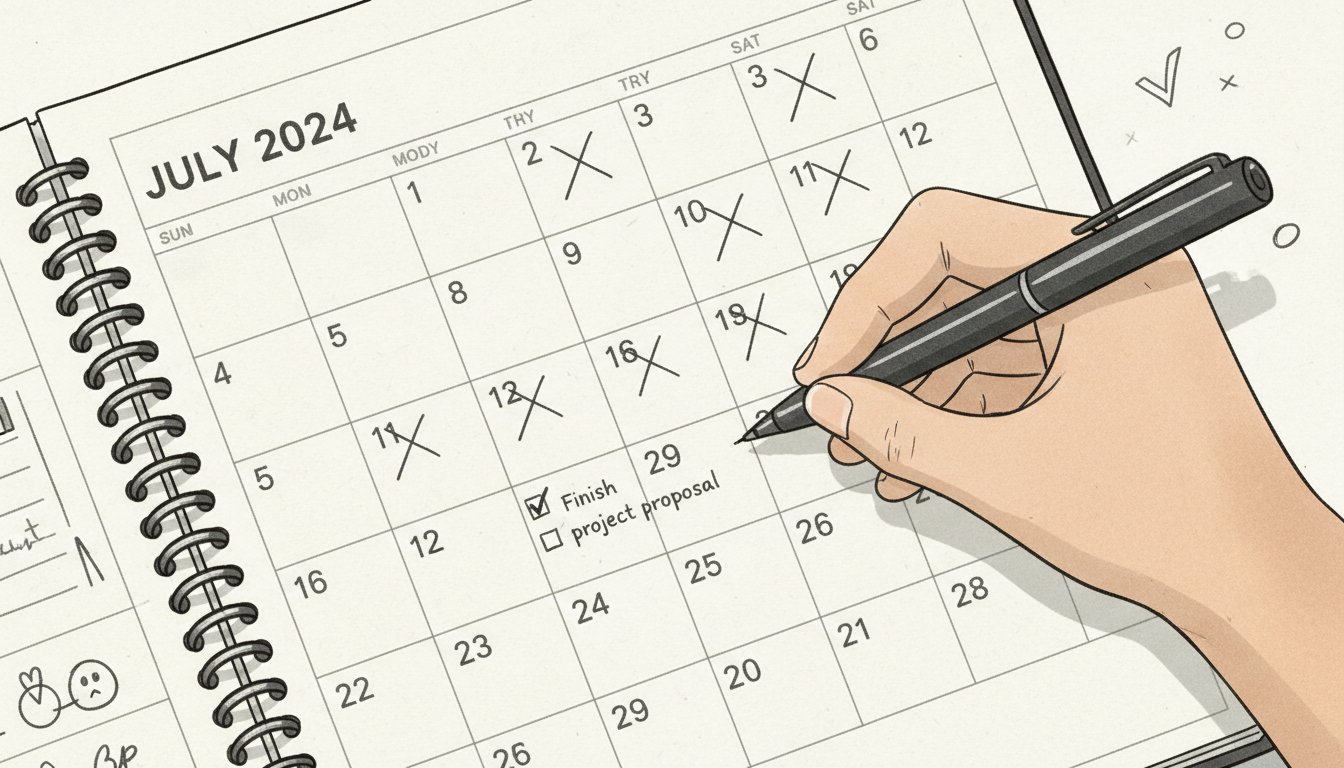
The most effective way to stay the course is to make your progress visual. When you track each day of your no-spend streak, you are leveraging the "don't break the chain" effect. It is much harder to justify a frivolous purchase when you have a 45-day streak staring back at you.
Using a countdown tool or a daily progress tracker allows you to see the finish line. It turns a daunting 100-day period into a series of small, manageable wins. When you see your streak grow, you begin to identify as someone who is disciplined and intentional with their money. That shift in identity is far more powerful than any temporary budget you might create on a spreadsheet.
Navigating the Challenges
You will hit a wall. It usually happens around day 20 or 30, when the excitement of the "fresh start" wears off and real life gets in the way. Maybe a friend invites you to a concert, or you see a sale on an item you’ve been eyeing for months. This is where most people quit.
When you feel the urge to break your streak, pause. Ask yourself: "Do I actually need this, or am I just looking for a hit of dopamine?" Research into behavioral psychology suggests that the urge to spend is often a response to emotional discomfort. By waiting 24 hours before making any non-essential purchase, you allow the emotional wave to pass. Often, when the next day arrives, the desire has completely vanished.
Building a Sustainable Future
As you approach day 100, don't just look forward to the day you can start spending again. Instead, look at what you’ve learned. You’ve likely discovered that you can survive perfectly well without the constant influx of new things. You’ve probably saved a significant amount of money, which serves as a powerful testament to your own capabilities.
The real success of this challenge isn't the money in your account at the end of the 100 days; it’s the peace of mind that comes from knowing you are in control. When you treat your finances with the same dedication you would give to any other skill, you build a foundation for long-term growth. Tracking your journey through these 100 days can help you stay consistent, and seeing your streak grow every day can be incredibly motivating as you navigate your path to financial freedom.
Key Takeaways
- Define your rules early: Be clear about what constitutes a "need" versus a "want" so you don't leave room for rationalizing impulse buys.
- Track your daily progress: Using a streak-based tracker makes your discipline visible and provides a psychological incentive to keep going.
- Identify your triggers: Use the 100 days to notice when you feel the urge to spend—boredom, stress, and fatigue are common culprits.
- Practice the 24-hour rule: When you feel the urge to spend, wait a day; the initial emotional pull often fades, leaving you with a clearer head.
- Identity shift: Remember that every day you stick to your goal, you are reinforcing the identity of someone who is intentional and disciplined with their financial resources.
Build Better Habits — Track Your Streaks
Set goals, build streaks, and transform your life one habit at a time.