
- Published on
The 100-Day Sleep Quality Challenge for Better Energy
You wake up, but your brain feels like it’s still stuck in a fog. You reach for the coffee, not because you enjoy the taste, but because it is the only thing standing between you and a mid-morning crash. We have all been there, dragging ourselves through the day, waiting for the clock to strike bedtime so we can start the cycle over again.
The problem isn't necessarily that you aren't sleeping; it is that you aren't sleeping well. Your circadian rhythm—that internal clock governing your wakefulness and rest—is likely out of sync with your daily habits. By committing to a 100-day sleep quality challenge, you can move away from surviving your mornings and toward actually thriving in them.
Understanding the Circadian Rhythm
Your body operates on a roughly 24-hour cycle known as the circadian rhythm. This internal clock is heavily influenced by external cues, primarily light and temperature. When you expose yourself to bright light at night or stay up late staring at a screen, you are essentially telling your brain that it is still daytime, which suppresses melatonin production and disrupts your natural ability to wind down.
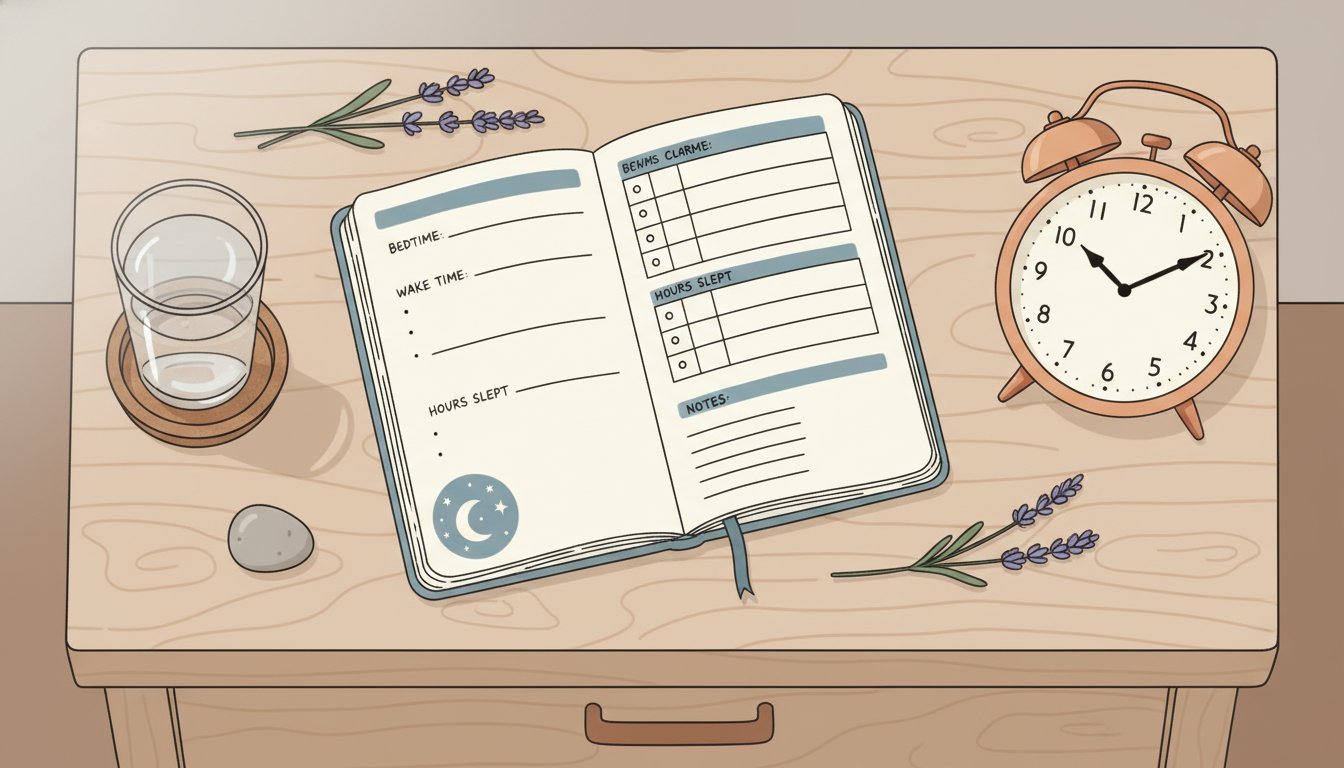
Think about it this way: your body is a biological machine that expects consistency. If you go to sleep at 10:00 PM one night and 2:00 AM the next, your internal clock cannot calibrate effectively. This mismatch leads to "social jetlag," leaving you feeling perpetually behind. By tracking your sleep patterns over a 100-day period, you aren't just logging hours; you are gathering data on how your body responds to specific habits like caffeine intake, light exposure, and evening routines.
The 100-Day Framework for Better Sleep
A 100-day challenge might sound daunting, but it is the perfect window to turn a conscious effort into an unconscious habit. During this time, you will experiment with your environment and your schedule to find what truly moves the needle for your energy levels.
Phase 1: The Foundation (Days 1–30)
In the first month, focus on consistency rather than perfection. Your primary goal is to wake up and go to sleep at the same time every single day, including weekends. This stabilizes your circadian rhythm. During this phase, use a simple tracking tool to note your wake time and how rested you feel on a scale of one to five. Seeing your streak of consistent bedtimes begin to grow can provide the motivation you need to avoid that late-night scroll.
Phase 2: Environmental Optimization (Days 31–60)
Now that your schedule is stable, look at your surroundings. Is your room dark enough? Is it cool? Research from institutions like the Harvard Medical School suggests that keeping your bedroom temperature around 65 degrees Fahrenheit can significantly improve sleep quality. Start tracking your evening habits—like when you have your last cup of coffee or when you put your phone away—to see if these small changes correlate with higher "rested" scores in your tracker.
Phase 3: Fine-Tuning and Mastery (Days 61–100)
By the final month, you are no longer guessing what works; you have the data to prove it. Use this time to refine your routine based on what you learned in the previous 60 days. Maybe you discovered that reading for 15 minutes is better for your brain than listening to a podcast. Or perhaps you found that a specific light-blocking curtain made a noticeable difference in your ability to fall asleep.
Why Tracking Matters for Your Energy
It is easy to lie to ourselves about how much sleep we are actually getting. We might think we slept "fine" until we look at our data and realize we were tossing and turning for hours. Tracking provides an objective mirror. When you see a visual representation of your progress—a streak of 20 or 50 days where you hit your sleep goals—it becomes much harder to justify the habits that sabotage your rest.
If you find yourself struggling with persistent insomnia or severe sleep issues, please reach out to a professional or a trusted person in your life. Sleep is a pillar of health, and professional guidance is sometimes necessary to address underlying concerns. That said, for most people, the challenge lies in the friction between our modern lifestyle and our ancient biology. A visual record of your sleep quality allows you to spot patterns you would otherwise miss, helping you build a sustainable routine that yields results you can actually feel.

Tips for Staying Consistent
Consistency is not about being perfect; it is about the ability to reset. If you have a bad night, don't let it ruin your entire challenge. Instead, use it as a data point. What happened that day? Did you have an extra cup of coffee? Did you work late?
Consider these strategies to keep your momentum:
- The 10-Minute Wind-Down: Dedicate the last 10 minutes before bed to something analog. No screens, just breathing, stretching, or reading.
- Morning Sunlight: Get outside as soon as possible after waking. This helps "set" your internal clock for the day.
- Review Your Data: Once a week, look back at your tracked sleep scores. Celebrate the days where you felt energized. This positive reinforcement is a powerful driver for long-term change.
Key Takeaways
- Consistency is the ultimate sleep aid: Your circadian rhythm thrives on a predictable schedule. Going to bed and waking up at the same time is the most effective way to improve your energy levels.
- Data reveals the truth: We are often poor judges of our own sleep quality. Using tracking tools to log your rest helps you see the direct impact of your evening habits, such as screen time or caffeine consumption.
- Small changes create big results: You don’t need a miracle cure. By optimizing your room temperature, light exposure, and wind-down routine over 100 days, you can fundamentally shift your energy levels.
- Track to stay committed: Seeing your streak grow can be a powerful motivator. When you track your sleep, you turn a vague goal into a concrete milestone, making it easier to stick with your new habits even on the days you feel tempted to slip back into old patterns.
Build Better Habits — Track Your Streaks
Set goals, build streaks, and transform your life one habit at a time.