
- Published on
The 100-Day Journaling Habit for Self-Awareness
Most of us spend our lives reacting to the world rather than understanding our place in it. You wake up, you rush through your morning, you handle the fire of the day, and you repeat the process. By the time the weekend hits, you feel exhausted, yet you cannot quite point to what happened or why you feel the way you do.
Journaling is often recommended as the cure for this mental fog, but it feels like a daunting commitment. How are you supposed to find the time to write a novel every night? The truth is that journaling doesn't need to be a literary production. It just needs to be consistent. Committing to a 100-day journaling habit isn't about writing the perfect memoir; it’s about capturing the data of your own life to build a clearer picture of your internal world.
The Psychology of Writing It Down
When you write down your thoughts, you move them from the chaotic, abstract space of your mind into the concrete, logical space of the page. This is called "externalization." When a thought is stuck in your head, it’s just a feeling. When it’s on paper, it becomes an object you can examine, analyze, and—most importantly—let go of.
Research in cognitive psychology suggests that expressive writing can reduce intrusive thoughts and improve emotional regulation. Think of it as a "brain dump." By clearing the mental cache every day, you create room for more present, intentional living. When you track this habit over 100 days, you aren't just writing; you are creating a longitudinal study of your own personality. You will start to see patterns in your mood, your reactions to stress, and the things that genuinely bring you joy.
How to Start Your 100-Day Journey
The biggest mistake most people make is aiming for length. If you try to write three pages every single day, you will likely burn out by day 10. Instead, start with the "Three-Question Method." Every evening, answer these three prompts:
- What was the most significant emotion I felt today?
- What is one thing I could have handled better?
- What is one thing I am grateful for, no matter how small?
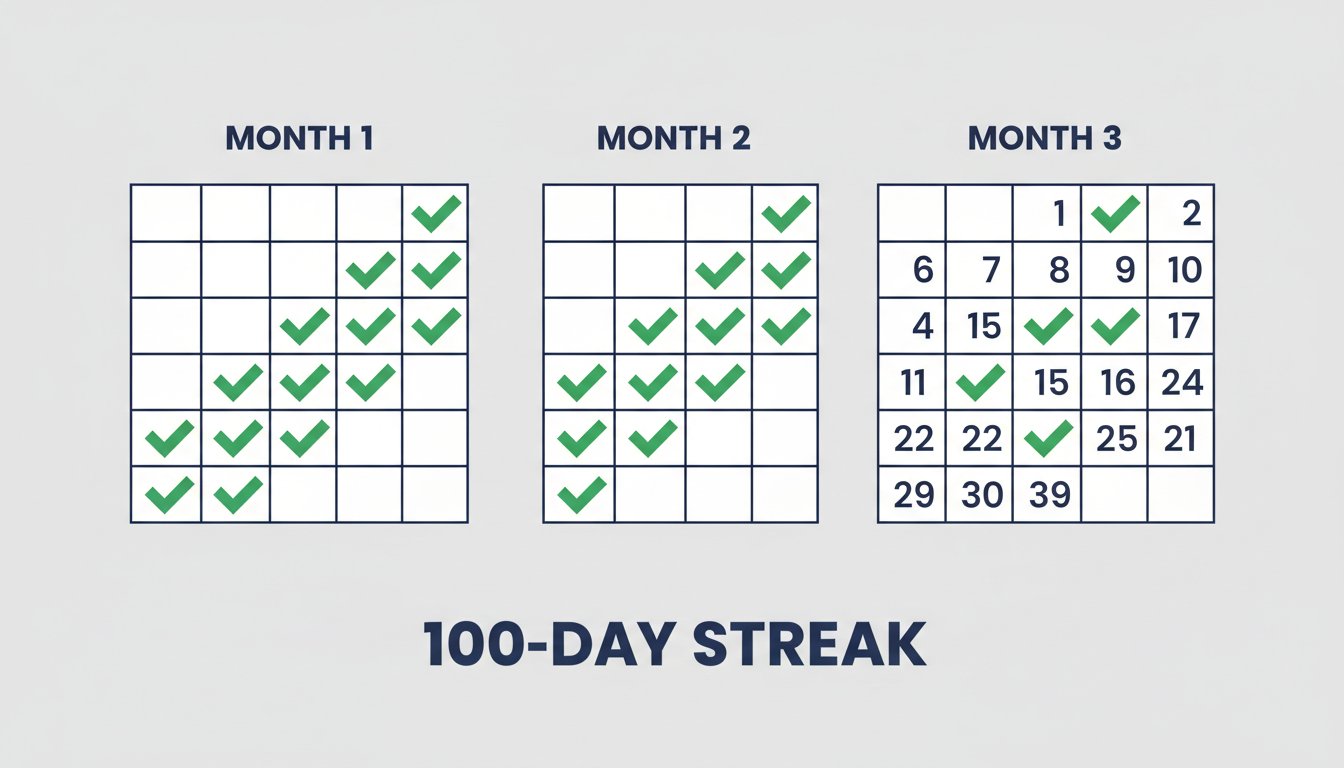
These three questions take less than five minutes to answer. They force you to practice self-reflection without demanding a massive time investment. If you want to make this even more effective, consider using a digital tracking tool to mark your progress. Seeing a streak grow as you complete your daily entries can be a powerful motivator, especially on those days when you feel like skipping.
Navigating the Middle Slump
Around day 20 or 30, the novelty will wear off. You will have a busy day, you will be tired, and you will think, "Does it really matter if I skip one day?" This is the moment where your 100-day goal is either won or lost.
The secret to consistency isn't willpower; it’s habit stacking. Link your journaling to a habit you already perform without fail, like brushing your teeth or drinking your morning coffee. Place your notebook or your tracking device right next to your toothbrush. When the physical trigger is there, the mental resistance to starting the task drops significantly.

It also helps to remember that a streak is just a way to visualize your commitment. If you use a tracker to monitor your progress, you gain a tangible sense of momentum. Tracking your streak doesn't mean you are perfect; it means you are prioritizing your self-awareness. If you miss a day, don't let it derail your progress. The goal is the 100-day milestone, not the perfection of the streak.
What Happens After 100 Days?
By the time you reach day 100, you will have a collection of insights that you simply could not have gained any other way. You will have documented your growth, your failures, and your breakthroughs. You might notice, for instance, that you consistently feel anxious on Tuesday afternoons—perhaps that’s a sign to change how you approach your weekly planning.
This is the transition from "writing" to "data analysis." You aren't just a person who writes; you are a person who knows themselves. You have moved from living on autopilot to living with intention. Once you reach this milestone, you will likely find that journaling is no longer a task you have to force yourself to do. It has become a part of who you are.
If you are feeling overwhelmed or if you find that tracking your thoughts leads to intrusive or distressing feelings, please reach out to a professional or a trusted person in your life. Journaling is a tool for self-discovery, but it is not a substitute for professional support when you are going through a difficult time.
Key Takeaways
- Externalize your thoughts: Writing things down turns abstract feelings into concrete objects you can manage, helping to clear mental clutter and improve emotional regulation.
- Keep it simple: Avoid the pressure to write long entries. Use a simple framework like three daily prompts to ensure the habit remains sustainable for the long haul.
- Build a streak: Use a tracking tool to monitor your progress. Seeing how many days you have consistently invested in yourself can be the motivation you need to push through the mid-habit slump.
- Focus on patterns: After 100 days, look back at your entries to identify recurring themes in your emotions and reactions. This data is the key to deep, lasting self-awareness.
- Consistency is key: Remember that small, daily efforts are far more powerful than sporadic, intense bursts of writing. Your future self will thank you for the clarity you built today.
Build Better Habits — Track Your Streaks
Set goals, build streaks, and transform your life one habit at a time.