
- Published on
The 10-Day Sleep Reset: A Guide to Better Bedtime Habits
You stare at the ceiling, counting the minutes until your alarm goes off. It is 2:00 AM, and your mind is racing through tomorrow’s to-do list, an awkward conversation from three years ago, and the sudden urge to check your phone. We have all been there. You tell yourself you will go to bed early, yet here you are, caught in the same cycle of exhaustion and frustration.
Sleep is not just a luxury; it is the foundation of your mental clarity, physical health, and emotional stability. When you are sleep-deprived, your brain struggles to regulate emotions and focus on even the simplest tasks. Research from the National Sleep Foundation suggests that adults need between seven and nine hours of quality sleep to function at their best. Yet, many of us treat sleep as the first thing to sacrifice when life gets busy.
The good news is that your biological clock is more adaptable than you think. You do not need months of radical lifestyle changes to see a difference. Often, a short, focused window is enough to break the cycle of poor rest. A 10-day sleep reset is a manageable, practical way to recalibrate your internal rhythm and build a foundation for long-term health.
Why 10 Days?
Psychologically, ten days is the perfect "sweet spot." It is long enough to see tangible benefits—like increased morning energy and improved mood—but short enough to feel achievable. When you commit to a shorter timeframe, you reduce the barrier to entry. You aren't trying to change your life forever; you are simply running an experiment on your own habits.
During these 10 days, your goal is to stabilize your circadian rhythm, the internal process that regulates the sleep-wake cycle. When you go to bed and wake up at inconsistent times, you essentially give yourself "social jetlag." By keeping your sleep window tight for 10 days, you signal to your body when it is time to produce melatonin and when it is time to wake up.
If you are struggling with chronic insomnia or severe sleep disorders, please reach out to a professional or a trusted person in your life. This guide is designed for the common "night owl" or the chronically stressed individual looking to regain control of their evenings.
The 10-Day Framework
To make this reset work, you need a plan that addresses both your environment and your behavior. Think of these 10 days as a transition period where you slowly peel away the distractions that keep you awake.
Days 1–3: The Audit
Start by tracking your current habits. Are you drinking caffeine after 2:00 PM? Are you scrolling through your phone until your eyes burn? For the first three days, simply notice what you are doing. You might find it helpful to use a habit tracking app to log your bedtime and wake-up time. Seeing the raw data of your sleep schedule can be a powerful wake-up call.
Days 4–7: The Barrier Phase
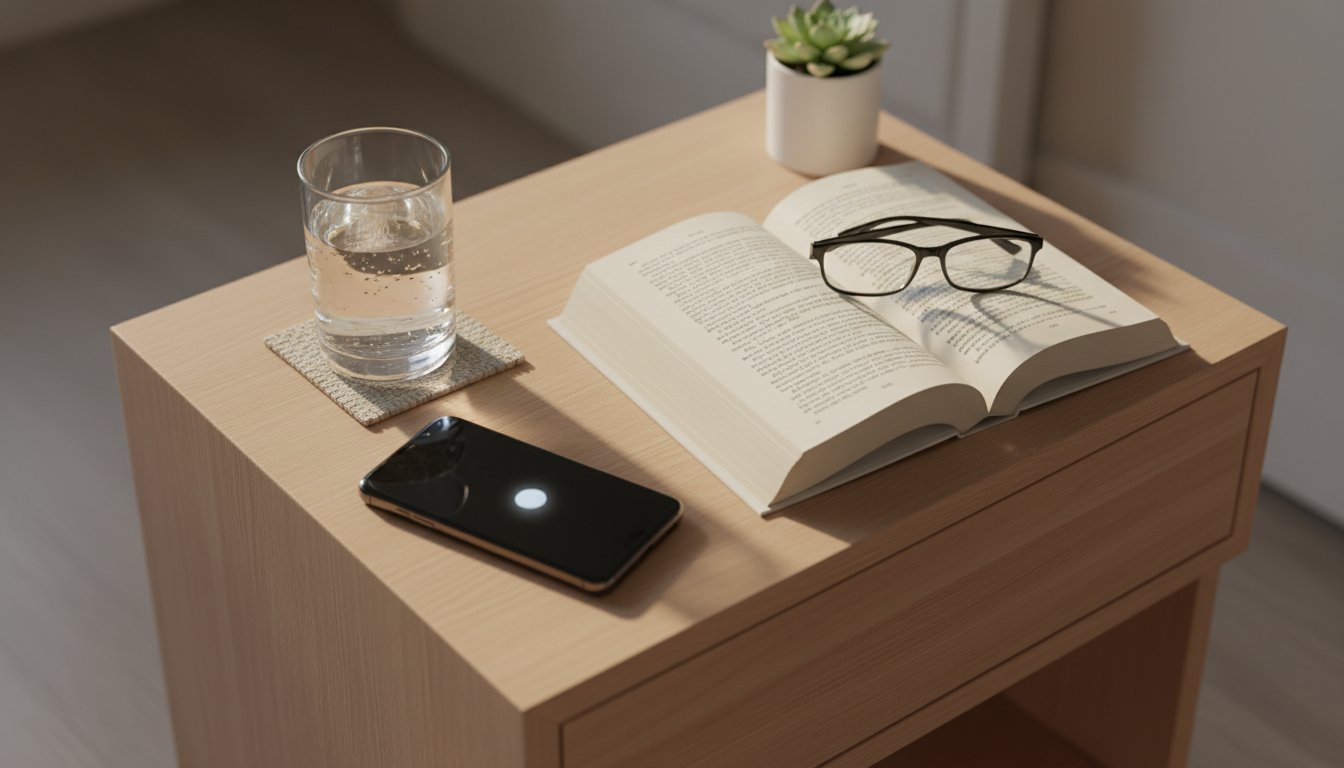
Now, begin to remove the friction. Create a physical "buffer zone" before bed. This means no screens 45 minutes before your desired sleep time. Replace the blue light of your phone with a book, a podcast, or gentle stretching. This is also when you should set a "lights out" alarm. Treat this alarm with the same respect you treat your morning wake-up call.
Days 8–10: The Stabilization
By now, you should feel a shift. Your body will start to crave sleep at the designated time. During these final days, focus on consistency. Even if you don't fall asleep immediately, keep the routine. The goal is to train your brain to associate your bed with rest, not with screen time or stress.

Practical Tips for Success
Consistency is the enemy of anxiety. When you know exactly what is coming next in your evening, your nervous system can finally downshift. Try these small, actionable changes:
- Dim the lights: Lowering the intensity of your home lighting an hour before bed mimics the setting sun, triggering your brain to prepare for sleep.
- Cool it down: Research consistently shows that a cooler bedroom temperature—usually between 60-67 degrees Fahrenheit—is optimal for deep sleep.
- Brain dump: If your mind races at night, keep a notebook by your bed. Write down everything you are worried about for the next day. Once it is on paper, your brain feels "allowed" to stop holding onto it.
Building a Lasting Routine
Once you finish your 10-day reset, the biggest mistake is sliding back into old habits. Think of your sleep as a streak you want to maintain. When you track how many days in a row you have hit your target bedtime, you create a visual representation of your progress. It becomes easier to say "no" to late-night social media scrolling when you have a 10-day or 20-day streak of good rest on the line.
Small, daily wins build your identity as someone who values their rest. If you miss a night, don't spiral. Just treat the next day as a fresh start. Using a countdown tool to mark your progress toward a milestone—like "30 days of consistent sleep"—can keep the motivation high long after the initial 10-day experiment is over.
Ultimately, your goal is to stop viewing sleep as a chore to finish and start viewing it as a tool for your success. You are the architect of your own energy levels. By taking control of these 10 days, you are setting the stage for a much more productive, focused, and calm version of yourself.
Key Takeaways
- The 10-day reset works because it is finite. A short, defined period makes it easier to stay disciplined without feeling overwhelmed by a permanent lifestyle change.
- Prioritize consistency over perfection. Your circadian rhythm thrives on predictability, so try to wake up and go to bed at the same time every day, even on weekends.
- Manage your light exposure. Limiting blue light from screens before bed is one of the most effective ways to signal to your body that it is time to wind down.
- Track your progress to stay motivated. Seeing your streaks grow can be a powerful reminder of why you started in the first place. Whether you use a habit tracking app or a simple journal, recording your nightly success makes the change feel real.
You have the power to change how you feel tomorrow morning. Start tonight. Turn off the phone, dim the lights, and give your body the rest it has been asking for.
Build Better Habits — Track Your Streaks
Set goals, build streaks, and transform your life one habit at a time.