
- Published on
Master Urge Surfing: Track Your Way Through Cravings
You’re sitting on the couch, and it hits you. That familiar, nagging itch in the back of your mind. Maybe it’s the urge to check your phone for the twentieth time this hour, or perhaps it’s the sudden, intense craving for something sweet after a long day. You try to push it away, but the more you resist, the louder it gets. It feels like a physical weight, a pressure that won't let up until you finally give in.
Here’s the thing: most of us treat cravings like an enemy we have to fight. We grit our teeth, white-knuckle our way through the tension, and hope our willpower doesn't snap. But willpower is a finite resource, and when we’re tired or stressed, it’s usually the first thing to go. There’s a better way to handle these moments, and it doesn't involve fighting at all. It’s called urge surfing.
Urge surfing is a mindfulness technique that helps you ride out cravings like a surfer riding a wave. Instead of trying to block the wave—which usually results in getting wiped out—you learn to stay on top of it until it naturally reaches the shore and dissolves. By changing your relationship with the urge, you take away its power over your behavior.
The Science of the "Crave Wave"
To understand why urge surfing works, we have to look at the psychology of a craving. Most people believe that once a craving starts, it will continue to grow in intensity until they satisfy it. If you don't eat the cookie or smoke the cigarette, you assume the discomfort will just keep rising until it becomes unbearable.
But research tells a different story. Cravings are not a straight line up; they are a bell curve. Psychologists, including the late Dr. Alan Marlatt who pioneered this technique, found that most urges peak within 20 to 30 minutes. If you can wait out those 20 minutes without giving in, the urge will naturally subside on its own.
Think about it this way: a craving is like an ocean wave. It starts small, builds momentum, reaches a peak (the crest), and then inevitably breaks and washes away. The problem is that when we are in the middle of a "big wave," we panic. We feel like we’re drowning, so we reach for the habit to save ourselves. Urge surfing teaches you that you don't need to be saved; you just need to keep your balance.
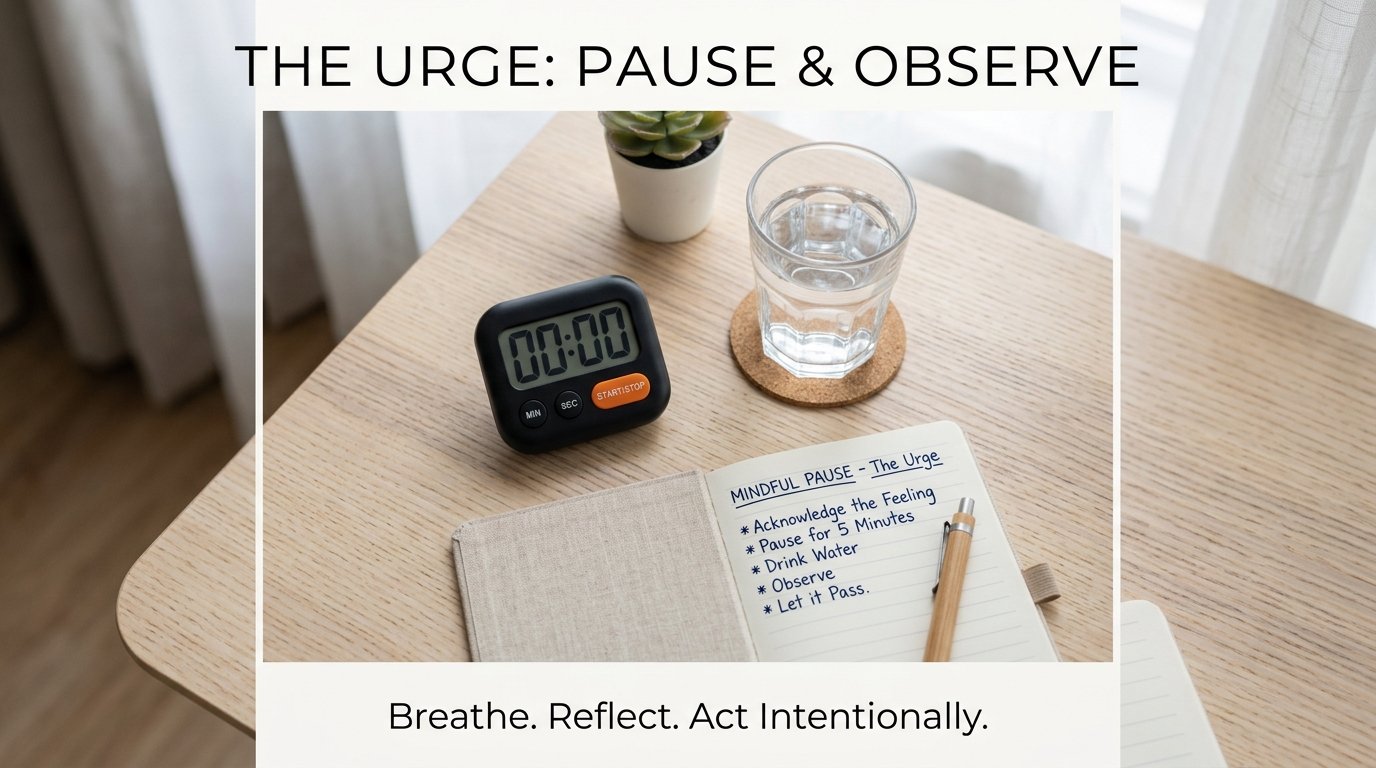
How to Surf the Urge: A Step-by-Step Guide
Urge surfing isn't about "thinking positive" or distracting yourself with a different task. It’s about being present with the discomfort. When you feel a bad habit calling your name, follow these four steps to ride the wave to the shore.
1. Identify the Urge
The moment you feel a craving, label it. Say to yourself, "I am having an urge to [habit]." This creates a small but vital gap between the feeling and the action. You are no longer the urge; you are the person observing the urge. Notice where it lives in your body. Is it a tightness in your chest? A restlessness in your hands? A dry throat? Simply acknowledge it without judgment.
2. Focus on the Breath
Once you’ve identified the physical sensations, bring your attention to your breathing. You don't need to change your breath; just notice the rise and fall of your chest or the air moving through your nose. Use your breath as your "surfboard." It is the steady object that keeps you afloat while the water around you is choppy.
3. Observe the Sensations
As the urge intensifies, pay close attention to how the sensations shift. Does the tightness move? Does it get warmer or cooler? You might notice that the urge isn't one solid block of "wanting." It’s a collection of flickering physical feelings. By focusing on the physical reality of the craving rather than the mental story ("I need this right now"), you de-escalate the emotional panic.
4. Release and Reassess
Eventually, you will notice the peak has passed. The tension starts to ebb. The "need" becomes a "thought." When the wave has finally washed up on the sand, take a moment to acknowledge that you survived it. You sat with the discomfort, and it didn't break you. Every time you do this, you are literally rewiring your brain’s reward system, teaching it that the habit is no longer the only way to find relief.
Why Tracking Your Progress Changes the Game
If urge surfing is the skill, then tracking is the fuel that keeps you practicing it. It is incredibly difficult to change a habit if you only look at your failures. When you give in to a craving, it feels like you're back at square one. But when you start tracking your successful "surfs," the narrative changes.
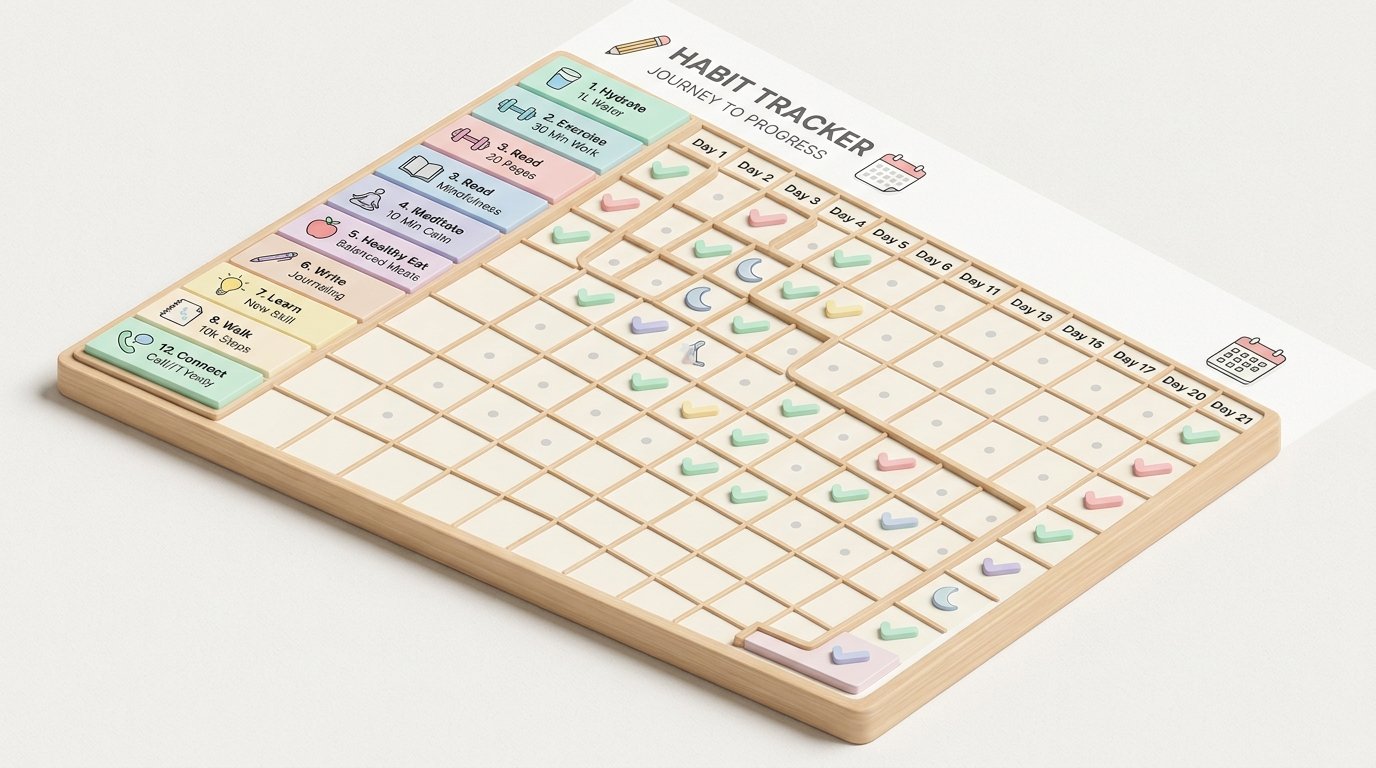
Using a habit tracking app to record your daily wins or "days since" you last gave in to a bad habit provides visual proof of your resilience. There is a specific kind of psychological power in seeing a streak grow. On day three, you might feel shaky. But on day 20? You’ve built a "streak" that you don't want to break. That visual progress becomes a shield against future cravings.
When you track your progress, you aren't just counting days; you are collecting evidence of your new identity. You are becoming someone who can handle discomfort. Seeing that you have successfully surfed 15 urges this week makes the 16th one feel much more manageable. You’ve done it before, and you have the data to prove it.
Real-World Applications: From Sugar to Smartphones
Urge surfing works for almost any impulsive behavior. Let’s look at how this looks in practice for two common struggles:
The Late-Night Snack: You’re watching TV and suddenly "need" chocolate. Instead of running to the kitchen, you sit back. You notice the craving feels like a hollow sensation in your stomach. You breathe. You watch the clock. You notice that after 15 minutes of focus, the "need" has turned into a mild "maybe later." You’ve surfed the wave.
The Social Media Loop: You’re working on a difficult task and feel a sudden itch to check your notifications. You recognize it as an urge to escape the boredom of work. You stay in your chair, feel the restlessness in your fingers, and breathe through it. Within three minutes, the "itch" fades, and you’re back in flow.
Building the Muscle of Consistency
It’s important to remember that you won't be a master surfer on day one. You might fall off the board. You might get "swamped" by a particularly large wave and give into the habit. That’s okay. The goal isn't perfection; it’s building a new skill.
If you're struggling with a deep-seated habit or addiction, please reach out to a professional or a trusted person in your life. Urge surfing is a powerful tool, but it works best as part of a broader support system.
The more you practice, the more you realize that urges are temporary. They are like clouds passing across the sky or weather moving through a valley. They feel permanent when you're in them, but they always, always pass. By using tools like countdowns for your goals or tracking your streaks, you give yourself the structure needed to stay the course when things get tough.
Think about your future self. In six months, you could be someone who is no longer a slave to every passing whim. You could be someone who feels a craving, smiles, and says, "I know what this is. I’ll just wait for it to pass."
Key Takeaways
- Cravings are temporary: Most urges peak and fade within 20 to 30 minutes if you don't feed them.
- Don't fight, observe: Instead of using willpower to suppress a craving, use mindfulness to observe the physical sensations in your body.
- Use your breath: Your breath acts as an anchor, keeping you present while the urge reaches its peak.
- Track your wins: Seeing your progress through "days since" tracking or a habit streak reinforces your new identity and keeps you motivated. Seeing your progress visually can make the difference between giving up and staying consistent.
- Practice makes progress: Like any skill, urge surfing gets easier the more you do it. Each successful "surf" rewires your brain for better self-control.
By learning to ride the waves of your impulses, you reclaim your time, your health, and your focus. Start today—the next time an urge hits, don't fight it. Just grab your board and start surfing.
Build Better Habits — Track Your Streaks
Set goals, build streaks, and transform your life one habit at a time.