
- Published on
The 30-Day Rejection Streak: Gamify Failure for Confidence
Have you ever kept a question to yourself because you were 99% sure the answer would be "no"? Maybe it was asking for a small discount at a coffee shop, or perhaps it was pitching a bold idea to your boss. We often avoid these moments because the sting of rejection feels like a physical blow. But what if the goal wasn't to get a "yes," but to collect as many "nos" as possible?
The fear of rejection is one of the most deep-seated human anxieties. For our ancestors, being rejected by the tribe meant literal death. Today, a "no" won't kill you, but your brain hasn't quite received the memo. When we face social rejection, our amygdala—the brain's alarm system—fires off as if we’re being chased by a predator. This biological hangover keeps us playing small, staying in our comfort zones, and missing out on opportunities that are just one "ask" away.
Here’s the thing: confidence isn't the absence of fear; it's the result of realized resilience. You don't become confident by succeeding all the time. You become confident by realizing that when you fail, you’re still okay. This is where the 30-Day Rejection Streak comes in. By gamifying failure, you turn your biggest fear into a metric for success.
The Psychology of Exposure
In the world of psychology, there is a concept called "exposure therapy." It’s used to help people overcome phobias by gradually and repeatedly exposing them to the thing they fear in a controlled way. If you’re afraid of spiders, you might start by looking at a photo of one, then being in the same room as one in a cage, and eventually letting one crawl near you.
The 30-Day Rejection Streak is exposure therapy for your social ego. When you intentionally seek out rejection, you are desensitizing your nervous system. The first "no" might make your heart race and your face turn red. The tenth "no" might just make you shrug. By the thirtieth "no," you start to realize that rejection is rarely a reflection of your worth—it’s usually just a reflection of the other person’s circumstances or preferences.
Think about it this way: every time you get rejected and survive, you are proving to your brain that the "danger" wasn't real. You are building a mental callus. Over time, the wall of fear that used to stop you from taking risks starts to crumble.

How the 30-Day Rejection Streak Works
The rules are simple but challenging. For 30 consecutive days, you must make one request every day that has a high probability of being rejected. The goal is to get a "no." If you get a "yes," it doesn't count toward your streak (though you still get whatever you asked for, which is a win-win).
The key is to make requests that are slightly outside the norm but still respectful. You aren't trying to be a nuisance; you’re trying to stretch your boundaries.
Here are some examples of "rejection missions":
- Ask for a 10% discount on your latte "just because."
- Ask a stranger for a compliment.
- Ask to skip the line at a grocery store (with a polite reason).
- Ask a local business if you can hang a flyer for a fake event.
- Ask to borrow $100 from someone you barely know.
- Ask for a tour of a restaurant's kitchen after your meal.
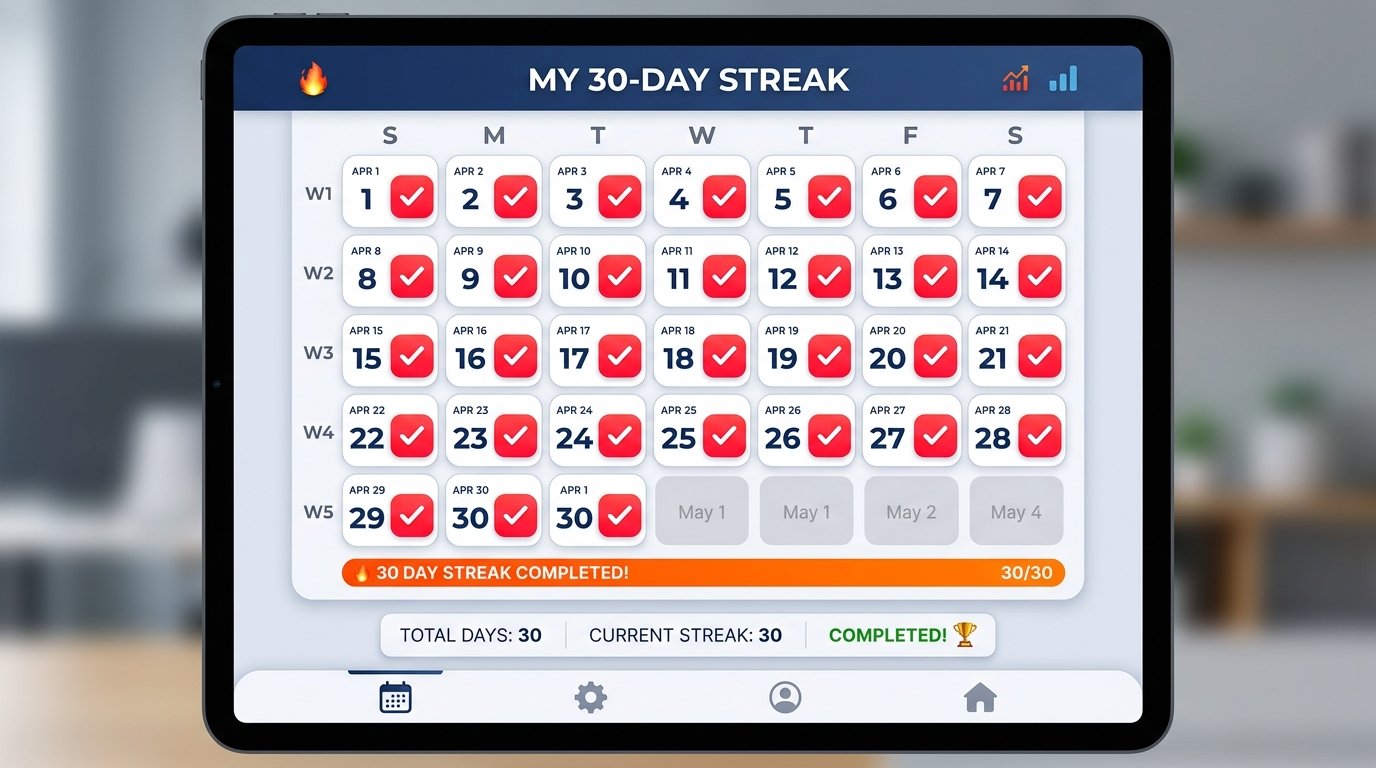
The magic happens when you start tracking your progress. Seeing a growing streak of days where you faced your fear can be incredibly motivating. When you use a habit tracking tool or a simple calendar to mark off each day you survived a "no," you stop seeing rejection as a loss and start seeing it as a point on the board.
Leveling Up Your Asks
As you move through the month, you’ll notice that the "small" asks stop feeling scary. That’s when it’s time to level up. You can categorize your missions into three tiers:
Tier 1: The "Low Stakes" Asks
These are interactions with strangers you’ll likely never see again. Asking for a free refill when it’s not offered or asking someone for directions to a place you already know. These are great for the first week because the social cost is nearly zero.
Tier 2: The "Professional" Asks
In the second and third weeks, move the challenge into your work life. Ask for a meeting with a senior executive, or ask to be the lead on a project you feel slightly underqualified for. The goal here is to realize that even in professional settings, a "no" isn't a career-ender—it’s often just a "not right now."
Tier 3: The "Personal" Asks
These are the hardest. They involve people you care about or situations where you feel vulnerable. Asking for a favor that feels "too big" or being honest about a boundary you’ve been afraid to set.
But there’s a catch. You have to be okay with the outcome. If you’re struggling with the emotional weight of these interactions, please reach out to a professional or a trusted person in your life to help you process these feelings.
Why Tracking the Streak Changes the Game
Most people give up on self-improvement because they don't see immediate results. Confidence is invisible; it grows in the background. This is why gamifying the process is so effective. When you track your "rejection streak," you are creating a visual representation of your courage.
Each day you add to your streak, you are reinforcing a new identity: someone who takes action regardless of the outcome. In many ways, the "no" becomes the prize. It’s proof that you showed up. It’s proof that you pushed the envelope. If you go 30 days without a single "no," it actually means you aren't asking for enough. You're playing it too safe.
Using a countdown to the end of the 30 days or a streak counter helps keep the momentum going when you have a "bad day." A bad day in this challenge is a day where you were too afraid to ask. Seeing that streak reset to zero is a powerful incentive to just go out and get that "no" over with.
The "Yes" Side Effect
An interesting thing happens about halfway through this challenge: you start getting a lot of "yeses."
When you ask for things without the desperate need for approval, your energy changes. You become more relaxed, more direct, and ironically, more persuasive. You’ll find that people are often much more willing to help or say "yes" than we give them credit for.
By the end of the 30 days, you’ll likely have a collection of "yeses" that you never would have received if you hadn't been hunting for "nos." You might get a free coffee, a better seat on a plane, or a new connection that changes your career path. But more importantly, you’ll have the confidence to know that if the answer is "no," you’ll wake up the next morning just fine.
Practical Steps to Start Today
You don't need to wait for a "Life Reset" or a New Year's resolution to start. You can start this afternoon.
- Pick your first mission: Choose something very low stakes. Ask a cashier if they have any "secret coupons" they can apply to your order.
- Commit to the streak: Decide that for the next 30 days, you will not go to bed until you have made your ask.
- Find a way to track it: Whether it's a dedicated habit tracking app, a countdown on your phone, or a physical journal, make your progress visible. Seeing your streak grow every day can be motivating.
- Reflect on the feeling: Immediately after the rejection (or the "yes"), take 30 seconds to breathe. Notice that your heart rate is slowing down. Notice that the world didn't end.
The 30-Day Rejection Streak isn't about becoming someone who doesn't care about others. It’s about becoming someone who cares more about their growth than their temporary comfort.
Key Takeaways
- Rejection is a skill: The more you experience it, the less power it has over your emotions.
- Gamify the failure: Turn "nos" into points on a streak to shift your focus from the outcome to the effort.
- Start small: Use low-stakes interactions to build the "courage muscle" before moving to professional or personal asks.
- Visual progress matters: Tracking your daily streak provides the necessary motivation to keep going when the fear feels heavy.
- The goal is resilience: You aren't looking for a "yes," you're looking for the realization that you are unstoppable regardless of the answer.
If you're ready to stop letting "maybe" and "what if" run your life, start your streak today. The first "no" is waiting for you.
Build Better Habits — Track Your Streaks
Set goals, build streaks, and transform your life one habit at a time.