
- Published on
Countdown to Change: Managing Life Transitions
You’ve spent weeks dreaming about your new life. You’ve signed the lease, accepted the offer, or booked the one-way ticket. But now that the date is actually approaching, that wave of excitement has started to feel a lot like dread. The boxes are still stacked in the corner, your to-do list is growing by the hour, and you can’t help but wonder if you’ve made a massive mistake.
It’s completely normal to feel this way. Major life transitions—like moving to a new city, starting a high-stakes job, or navigating a total lifestyle overhaul—trigger a specific type of stress. Our brains naturally prefer the comfort of the familiar. When we prepare to leave that behind, our nervous system often interprets the uncertainty of the future as a threat.
The secret to moving through this phase isn't trying to suppress the anxiety. It’s about giving your brain a structure to hold onto. By using a countdown, you can transform that vague, floating sense of overwhelm into a series of manageable, actionable steps.
Turning Anxiety into a Concrete Timeline
When we look at a big transition as one giant, looming event, it feels insurmountable. Your brain sees "Move to New City" and immediately registers it as a massive, dangerous mountain. You end up paralyzed by the sheer scope of the task.
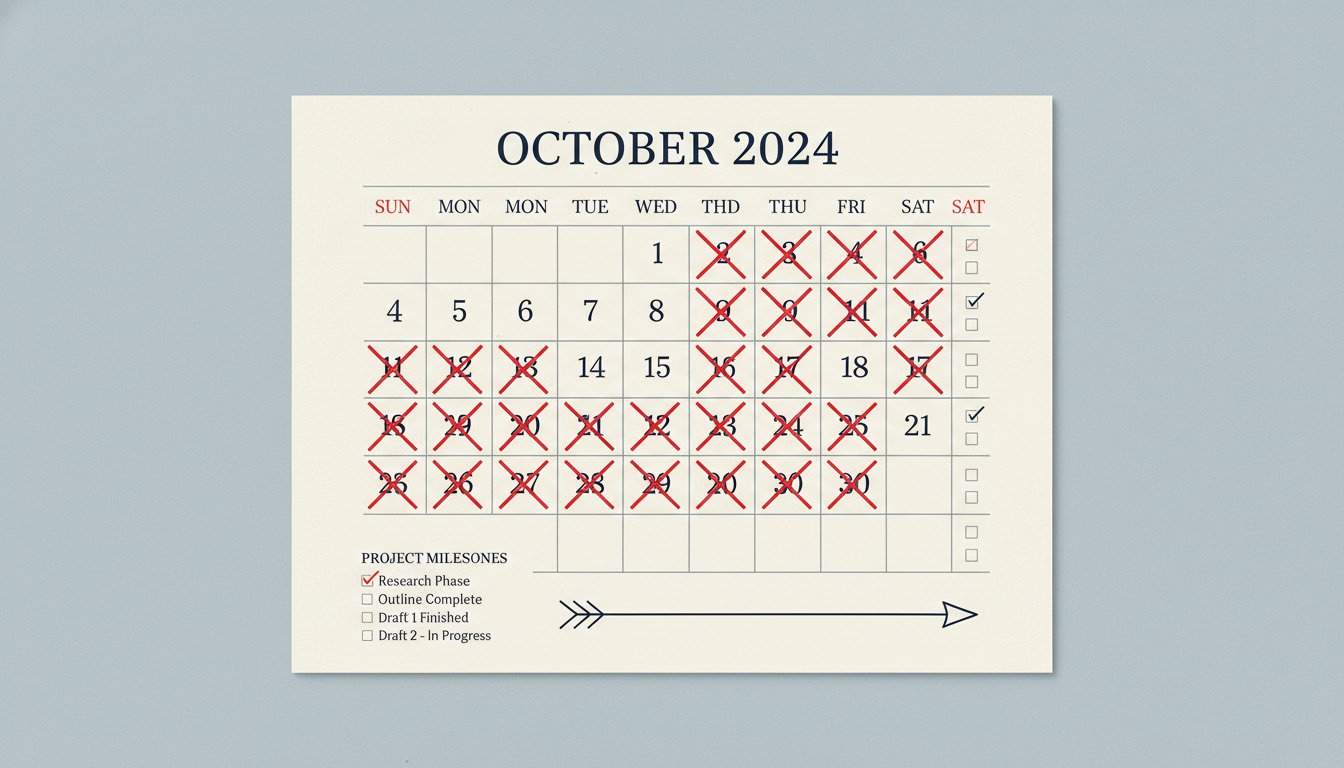
A countdown changes the perspective. Instead of focusing on the final date, you focus on the interval. When you break the time remaining into segments—perhaps 30 days, 14 days, and 7 days—the event stops being a looming monster and starts being a project.
Psychologically, this is known as "chunking." Research suggests that when we break large, complex tasks into smaller, time-bound pieces, we reduce the cognitive load on our working memory. You aren't "moving your entire life"; you are "packing the kitchen today." You aren't "starting a new career"; you are "researching industry standards this morning."
How to Build Your Transition Countdown
To make this effective, you need to be intentional about what you track. Don't just countdown the days until you leave; countdown the milestones that get you there.
Phase 1: The Foundation (30 Days Out)
At the one-month mark, the transition feels distant but inevitable. This is the time for "macro" planning. Use this phase to handle the administrative heavy lifting.
- Audit your current state: What needs to be canceled, transferred, or settled?
- Set the vision: What do you want your first week in the new environment to look like?
- The visual anchor: Use a countdown tool to track exactly how many days remain. Seeing the number decrease helps you visualize the approaching finish line as a positive transition rather than a deadline to be feared.
Phase 2: The Momentum (14 Days Out)
By the two-week mark, reality starts to sink in. This is when the "what-ifs" usually start to surface. Combat this by shifting to "micro" tasks.
- Daily habits: Even if your world is in chaos, keep one or two habits consistent. If you exercise every morning, keep doing it. Maintaining a small, stable ritual acts as an emotional anchor when everything else is in flux.
- The "One Thing" rule: Commit to finishing only one meaningful task per day related to the transition. Whether it’s updating your address or organizing your packing, checking off that single box prevents the "everything is falling apart" narrative from taking hold.
Phase 3: The Final Stretch (7 Days Out)
In the final week, your brain might try to convince you to panic. This is the time to prioritize mental clarity over productivity.
- Closing rituals: Spend time with the people who matter, or visit your favorite local spots. Giving yourself permission to say goodbye to the old chapter is just as important as preparing for the new one.
- Prepare the landing: Focus on the first 24 hours of your new situation. Knowing exactly where you’ll sleep or how you’ll get to your first day of work removes the unnecessary friction that fuels last-minute anxiety.
Staying Grounded During the Shift
If you’re moving cities or starting a new job, the temptation is to try to control every single outcome. But the truth is, you can’t predict how the first day will go. You can only control your preparation and your mindset.
Tracking your progress is one of the most effective ways to stay grounded. When you use a countdown tool to see how far you’ve come, you remind yourself that you are capable of change. You aren't just waiting for the day to arrive; you are actively moving toward it.
If you find that the anxiety becomes truly debilitating—if you’re losing sleep, unable to eat, or experiencing persistent panic—please remember that you don't have to carry this alone. If you're struggling, please reach out to a professional or a trusted person in your life. There is no shame in seeking support during a period of significant change.
The Power of the "After"
We often focus so much on the countdown to the event that we forget to plan for the "after." When the big day finally arrives, your brain might feel a strange sense of deflation. This is normal. You’ve been running on adrenaline, and now that the event is here, the quiet can feel unsettling.
Continue to use your tracking tools even after the transition. Maybe you start a new countdown for your first 30 days in the new city. Or perhaps you track the "days since" you started the new job to celebrate your growth and adjustment period.
Small, consistent progress is what builds a new life. Every day you show up, you are rewriting your identity. By managing your transition with a countdown, you’re telling yourself that you are in control of your future, and that is a powerful place to start.
Key Takeaways
- Break it down: Use a countdown to turn a massive life event into small, manageable milestones, which reduces cognitive load and anxiety.
- Maintain anchors: During times of transition, keep at least one or two daily habits consistent to provide emotional stability.
- Track your progress: Seeing your journey visually represented through countdowns or progress trackers helps maintain momentum and reminds you of your capability.
- Plan for the landing: Don't just focus on the departure; focus on the first 24 hours of your new chapter to minimize friction.
- Seek support: If the weight of the transition becomes too much to handle, reach out to a professional or a trusted friend—you don't have to navigate big changes in isolation.
Build Better Habits — Track Your Streaks
Set goals, build streaks, and transform your life one habit at a time.