
- Published on
30-Day Deep Work Challenge: Master Your Focus
You’ve probably had one of those days where you sat at your desk for eight hours, felt busy the entire time, and yet somehow ended the day with nothing to show for it. You answered thirty emails, joined two "quick" calls, and checked your favorite news site more times than you’d like to admit. You’re exhausted, but the needle on your most important project hasn't moved an inch.
This is the reality of "shallow work"—tasks that are cognitively easy and often performed while distracted. The opposite of this is Deep Work. Coined by author Cal Newport, Deep Work is the ability to focus without distraction on a cognitively demanding task. It’s a superpower in our modern economy, yet it’s a skill that most of us are losing.
The good news? Focus is a muscle. If yours has withered from too much scrolling and context-switching, you can build it back. This 30-day challenge is designed to take you from a fragmented attention span to a state of mastery where you can produce high-quality work in half the time.
Why Your Brain Struggles to Focus
Before we start the challenge, we need to understand the enemy. It’s not just "distraction" in a general sense; it’s a psychological phenomenon known as attention residue.
Research by Sophie Leroy, a business professor at the University of Minnesota, suggests that when you switch from Task A to Task B, your attention doesn’t follow immediately. A "residue" of your thoughts remains stuck on the previous task. If you’re working on a report but quickly check an email about a different project, your brain is now split. Even after you close the email, you aren't fully back in the report. You are operating at a lower cognitive capacity for up to 20 minutes after every distraction.
If you check your phone every 15 minutes, you are effectively never working at 100% capacity. You are living in a permanent state of mental fog. The 30-Day Deep Work Challenge is about clearing that fog by training your brain to stay on one thing for an extended period.
Phase 1: Setting the Foundation (Days 1–7)
The first week isn't about doing four-hour marathons. If you tried that now, you’d likely burn out by Wednesday. Instead, we’re going to focus on environment and short, intense bursts.
Step 1: Define Your "Deep" Tasks
Not all work is deep work. Deep work is the stuff that requires your best thinking: writing, coding, strategizing, or learning a complex new skill. Make a list of these tasks. Everything else—emails, Slack, filing, basic admin—is shallow work.
Step 2: Choose Your Time and Place
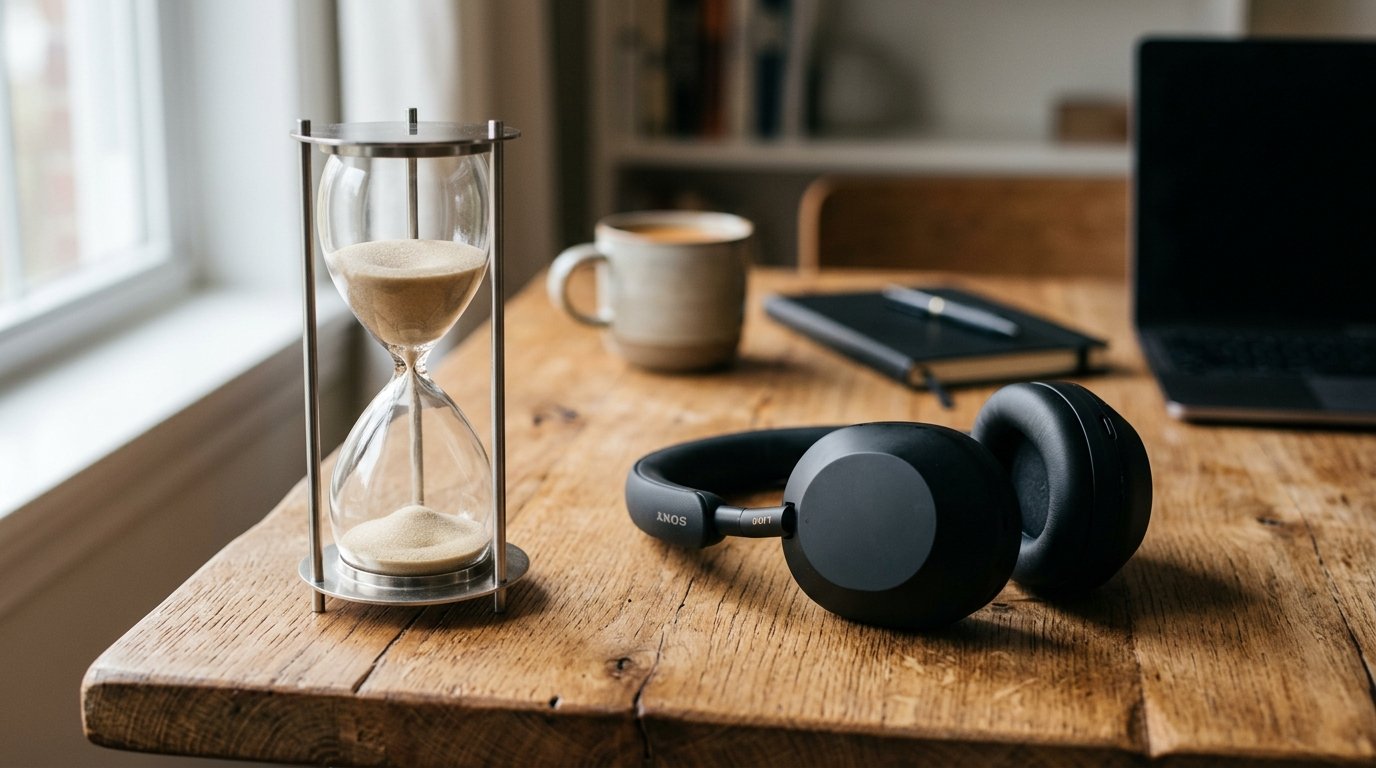
Deep work requires a "sanctuary." This might be a specific desk, a certain pair of noise-canceling headphones, or even a specific time of day. Most people find their peak cognitive energy is in the morning, shortly after waking up.
Step 3: The 60-Minute Block
For the first seven days, your goal is simple: one 60-minute block of deep work per day.
- The Rule: No phone in the room. No browser tabs open except what you need for the task. No "just checking" anything.
- The Tactic: If a distracting thought pops into your head (e.g., "I need to buy milk"), write it down on a physical piece of paper and immediately return to the task. This clears the "open loop" in your brain without breaking your focus.
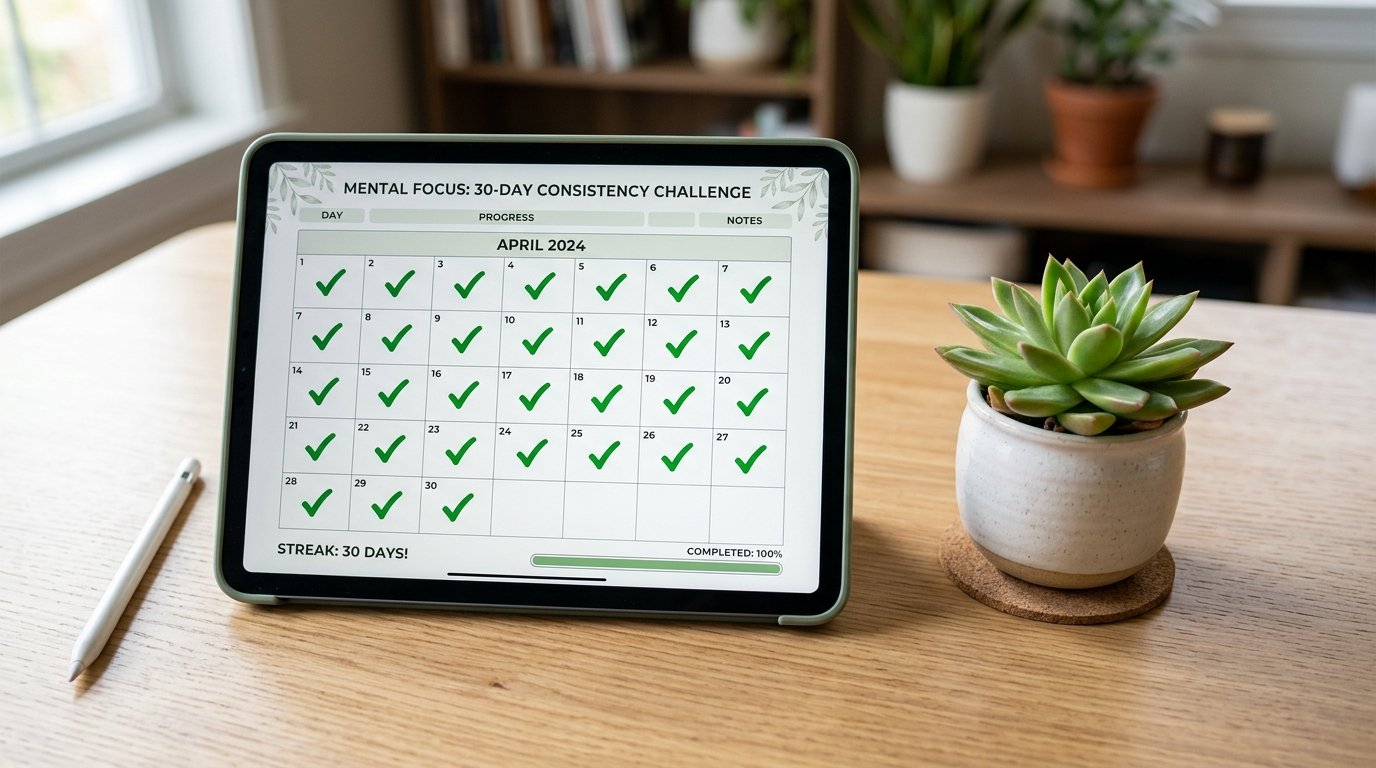
Seeing your streak grow during this first week is vital. When you track your progress daily, you start to view yourself as someone who can focus, which is half the battle.
Phase 2: Increasing the Load (Days 8–14)
By the second week, your brain will start to protest. The initial "novelty" of the challenge has worn off, and the itch to check social media will feel stronger. This is where the real training begins.
In Phase 2, we move from 60 minutes to 90 minutes. 90 minutes is often cited as the "sweet spot" for deep work because it allows enough time to enter a flow state—that feeling where time disappears and the work feels effortless—without reaching the point of total mental exhaustion.
Embrace Productive Boredom
One of the biggest obstacles to deep work is that we’ve trained our brains to never be bored. The moment we stand in a grocery line or wait for an elevator, we pull out our phones. This trains the brain to expect constant stimulation.
During this week, try to find moments of "nothingness." When you’re walking to your car or waiting for coffee, don't reach for your phone. Let your mind wander. This strengthens your "boredom tolerance," making it easier to stay focused when your work gets difficult or tedious.
Phase 3: Managing the Resistance (Days 15–21)
You are now halfway through. At this point, you’ve likely noticed a significant increase in your output. However, you’ll also hit what I call "The Wall." This is the day when the work is hard, your coffee isn't kicking in, and you feel like you’ve hit a plateau.
The "Shut Down" Ritual
To sustain deep work, you must also master deep rest. If you’re constantly thinking about work at 9:00 PM, you aren't recovering. Create a ritual to signal the end of your workday. It could be closing your laptop, checking your calendar for tomorrow, and saying out loud, "Shut down complete."
This ritual helps clear the attention residue from your workday so you can be present with your family or hobbies. Remember, the quality of your deep work depends on the quality of your downtime.
Phase 4: Mastery & Integration (Days 22–30)
In the final stretch, we aim for the "Grandmaster" level: two 90-minute blocks of deep work per day, separated by a long break.
For most professionals, three hours of true deep work per day is more than enough to outperform almost everyone else in their field. It sounds like a small amount of time, but when it is 100% focused, it is incredibly powerful.
The Distraction Audit
Look back at the last three weeks. What was your biggest "leak"?
- Was it a specific website? Use a site blocker.
- Was it a specific person interrupting you? Communicate your "deep work hours" to them.
- Was it your own internal anxiety? Keep using that distraction sheet.
As you approach the end of the 30 days, using a countdown can keep the momentum high. Seeing that you only have five days left to complete the challenge provides that extra push to not break the chain.
What to Do When You Fail
You will likely have a day where you fail. You’ll get sucked into a YouTube rabbit hole or spend three hours on a low-priority task.
When this happens, don't throw away the whole challenge. The goal isn't perfection; it’s a shift in your identity. In the past, you were a "distracted worker." Now, you are a "deep worker who had a bad day." There is a massive difference between the two. Simply reset, look at your tracking tool, and make sure you get back on the streak tomorrow.
If you find that your inability to focus is causing significant distress or interfering with your mental health, please reach out to a professional or a trusted person in your life. Sometimes, persistent focus issues are tied to burnout or other underlying conditions that require more than just a habit change.
Key Takeaways
- Focus is a Skill: You aren't born with or without it. You build it through consistent, deliberate practice, just like a physical muscle.
- Eliminate Attention Residue: Every "quick check" of your phone costs you 20 minutes of peak brainpower. Guard your attention ruthlessly during your deep work blocks.
- Start Small, Scale Slowly: Don't aim for four hours on Day 1. Start with 60 minutes and gradually increase your capacity as your boredom tolerance grows.
- Track Your Progress: Visualizing your consistency through streaks or a 30-day countdown makes the habit feel real and provides the dopamine hit your brain usually seeks from distractions.
- Master the Shut Down: High-intensity focus requires high-intensity recovery. Create a clear boundary between your work life and your personal life to avoid burnout.
By the end of these 30 days, you won't just have finished a challenge. You will have reclaimed your mind from the "distraction economy" and discovered what you are truly capable of producing when you give a task your full, undivided attention. Ready to start Day 1?
Build Better Habits — Track Your Streaks
Set goals, build streaks, and transform your life one habit at a time.