
- Published on
The 30-Day Stretching Streak: Benefits and Results
You wake up, swing your legs over the side of the bed, and as you stand up, your lower back lets out a groan that sounds like a rusty gate. You’re in your late twenties or thirties, yet you feel like you’ve aged decades overnight. If you spend most of your day hunched over a laptop or scrolling through a phone, your muscles aren't just tired—they’re actually shortening and tightening.
The reality is that most of us are "freezing" our bodies into a seated position. We focus on intense workouts or 10,000 steps, but we often ignore the glue that holds it all together: mobility. Committing to a 30-day stretching streak isn't just about being able to touch your toes. It’s about a total nervous system reset. When you track your progress daily, you move from "I feel stiff" to "I feel fluid."
Why Daily Stretching is a Psychology Game
Most people fail at stretching because the results aren't as "loud" as lifting weights. You don't see a bulging bicep after a session of pigeon pose. This is where the psychology of the streak becomes your best friend. In the beginning, stretching feels like a chore. You’re tight, it’s slightly uncomfortable, and you’d rather be doing literally anything else.
But think about it this way: your brain loves consistency more than intensity. When you commit to a streak, you stop negotiating with yourself. You don't ask, "Do I feel like stretching today?" Instead, you look at your progress and think, "I'm not breaking this 15-day streak." This shift from motivation to identity is where the real magic happens. You stop being someone who "tries to stretch" and become a person who "is active and mobile."
Days 1–7: The "Awakening" Phase
The first week is, quite frankly, the hardest. You’re going to realize exactly how limited your range of motion has become. You might find that you can barely reach past your knees in a forward fold, or that your hips feel like they’re made of concrete.
During these first seven days, your goals are simple: blood flow and neurological permission. Your muscles have "spindles" that act as safety sensors. When you stretch, these sensors scream at your brain to stop because they think you’re about to tear something. This is why you feel that sharp "stop" sensation. By showing up every single day for the first week, you’re teaching your nervous system that it’s safe to let go.
You’ll notice that your sleep might improve slightly in this first week. Stretching, especially in the evening, activates the parasympathetic nervous system—your "rest and digest" mode. It’s the perfect way to signal to your brain that the workday is over.
Days 8–20: The "Fluidity" Phase
This is where the physical changes start to become visible. Around day 10, the morning "creaks" begin to vanish. You might reach for something on a high shelf and realize your shoulder doesn't pinch. You might sit at your desk for three hours and realize your neck isn't throbbing.
Physiologically, you are increasing the "sarcomeres" (the basic unit of muscle tissue) in series. You are literally lengthening the functional part of your muscle. But the bigger change is in your fascia—the connective tissue that wraps around your muscles like a spiderweb. Fascia loves consistency. When you stretch daily, that "web" becomes more hydrated and elastic.
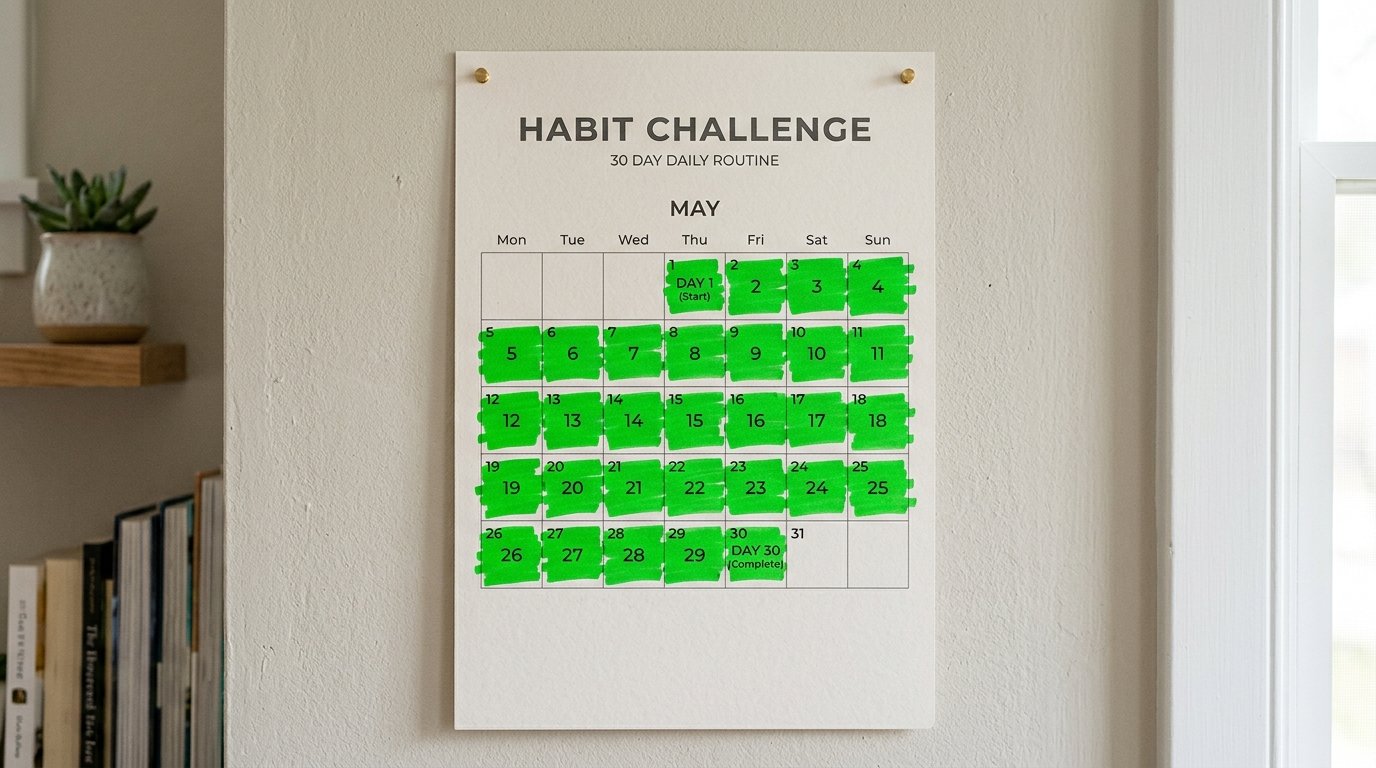
During this middle phase, the "streak" becomes a powerful motivator. Seeing a visual representation of your 18 days of hard work makes the 19th day feel mandatory. It’s no longer a struggle to start; it’s a struggle to imagine stopping. This is the period where most people start to feel "lighter" in their own skin.
Days 21–30: The "Identity" Phase
By the final ten days, you’ve crossed the threshold of habit formation. Research suggests that while the "21 days to form a habit" rule is a bit of a myth, the three-week mark is usually when a behavior becomes significantly easier to maintain.
In this final stretch, you’ll notice "passive" benefits:
- Improved Posture: Your pelvis begins to align correctly because your hip flexors aren't pulling it forward anymore.
- Reduced Stress: You’ve spent 30 days practicing deep breathing while holding poses. This has a cumulative effect on your cortisol levels.
- Increased Power: Flexible muscles can actually generate more power. If you run or lift weights, you’ll likely see a performance boost because your muscles can move through a full range of motion.
The real win on day 30 isn't just the flexibility; it's the proof that you can commit to yourself. You’ve built a streak that proves you value your long-term health over short-term laziness.

How to Set Up Your Mobility Streak for Success
If you want to make it to day 30, you need a plan that removes friction. Here is how to ensure you don't drop the ball on day four.
1. The "Minimum Viable" Rule
Never commit to a 60-minute yoga flow every day. You will fail. Instead, commit to a "Minimum Viable Stretch"—maybe just five minutes of three key poses (Cobra, Pigeon, and Child’s Pose). On days you have energy, do more. On days you’re exhausted, do the five minutes just to keep the streak alive.
2. Stack Your Habits
Link your stretching to something you already do. Stretch while the coffee is brewing, or do it while you’re watching the evening news. By "stacking" the new habit onto an old one, you don't have to rely on memory.
3. Track It Visually
There is a profound psychological difference between "knowing" you stretched and "seeing" a mark on a calendar or a digital tracker. Using a tool to track your "days since" you started or your current streak creates a hit of dopamine every time you check it off. That visual progress is often the only thing that gets you onto the mat on a rainy Tuesday when you’re tired.
4. Focus on Breath, Not Depth
Don't bounce and don't force it. The goal isn't to rip your muscles open; it's to melt them. If you can't breathe deeply in a pose, you’ve gone too far. Your breath is the bridge between your mind and your muscles. Use it to signal safety to your brain.
A Note on Safety
Stretching should feel like "productive discomfort," never sharp pain. If you feel a pinching sensation or a sudden "electric" zing, back off immediately. We’re building a body that lasts, not one that’s sidelined by a preventable injury.
If you're struggling with chronic pain, a recent injury, or a specific medical condition, please reach out to a professional or a trusted person in your life before starting a new physical regimen.
What Happens on Day 31?
The most common mistake people make after a 30-day challenge is stopping. They treat it like a finish line. But your body doesn't stay flexible forever; it's a "use it or lose it" system.
The goal of the 30-day stretching streak is to show you how good you could feel. Once you’ve experienced life without a stiff neck and a tight lower back, it’s hard to go back. Use the momentum from your 30-day win to transition into a permanent lifestyle. Maybe you don't stretch every single day for the rest of your life, but you’ll now have the tools and the discipline to reset whenever you feel those old "creaks" coming back.
The countdown to a more mobile version of yourself starts today. It only takes a few minutes, a little bit of floor space, and the willingness to start a streak that your future self will thank you for.
Key Takeaways
- Consistency Over Intensity: A five-minute daily stretch is more effective for your nervous system than one 90-minute session a week.
- Neurological Reset: Daily movement teaches your brain to release the "safety brakes" on your muscles, leading to permanent mobility gains.
- The Power of the Streak: Tracking your progress visually helps shift your mindset from "doing a task" to "building an identity."
- Full-Body Benefits: Beyond flexibility, expect better sleep, lower stress, and improved posture as your body realigns.
- Start Small: Use a countdown or streak tracker to gamify your progress and keep yourself accountable during the difficult first week.
Build Better Habits — Track Your Streaks
Set goals, build streaks, and transform your life one habit at a time.