
- Published on
50 30-Day Challenges to Reboot Your Routine
You wake up, grab your phone, scroll for 20 minutes, drag yourself to the kitchen, and start a day that looks identical to yesterday. Routines are meant to support us, but over time, they can quietly turn into ruts. When every day feels like a carbon copy of the last, your brain switches to autopilot, and your motivation begins to drain.
Here's the thing. You don't need a massive, disruptive life overhaul to feel energized again. Sometimes, you just need a temporary experiment to shake things up, wake your brain up, and test your limits.
Psychologists often talk about the power of "novelty" in stimulating dopamine and creating new neural pathways. A 30-day challenge is the perfect vehicle for this. It is long enough to break old patterns and see real physical or mental changes, but short enough to feel entirely achievable. You aren't committing to a habit forever; you are just trying it on for a month.
Physical Health: Reconnect with Your Body
Physical ruts are often the easiest to fall into and the hardest to crawl out of. When your body feels sluggish, your mind quickly follows. These challenges are designed to get you moving, resting, and fueling yourself with intention.
- The Daily Walk Challenge: Walk for 30 minutes every single day, regardless of the weather.
- No Sugar After 7 PM: Close the kitchen early to improve your sleep quality and digestion.
- The 10-Minute Stretch: Spend 10 minutes stretching every morning or right before bed to improve mobility.
- Hydration First: Drink a full glass of water immediately upon waking up, before touching coffee or your phone.
- The 10,000 Steps Daily: Hit a consistent daily step target to keep your baseline physical activity high.
- No Liquid Calories: Stick strictly to water, black coffee, and unsweetened tea for 30 days.
- The Sleep Consistency Goal: Go to bed and wake up at the exact same time every day, even on weekends.
- Cook One New Recipe Weekly: Cook four completely new, healthy meals from scratch over the month.
- The No-Snooze Challenge: Place your alarm across the room and get up on the first beep.
- The Daily Planks: Start with a 30-second plank on day one, adding five seconds every day.
- Veggie Doubling: Double the portion of vegetables on your plate during lunch and dinner.
- The Posture Check: Spend five minutes daily doing wall sits or back-strengthening exercises to correct desk posture.
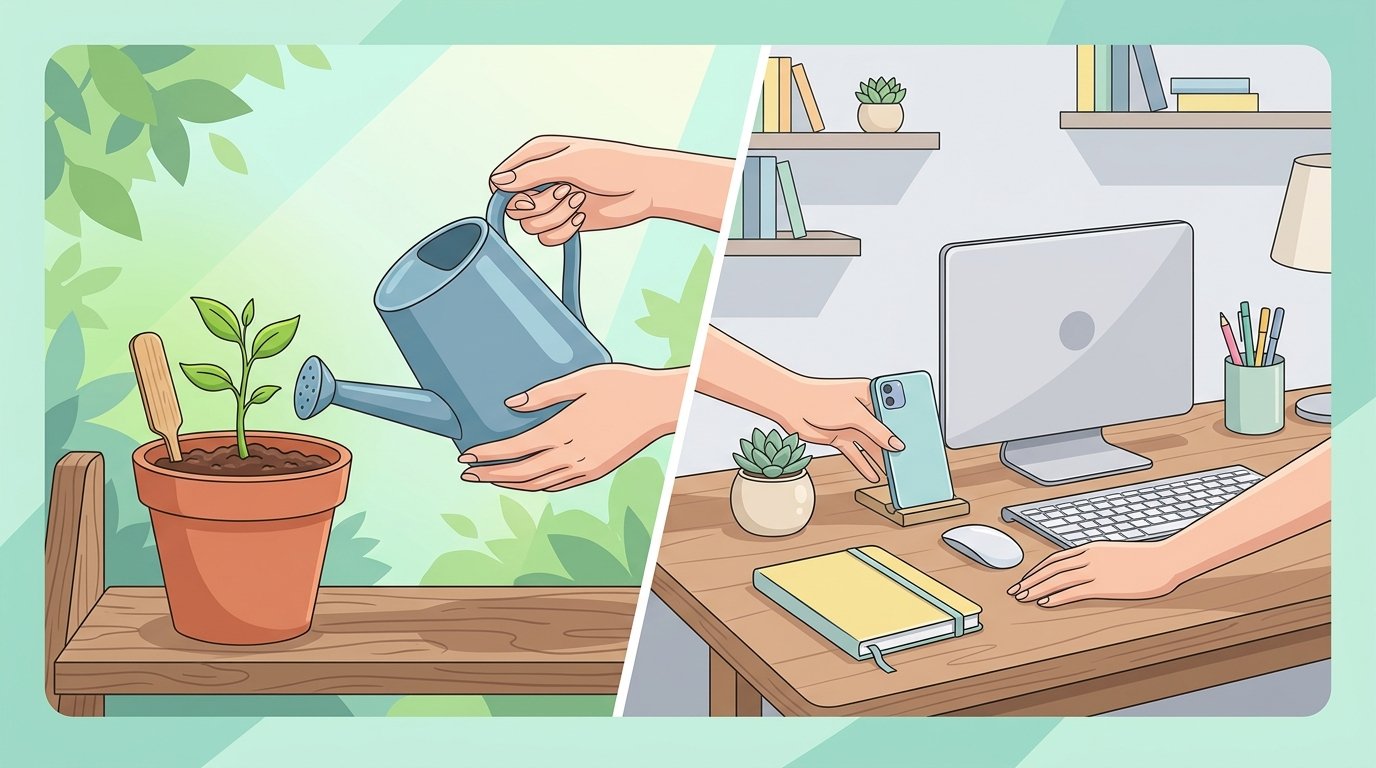
Mental Wellbeing: Cultivate Inner Calm
Mental clutter can feel heavier than physical mess. If you find yourself constantly anxious, distracted, or emotionally exhausted, your brain is crying out for a reset.
If you are struggling with severe anxiety, depression, or burnout, please reach out to a professional or a trusted person in your life.
Let's break this down. Your mind needs white space to process daily life. These challenges are designed to quiet the noise and build mental resilience.
- The Morning Tech Fast: Do not look at your phone for the first 30 minutes of the day.
- Three-Line Gratitude: Write down three highly specific things you are grateful for every night.
- The 5-Minute Meditation: Sit in silence and focus entirely on your breath for five minutes daily.
- No Complaining: Go 30 days without voicing a complaint about the weather, traffic, or other people.
- The Daily Reading Habit: Read 10 pages of a physical book every single day.
- The Evening Brain Dump: Write down everything on your mind before bed to clear cognitive load.
- Digital Sunset: Turn off all screens 60 minutes before bedtime.
- One Daily Photo: Take one photo of something beautiful or interesting every day to practice mindfulness.
- The Single-Tasking Experiment: Focus on only one task at a time—no multitasking during work or chores.
- No News Fast: Avoid reading or watching the news for 30 days, relying only on weekly summaries if necessary.
- The Creative Outlet: Spend 15 minutes a day drawing, writing, playing an instrument, or crafting.
- The Daily Compliment: Give one genuine, unsolicited compliment to someone in your life every day.
- The "No" Challenge: Practice saying "no" to things that drain your energy or don't align with your priorities.
Productivity & Career: Sharpen Your Focus
Many people believe productivity is about doing more. But there's a catch. Real productivity is actually about doing less, but doing it with intense focus and clarity. If your workdays feel chaotic, try one of these professional experiments.
- The 90-Minute Focus Block: Work on your most important project for 90 uninterrupted minutes every morning.
- Inbox Zero Daily: Clear, archive, or delegate every single email in your inbox by the end of the workday.
- The 5-Minute Plan: Spend the last five minutes of your workday planning the exact tasks for tomorrow.
- The Desktop Clean: Delete or organize all files on your computer desktop at the end of each day.
- No Social Media at Work: Block all personal social media sites during working hours.
- The Time Audit: Track how you spend every hour of your workday to find hidden time leaks.
- The "One Thing" Rule: Identify your single most important task each morning and finish it first.
- The Paper Declutter: Throw away, shred, or file three pieces of paper clutter in your home or office daily.
- The 15-Minute Clean: Set a timer and clean your workspace or home rapidly for 15 minutes every evening.
- The No-Meeting Prep: Spend 10 minutes reviewing agendas and goals before every single meeting you attend.
- Learn a New Skill: Spend 20 minutes a day taking a free course, watching tutorials, or practicing a new professional tool.
- The Workspace Minimalism: Keep your desk completely clear of everything except your computer, notebook, and water bottle.
- The Promptness Goal: Arrive or log on five minutes early to every scheduled meeting or call.

Relationships & Connection: Strengthen Your Bonds
Humans are wired for connection, but we often take our relationships for granted. It is easy to assume our partners, friends, and family will always be there, leading us to neglect the small gestures that keep bonds strong.
- The Daily Text: Send one text to a friend or family member just to tell them you are thinking of them.
- Distraction-Free Dinners: Keep all phones off the dinner table, whether eating alone, with family, or with a partner.
- The Appreciation Note: Write a small note of appreciation to your partner, roommate, or coworker and leave it where they can find it.
- The Active Listening Challenge: Practice listening to others without interrupting or thinking about your response.
- The Daily Hug: Give your partner or family member a warm, 20-second hug every day to lower stress levels.
- Reconnect with an Old Friend: Call or meet up with one old friend you haven't spoken to in months every week.
- The Shared Routine: Establish a small daily routine with your partner, like a short evening walk or morning coffee together.
- The Weekly Date Night: Schedule and execute four unique date nights over the course of the month.
- The Acts of Service Challenge: Do one small, helpful chore for someone else without them asking.
- The Group Chat Spark: Share a positive memory, old photo, or encouraging thought in a family or friend group chat once a week.
- The Neighborly Wave: Make a conscious effort to smile and say hello to your neighbors whenever you see them.
- The Support Check-In: Ask a close friend, "What is one thing I can do to support you this week?" and follow through.
How to Keep Your Challenge Streak Alive
Deciding to start a 30-day challenge is exciting. Keeping it going when you are tired, busy, or simply unmotivated on day 12 is where the real work begins.
That said, consistency is a skill you can build. If you want to make sure you finish what you start, you need to make your progress visible. When you can physically see your streak growing day after day, your brain gets a small hit of satisfaction. You start protecting that streak because you don't want to see your hard work reset to zero.
Using habit tracking apps or countdown tools can help you visualize your progress. Seeing a countdown ticking down to day 30 makes the finish line feel closer and more tangible.
If you happen to miss a day, don't throw your hands up and abandon the entire project. The golden rule of habit building is simple: never miss twice. A single slip is just an accident; missing two days in a row is the start of a new, bad habit. Dust yourself off, reset your focus, and get back on track the very next day.
Key Takeaways
- Start with just one: Don't try to run five challenges at once. Pick the single challenge that addresses your current biggest friction point.
- Make it visible: Track your challenge days visually to build momentum, protect your streak, and stay motivated.
- Embrace the messy middle: Days 10 through 20 are historically the hardest. Push through the dip to reach the rewarding finish line.
- Focus on the experiment: Remember, it's only 30 days. You are testing a theory, not making a permanent lifetime commitment.
- Track your progress daily: Using simple habit tracking apps can keep you accountable and show you exactly how far you've come.
Build Better Habits — Track Your Streaks
Set goals, build streaks, and transform your life one habit at a time.