
- Published on
The 100-Day Morning Sunlight Challenge for Better Sleep
You wake up, reach for your phone, and the blue light hits your eyes before you’ve even had a chance to process the day. It’s a common habit, but it might be the reason you feel groggy, disconnected, and unable to switch off when bedtime finally rolls around. Your body has an internal clock, known as the circadian rhythm, and it is desperate for a specific signal to tell it that the day has truly begun.
That signal is sunlight. Not the artificial glow of a desk lamp or the screen in your palm, but the genuine, unfiltered light of the morning sun. If you’ve been struggling to find your rhythm or feel like you’re constantly fighting off fatigue, a 100-day commitment to morning light exposure might be the shift you need to reset your system.
Understanding the Circadian Connection
Your internal clock is governed by a small cluster of cells in the brain called the suprachiasmatic nucleus. Think of this as your body’s master conductor. It regulates everything from your hormone production to your body temperature and, most importantly, your sleep-wake cycle. When you step outside shortly after waking, the specific wavelengths of morning light hit your retinas, sending a signal to your brain that it is officially time to be alert.
This process triggers the release of cortisol, which is healthy and necessary in the morning to get you moving, and it sets a timer for the production of melatonin, the hormone that helps you sleep. If you skip this morning signal, your brain remains confused, often leading to a "delayed phase" where you feel groggy in the morning and wide awake at night. By committing to 100 days of consistent morning light exposure, you are essentially training your biological clock to run on a predictable, efficient schedule.

How to Execute the 100-Day Challenge
This isn't about staring directly at the sun, which can be harmful. It is about getting outside and letting ambient daylight hit your eyes. The goal is to get outside within 30 to 60 minutes of waking up.
Start small if you need to. On day one, aim for five minutes on your porch or balcony. By day ten, try to make it 15 minutes. If you live in a place where the sun isn't always shining, don't worry—even on cloudy days, the natural light exposure is significantly more potent than the light provided by indoor overhead fixtures.
The beauty of a 100-day timeframe is that it allows for the natural ebb and flow of life. You don't need to be perfect every single morning to see the benefits. If you miss a day, just pick it up the next. Many people find that using a simple habit tracker to log these mornings creates a sense of accountability, turning a vague intention into a concrete part of their daily identity.
Navigating the Early Days
The first week is often the hardest because you are fighting against years of established habits. You might find yourself wanting to hit the snooze button or reach for coffee before stepping outside. Think of this as the "resistance phase." Your body is accustomed to a certain way of operating, and it will push back when you try to introduce a new rhythm.
Focus on the sensation of the morning air. Notice the temperature on your skin and the sounds of your neighborhood waking up. This is a chance to move from a frantic, reactive morning to a proactive, grounded one. If you find the process difficult to remember, try pairing it with an existing habit, like drinking your first glass of water. Keep your water bottle by the door so you have a physical reminder to step outside.
The Cumulative Power of 100 Days
Why 100 days? It’s long enough to see a fundamental shift in how you feel, yet short enough to feel achievable. By the time you reach day 30, you will likely notice that you are waking up feeling slightly more alert. By day 60, the evening "wind-down" process usually becomes much smoother because your body knows exactly when it should be preparing for sleep.
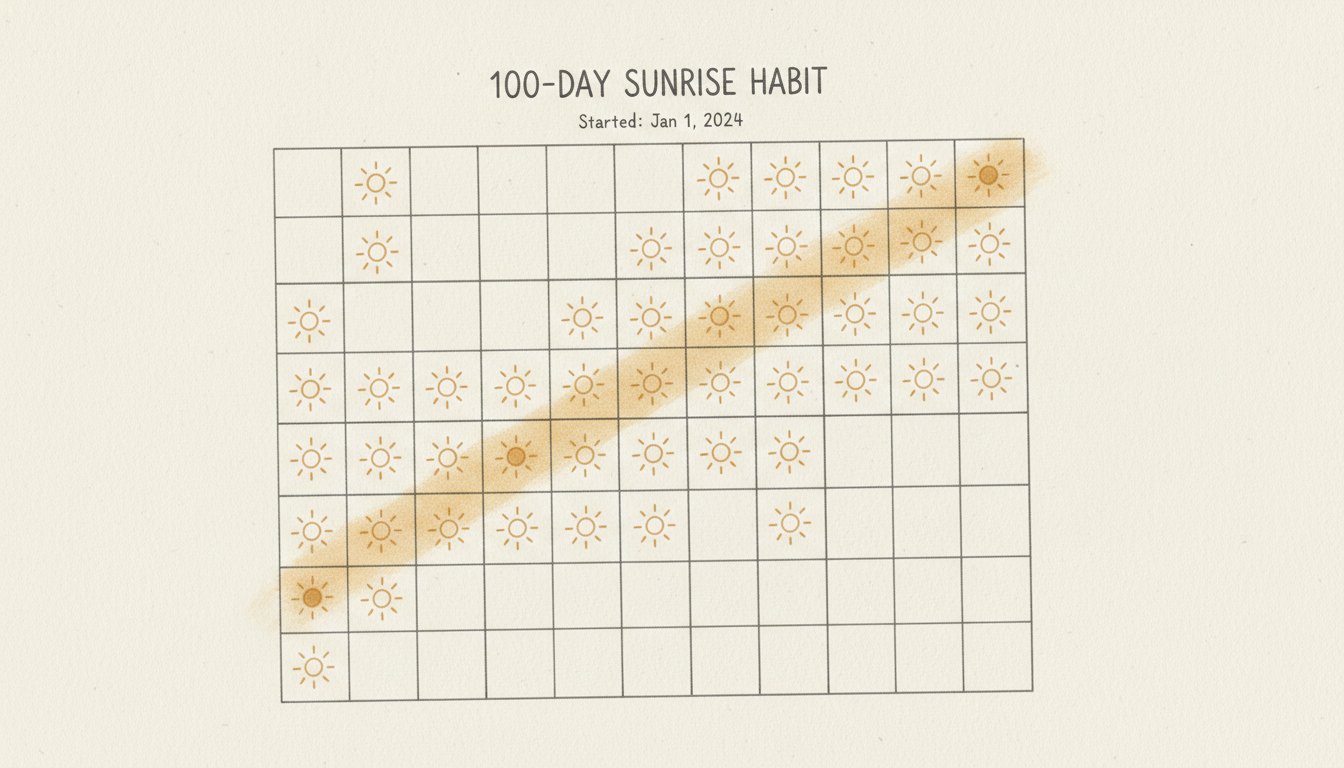
Tracking your journey through this period can provide a powerful feedback loop. When you see your streak of successful mornings growing, it reinforces the behavior. Seeing your progress visually can make the commitment feel more real, especially on days when the weather is less than ideal. If you've been using countdown tools to keep yourself focused on other goals, try adding this challenge to your list of daily actions. Small, daily wins like this eventually compound into a much higher quality of life.
Troubleshooting Your Morning Routine
If you live in a city with tall buildings or work in a basement, getting direct sunlight can be tricky. If you absolutely cannot get outside, try to sit near a window where the light is brightest. While it isn't as intense as being outdoors, it is still far more effective than staying in a dim room.
If you are struggling with deeper issues related to sleep or mood, please reach out to a professional or a trusted person in your life. This challenge is meant to optimize your natural rhythms, but it is not a replacement for medical care if you are dealing with chronic insomnia or other health concerns.
Key Takeaways
- Sunlight sets your rhythm: Exposure to morning light signals your brain to begin the day, which directly influences your ability to fall asleep later that night.
- Consistency is key: Aim for 10–20 minutes of outdoor light within an hour of waking. Even on cloudy days, the natural spectrum of light is beneficial.
- Track your progress: Using a simple habit tracking method helps you stay consistent. Seeing your streak of successful mornings grow can be a powerful motivator to keep going.
- Start where you are: You don't need a perfect routine to start. If you miss a day, simply resume the next morning and keep moving forward.
Small, intentional actions like stepping outside every morning can lead to significant improvements in your energy and sleep. By staying consistent with your daily habit, you aren't just checking a box; you are building a biological foundation for a better, more focused version of yourself.
Build Better Habits — Track Your Streaks
Set goals, build streaks, and transform your life one habit at a time.