
- Published on
The 100-Day Decluttering Streak: Remove One Item Daily
You look around your living room and feel that familiar weight. It isn’t just the pile of mail on the counter or the stack of books you haven't touched in years; it is the mental fatigue that comes from living in a space that feels increasingly crowded. We often think that decluttering requires a massive weekend overhaul, a total life-reset that leaves us exhausted and discouraged by Sunday evening. But what if the secret to a clearer home—and a clearer mind—wasn't a marathon, but a single, tiny decision made once a day?
The 100-day decluttering streak is built on a simple premise: remove one item daily. That is it. No giant trash bags, no overwhelming sorting sessions, and no need to clear your entire schedule. Just one item. By focusing on consistency rather than intensity, you turn an intimidating chore into a sustainable habit that fundamentally shifts how you interact with your belongings.
The Psychology of Tiny Wins
Why does removing just one item feel so effective? It comes down to how our brains process decision fatigue. When we look at a cluttered room, our cognitive load spikes. We see dozens of items, each demanding a decision: "Do I keep this? Should I donate that? Where does this go?" This is why we often freeze and end up doing nothing at all.
By limiting yourself to one item, you bypass the "overwhelm response." You aren't asking your brain to solve the problem of your entire house; you are asking it to make one small choice. Research suggests that small, consistent actions are far more effective at forming permanent habits than sudden, drastic changes. When you successfully remove that single item, your brain releases a small hit of dopamine, reinforcing the behavior. Over 100 days, that sequence of small wins builds a new identity: you become someone who maintains their space rather than someone who just cleans it when things get unbearable.

How to Build Your 100-Day Streak
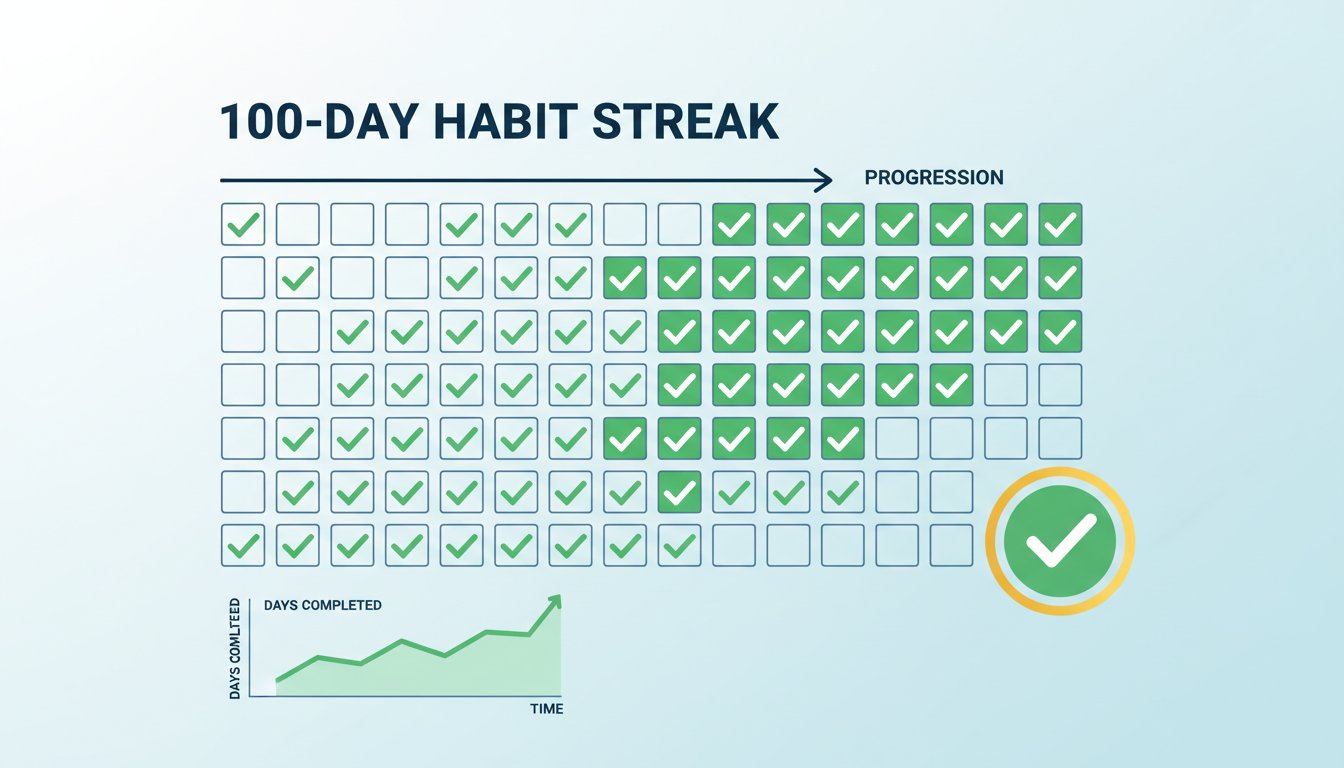
The beauty of a 100-day challenge lies in its structure. To get started, you don't need a complex system. Grab a notebook, a digital calendar, or use a simple habit-tracking tool to mark off your progress. Seeing your progress visually—whether it’s a line on a calendar or a digital streak counter—remains one of the most powerful motivators for long-term success.
Start with the "Easy Wins"
In the first 10 days, don't touch the sentimental items or the important documents. Pick the "low-hanging fruit." That broken pen in the kitchen drawer? That’s day one. The expired coupon in your wallet? That’s day two. The single sock without a partner? That’s day three. By starting with things that hold no emotional weight, you build the "decluttering muscle" without resistance.
Create a "Departure Zone"
Place a small box or bag in a closet or a discrete corner. This is your temporary holding area for the items you’ve chosen to let go of. Knowing that you have a dedicated space to put these items removes the friction of having to drive to a donation center every single day. You aren't just cleaning; you are building a process.
The "One-Touch" Rule
As you move into the second month of your streak, try to apply the one-touch rule to the rest of your life. When you pick something up—a piece of mail, a flyer, or a brochure—decide in that moment whether it earns a spot in your home. If it doesn't, it doesn't even enter your living space. This helps you prevent new clutter from accumulating while your streak works to remove the old.
What Happens at Day 50?
By the time you hit the halfway point, you will notice something interesting. You’ve removed 50 items. Your home likely won't look "minimalist" overnight, but the small pockets of space you’ve created—a drawer that opens smoothly, a shelf that isn't crammed—will start to influence your behavior. You might find yourself naturally wanting to keep those areas clear.
This is where the streak becomes a feedback loop. When you see the physical evidence of your progress, you feel more capable. If you find yourself struggling to find an item to remove, don't worry. Look for duplicates. Do you really need three sets of measuring spoons? Do you need five different charging cables for a phone you no longer own? These small redundant items are the silent thieves of your storage space.
Staying Consistent When Life Gets Busy
The biggest challenge to any streak is life itself. Maybe you have a busy week at work, or you’re traveling. If you miss a day, don't spiral into the "all or nothing" trap. The goal of a 100-day streak isn't perfection; it’s recovery. If you miss a day, just pick up on the next one. Using a habit-tracking app to keep your streak visible can help you stay committed even when motivation dips. Remember, the goal is to build a habit that lasts, not to hit a perfect score.
It is worth noting that if you find yourself feeling extreme distress over discarding items, or if you feel unable to let go of even the smallest things, there may be deeper patterns at play. If you're struggling with this, please reach out to a professional or a trusted person in your life. Decluttering should be a tool for relief, not a source of anxiety.
The Transformation of Your Space
By day 100, you will have removed 100 items from your home. Think about the physical volume of that. That is 100 things that no longer demand your attention, your cleaning time, or your mental energy. You have essentially "curated" your environment rather than just living in it.
The most important takeaway isn't the number of items removed—it is the change in your mindset. You have proven to yourself that you are in control of your surroundings. You have replaced a habit of accumulation with a habit of intentionality. That is a skill that carries over into every other area of your life, from how you manage your time to how you set your goals.
Key Takeaways
- Consistency over intensity: Removing one item daily is more sustainable and less overwhelming than a massive, one-time decluttering marathon.
- Small wins build momentum: Each item removed provides a small dopamine hit, making it easier to stick with the habit for the full 100 days.
- Use visual tracking: Keeping a record of your progress, such as using a streak counter, makes your growth tangible and helps you stay motivated when the initial excitement fades.
- Focus on the redundant: If you’re stuck, look for duplicates or expired items; these are the easiest to remove without creating emotional distress.
- Embrace the process: A 100-day streak is about rewiring your relationship with your belongings, turning you from a passive collector into an active curator of your home.
Build Better Habits — Track Your Streaks
Set goals, build streaks, and transform your life one habit at a time.