
- Published on
The 100-Day Creative Hobby Challenge for Passion
You sit down at your desk, stare at a blank page or an empty canvas, and feel... nothing. It wasn't always this way. You remember a time when you could lose yourself in a project for hours, forgetting to eat or check your phone. Somewhere between the demands of your job, the endless cycle of errands, and the constant digital noise, that spark of creative passion dimmed.
It is easy to blame a lack of time or energy. But the real culprit is often a lack of structure. When we wait for inspiration to strike, we end up waiting forever. The solution isn't to force a masterpiece; it is to build a habit. By committing to 100 days of a creative hobby, you move from being someone who "used to be creative" to someone who is actively cultivating a skill.
Why 100 Days Changes Your Perspective
The beauty of a 100-day challenge lies in the psychology of the "marathon." When you set a goal for a single week, it feels like a sprint—intense, stressful, and easily abandoned if you have one bad day. A 100-day window, however, allows for imperfection. It acknowledges that life is messy. You are going to have days where you are tired, uninspired, or busy.
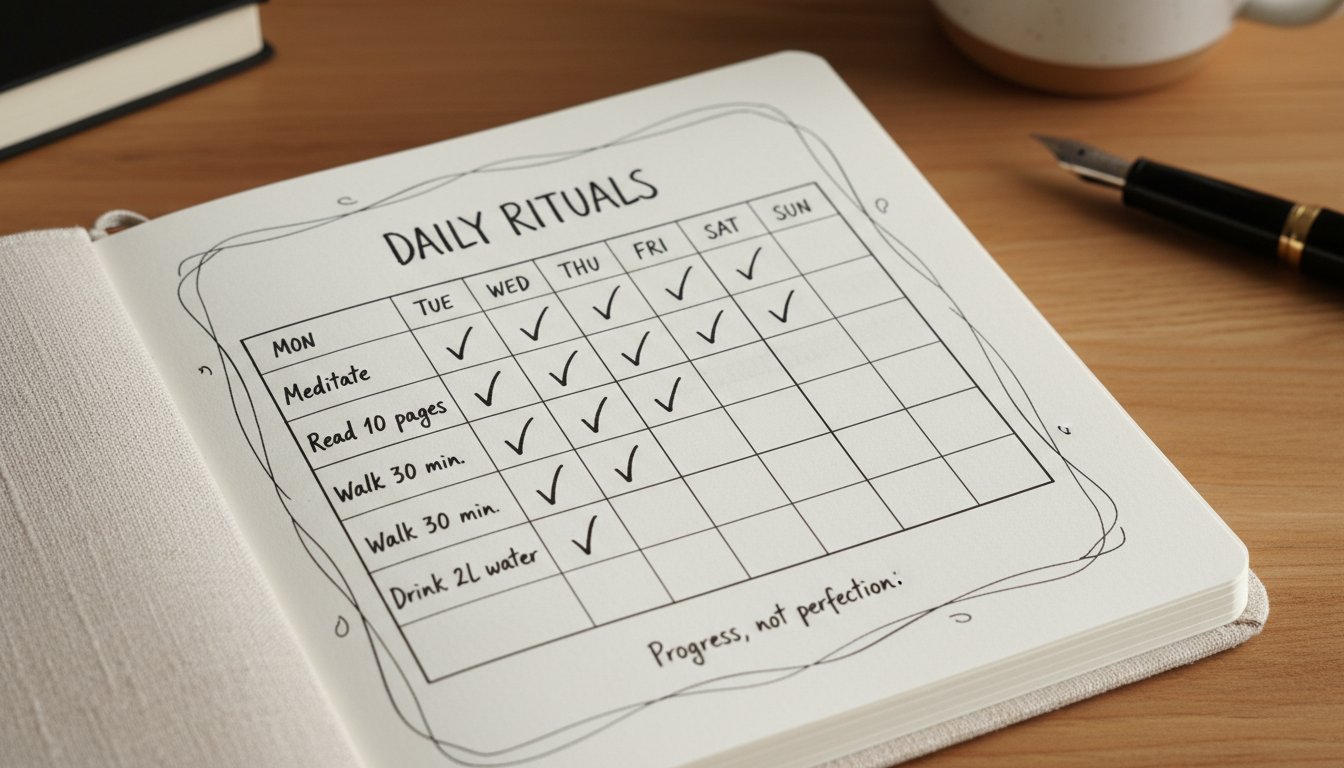
In a 100-day cycle, a single missed day is not a failure; it is just a data point. When you maintain a visual record of your progress, you stop judging yourself by the quality of a single output and start judging yourself by the consistency of your effort. This shift reduces the "performance anxiety" that kills most creative endeavors. You aren't trying to paint a gallery-worthy portrait; you are just showing up for 100 days to see what happens when you do.
Choosing Your Creative Path
The biggest mistake most people make is picking a project that is too complex. If you decide to "write a novel" in 100 days, you are setting yourself up for burnout. Instead, aim for a micro-habit. If you want to write, commit to 100 words a day. If you want to draw, commit to one sketch per day. If you want to learn an instrument, commit to 15 minutes of practice.
The goal is to keep the barrier to entry so low that you can finish your session even on your worst days. When the task feels manageable, your brain stops resisting it. Many people find that using a simple tracker or a countdown tool helps them visualize this commitment. Seeing a streak grow on a calendar provides a dopamine hit that reinforces the behavior, turning a chore into a rewarding ritual.
Overcoming the "Messy Middle"
Around day 30, the novelty will wear off. This is the "messy middle," where the excitement of starting has faded, but the mastery of the skill feels light-years away. You might find yourself questioning why you started or feeling like your work isn't "good enough." This is the exact point where most people quit.
Think about it this way: your brain is currently rewiring its relationship with creativity. You are moving from a state of passive consumption—scrolling through social media or watching streaming services—to active creation. This transition is naturally uncomfortable. If you feel like your progress has stalled, look back at your records. Seeing how far you have come since day one serves as a powerful reminder that you are capable of sticking to your commitments.

Practical Steps to Stay Consistent
- Define Your Minimum Viable Effort: What is the absolute least you can do on your most tired day? If it is picking up a guitar for two minutes, that is your baseline.
- Anchor Your Habit: Attach your hobby to an existing part of your day. For example, "After I finish my morning coffee, I will write for 10 minutes."
- Track Your Milestones: Use a tracker to document every day you complete. There is something deeply satisfying about checking off a box. It transforms an abstract goal into a tangible victory.
- Forgive the Reset: If you miss a day, don't spiral. Just get back to it the next day. The goal is the 100-day journey, not a perfect, unbroken chain of days.
The Long-Term Impact
By the time you reach day 100, you will likely find that you are a different person than the one who started. You will have built a "creative muscle" that doesn't rely on fleeting motivation. You will have a body of work—even if it is just 100 rough sketches or 100 short journal entries—that proves you can be the type of person who creates.
If you are struggling with a lack of direction or feeling stuck in a rut, please reach out to a professional or a trusted person in your life. Creativity is a vital part of mental well-being, but it is not a cure-all for deeper challenges.
Key Takeaways
- Commit to the process, not the outcome. A 100-day challenge is about building a sustainable habit, not creating a perfect final product.
- Start small to stay big. Keep your daily requirement low so that you can succeed even on the days you feel least motivated.
- Use visual tracking to build momentum. Seeing your streak grow day by day is one of the most effective ways to stay consistent and motivated over the long term.
- Embrace the "messy middle." Expect to hit a plateau around the one-month mark, and use your progress records to remind yourself why you started in the first place.
Start today. You don't need a fancy studio or hours of free time—you just need to show up for yourself for a few minutes. Your future self will thank you for the progress you make starting right now.
Build Better Habits — Track Your Streaks
Set goals, build streaks, and transform your life one habit at a time.