
- Published on
Environment Design: Protect Your Habit Streaks
You wake up at 6:00 AM. The room is cold, the sun isn't up yet, and your bed feels like a warm sanctuary. You promised yourself last night that today would be the day you start a morning workout streak. But as you lie there, your brain starts negotiating. "Maybe tomorrow," it whispers. "I didn't sleep well anyway."
Most of us think the solution to this problem is more willpower. We tell ourselves we need to be stronger, more disciplined, or more "hardcore." We treat willpower like a muscle that we just haven't flexed enough. But here’s the truth: relying on willpower to maintain a habit streak is like trying to keep a campfire going in a rainstorm. You might succeed for a few minutes, but eventually, the environment will win.
If you want to protect your streaks and actually change your life, you have to stop fighting your environment and start designing it.
The Myth of the Disciplined Person
We all know that person who never misses a workout, eats clean every day, and somehow finds time to read 50 books a year. We look at them and think, "I wish I had their self-control."
Research suggests something surprising, though. People with high self-control don't actually spend their days battling intense temptations. Instead, they structure their lives so they don't have to use willpower in the first place. They aren't better at resisting the siren call of the couch; they just made sure the couch isn't the first thing they see when they walk through the door.
Psychologists often talk about "ego depletion," the idea that willpower is a finite resource. While the scientific community debates exactly how finite it is, the practical reality remains: you have less mental energy at 8:00 PM after a long workday than you do at 8:00 AM. If your habit depends on you making a "good choice" when you're exhausted, the habit is doomed to fail.
Environment design is about moving the choice from the moment of exhaustion to the moment of clarity. It’s about making the right thing easy and the wrong thing hard.
The Power of Friction
In physics, friction is the resistance that one surface or object encounters when moving over another. In habit psychology, friction is the number of steps between you and an action.
If you want to build a good habit, you need to reduce friction. If you want to quit a bad habit, you need to increase it. It sounds simple, but most people ignore this fundamental rule.
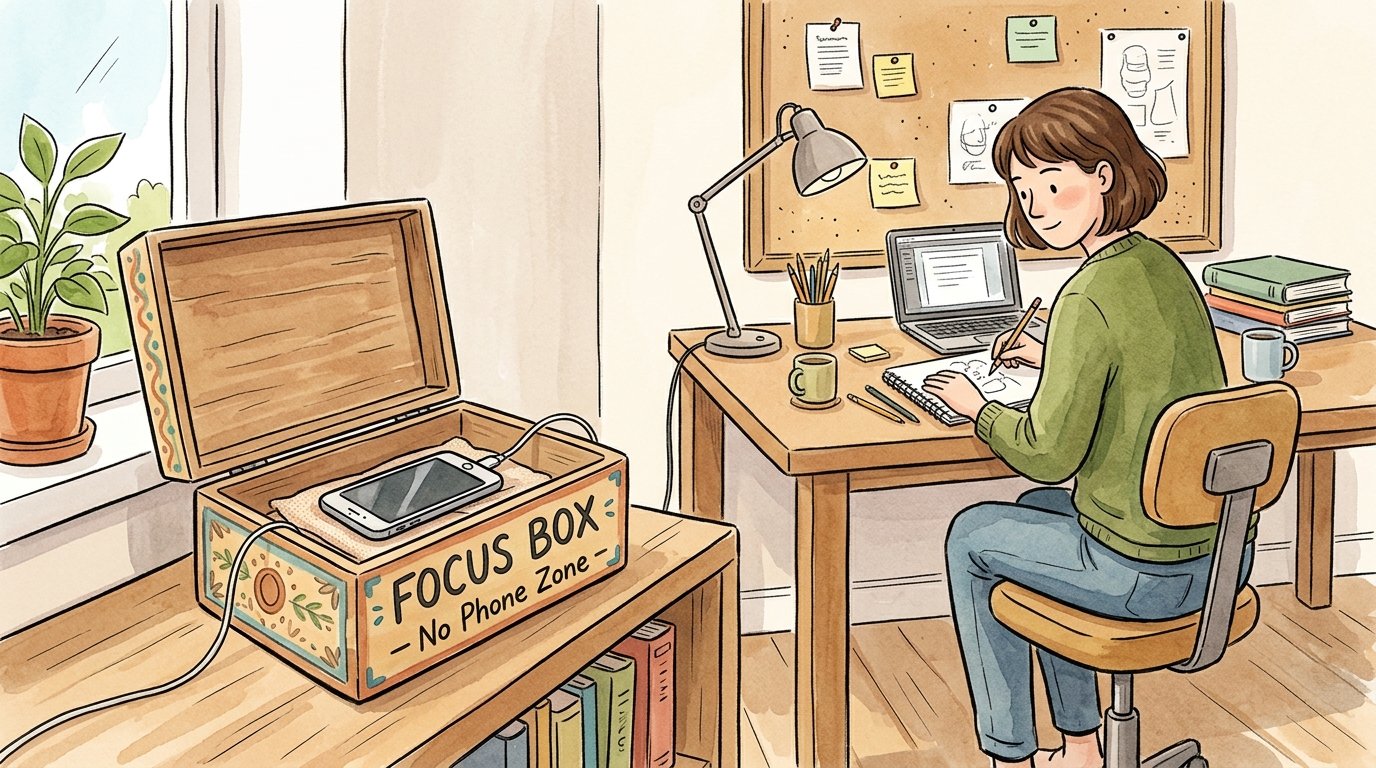
Think about your phone. If it’s sitting right next to your keyboard with the screen facing up, the friction to check a notification is near zero. You don't even have to think about it; your hand moves automatically. But if you put that phone in a drawer in another room, you’ve added friction. You have to stand up, walk across the house, and open a drawer. That five-second delay is often enough for your conscious brain to kick in and say, "Wait, I'm supposed to be working."
Designing for "Easy" Wins
Let’s look at how to apply this to common habit streaks:
- Exercise: Don't just "decide" to go to the gym. Lay your clothes out the night before, right next to your bed. Put your sneakers on top of your phone. By doing this, you’ve removed three or four "micro-decisions" from your morning.
- Healthy Eating: If you want to stop snacking on junk, don't keep it in the house. If you have to drive to the store to get a bag of chips, you probably won't do it. Meanwhile, put a bowl of pre-washed fruit right on the counter where you can see it.
- Reading: Place a book on your pillow every morning when you make the bed. When you go to lie down at night, the book is literally in your way. You have to pick it up just to get into bed.
When you lower the friction, your habit streak starts to feel less like a chore and more like a natural path. Tracking your progress through a streak tracker becomes much more satisfying when the "daily win" feels inevitable rather than a grueling battle of the mind.
Visual Cues and the "Out of Sight" Trap
Your brain is a scanning machine. It is constantly reacting to visual triggers in your surroundings. If you see a television remote, your brain thinks about watching TV. If you see a guitar on a stand in the middle of the living room, you’re much more likely to pick it up and practice.
This is why "out of sight, out of mind" is a very real phenomenon. Many people fail at habits simply because they forget to do them. Life gets busy, stress levels rise, and the new habit slips through the cracks.
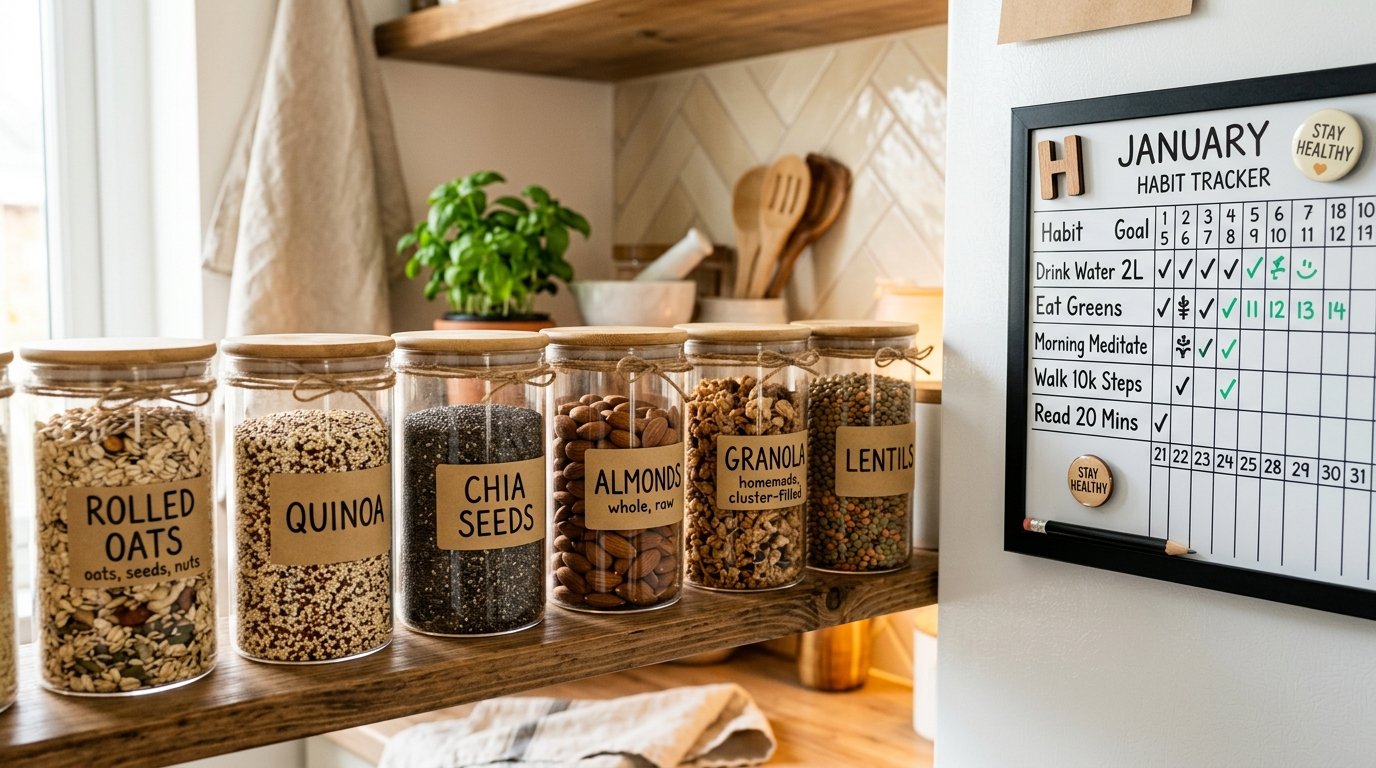
To protect your streak, you need to make the habit impossible to ignore. This is where visual tracking comes in. Seeing a physical or digital representation of your progress acts as a powerful environmental cue. When you see that you are on Day 14 of a challenge, that number itself becomes part of your environment. It’s a visual reminder of who you are becoming.
Using countdown tools for a big goal or a "days since" tracker for quitting a bad habit provides a constant feedback loop. It transforms an abstract goal into a concrete reality that lives right in your field of vision.
Designing Your Social Environment
Environment isn't just about the objects in your room; it's also about the people in your life. We are social creatures, and we tend to pick up the habits of the "tribe" we hang out with.
If all your friends meet up to grab drinks and fried food every Friday, it’s going to be incredibly hard to maintain a health-focused streak. You'll be using massive amounts of willpower to say no while everyone else is saying yes.
That said, you don't necessarily need to find a whole new set of friends. You just need to design the interaction. Instead of meeting at a bar, suggest a hike or a walk in the park. Change the "default" setting of your social life.
If you're struggling with a specific addiction or a deep-seated bad habit, your social environment is even more critical. Sometimes, the best environment design is simply removing yourself from situations where the temptation is high. If you're struggling, please reach out to a professional or a trusted person in your life.
The "One-Step" Rule for Habit Protection
One of the most effective ways to use environment design is the "One-Step" rule. This means that the habit you want to perform should be exactly one step away from your current state.
If you want to drink more water, have a full bottle sitting on your desk at all times. One step. If you want to meditate, have a cushion already placed in a quiet corner. One step.
Conversely, the habits you want to break should be at least three steps away. Want to stop watching so much TV? Take the batteries out of the remote and put them in a kitchen drawer. Now, to watch TV, you have to: 1) Go to the kitchen, 2) Get the batteries, 3) Put them in the remote. Those extra steps give your "rational self" time to intervene.
Over time, these small environmental tweaks create a "protective bubble" around your streaks. You aren't succeeding because you're a superhero; you're succeeding because you've made it really hard to fail. Seeing your streak grow every day becomes a reflection of your environment’s efficiency.
What to Do When the Environment Changes
The biggest threat to a habit streak is usually a change in environment. This happens during vacations, business trips, or even just a busy weekend at a relative's house.
When your usual cues are gone, the habit often vanishes with them. This is why many people lose their 30-day or 60-day streaks the moment they leave their zip code.
The secret is to have a "portable environment." This could be a specific playlist you listen to while working out, a travel-sized version of a book you're reading, or a digital habit tracking app that goes everywhere with you. These portable cues tell your brain, "Even though the room looks different, the habit still stands."
A countdown can make big goals feel more real, even when you're far from home. It keeps the "future you" in the present moment, reminding you why you started the streak in the first place.
Key Takeaways
- Willpower is a backup, not a primary strategy. Use it for emergencies, but rely on environment design for daily consistency.
- Reduce friction for good habits. Make the right choice the easiest choice by prepping your space in advance.
- Increase friction for bad habits. Put space, time, and effort between you and the behaviors you want to stop.
- Use visual cues. Keep your progress visible. Tracking your progress through streaks or countdowns helps you stay consistent by providing a constant reminder of your success.
- Audit your space. Take ten minutes today to look at your home or office. Ask yourself: "Does this space make my habit easier or harder?"
By taking the burden off your brain and putting it onto your surroundings, you'll find that maintaining a streak isn't about being perfect—it's about being prepared. Start today by changing one small thing in your room, and watch how much easier it becomes to keep that chain going.
Build Better Habits — Track Your Streaks
Set goals, build streaks, and transform your life one habit at a time.