
- Published on
Building Self-Trust: The 30-Day Integrity Streak
Have you ever set an alarm for 6:00 AM, only to hit snooze five times and wake up at 7:30 feeling like you’ve already failed the day? It’s a small moment, but it carries a heavy weight. When we break a promise to a friend, we feel guilty and work to make it right. But when we break a promise to ourselves, we often shrug it off, not realizing that we are slowly chipping away at our self-trust.
Self-trust is the quiet confidence that you will do what you say you’re going to do. It’s the foundation of every habit, every goal, and every major life change. Without it, even the best productivity system or the most expensive gym membership won't save you. You’ll always have that nagging voice in the back of your mind saying, "Why bother? You know you’re just going to quit anyway."
The real question is: how do we get that trust back once it’s been broken? You don't do it with grand gestures or overnight transformations. You do it through an integrity streak—a dedicated 30-day period where your only goal is to keep one small promise to yourself, every single day, without exception.
The Psychology of the Integrity Gap
Psychologists often talk about "Self-Perception Theory," which suggests that we develop our self-image by observing our own behavior. In other words, you don't just "have" a personality; you watch yourself act and then decide who you are based on those actions. If you watch yourself commit to a workout and then skip it for the third time this week, your brain concludes: "I am a person who doesn't follow through."
This creates an "Integrity Gap"—the space between who you want to be and what you actually do. The wider this gap, the higher your levels of anxiety and low self-esteem. You begin to feel like a stranger to yourself. You stop making plans because you don't believe you'll execute them.
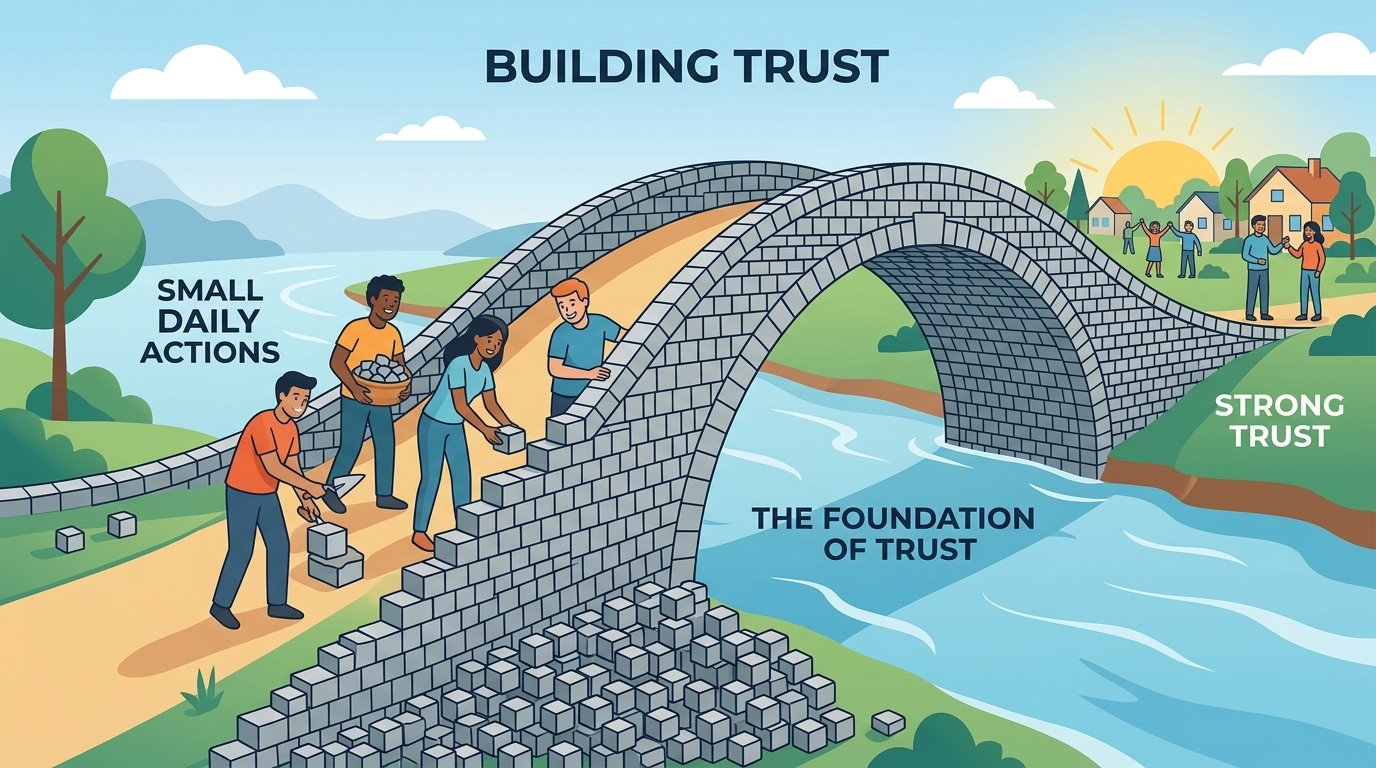
Building self-trust requires closing that gap. It’s about proving to your brain, through data and consistent action, that you are a reliable person. This isn't about being perfect; it's about being consistent.
Why 30 Days?
You’ve probably heard that it takes 21 days to form a habit, but research from University College London suggests the average is actually closer to 66 days. So why start with 30? Because 30 days is the "sweet spot" for psychological commitment. It’s long enough to feel like a challenge and move past the initial "honeymoon phase" of motivation, but short enough that the finish line always feels within reach.
A 30-day integrity streak acts as a "hard reset" for your self-image. It’s a focused sprint designed to show you that you are capable of discipline. When you see that streak hitting day 10, day 20, and finally day 30, something shifts in your identity. You stop being someone who tries to change and start being someone who does what they say.
Setting the Rules for Your Integrity Streak
The biggest mistake people make when trying to build self-trust is picking a goal that is too big. They decide to "get fit" and promise to go to the gym for two hours every day. By day four, they’re exhausted, they miss a session, the streak breaks, and their self-trust takes another hit.
For an integrity streak to work, the goal must be "stupid simple." The point isn't the difficulty of the task; the point is the act of keeping the promise.
1. Choose One Micro-Habit
Pick one action that takes less than five minutes. It should be so easy that you can do it even on your worst, most stressful day. Examples include:
- Drinking one glass of water immediately after waking up.
- Reading exactly one page of a book before bed.
- Doing two push-ups before your morning shower.
- Meditating for 60 seconds.
2. The "No Matter What" Rule
This is the core of the integrity streak. You do this task whether you’re tired, sick, traveling, or just not in the mood. Because the task is so small, there is no valid excuse for skipping it. By removing the "negotiation" phase of the habit, you strengthen your discipline.
3. Visual Tracking
You need to see your progress. Whether it’s a physical calendar where you draw an X or a habit tracking app on your phone, visual proof is essential. Seeing a streak of 14 days makes you much less likely to quit on day 15. Tracking your progress can help you stay consistent when your internal motivation starts to dip.
Navigating the 30-Day Journey
Let’s break down what this actually looks like in practice. It’s rarely a straight line of easy wins.
Week 1: The Novelty Phase
The first few days feel great. You’re motivated, the task is easy, and you feel a surge of pride every time you check it off. You might even feel tempted to add more habits. Don't. Keep the bar low. Your only job right now is to build the foundation.
Week 2: The Resistance Phase
This is where the "newness" wears off. You might get home late, or have a bad day at work, and your brain will start to negotiate. "It’s just one glass of water, it doesn't really matter," it will whisper. This is the most important week. Keeping the promise when you don't want to is where the actual trust is built.

Week 3: The Identity Shift
Around day 20, you’ll notice that you don't have to think about the task as much. It’s becoming part of your daily rhythm. More importantly, you’ll start to feel a sense of quiet confidence. You’ve kept a promise to yourself for nearly three weeks. You’re starting to believe in your own word again.
Week 4: The Final Push
As you approach the 30-day mark, the finish line is in sight. You might feel a sense of urgency to finish strong. This is a great time to reflect on how much easier the task has become and how your internal dialogue has changed. Seeing your streak grow every day can be incredibly motivating as you reach the final stretch.
What to Do if You Break the Streak
If you're struggling with deep-seated issues regarding self-worth or past trauma, please reach out to a professional or a trusted person in your life. An integrity streak is a tool for self-improvement, but it isn't a replacement for mental health support.
If you happen to miss a day, the most important thing is how you respond. Most people fall into the "all-or-nothing" trap. They miss one day and decide the whole experiment is a failure, so they quit entirely. This is known as the "What the Hell Effect."
Instead, adopt the "Never Miss Twice" rule. If you break your integrity streak, acknowledge it without self-judgment, and start a new streak immediately. The goal isn't to be a perfect human; it's to be someone who gets back on track quickly. Every "Day 1" is an opportunity to prove that you haven't given up on yourself.
The Long-Term Benefit: Beyond the 30 Days
What happens after day 30? You might choose to keep the habit going, or you might choose to pick a new, slightly more challenging one. But the real prize isn't the habit itself—it’s the self-trust you’ve cultivated.
When you trust yourself, everything in life becomes easier. You make decisions faster because you know you’ll follow through on them. You take more risks because you know that even if things go wrong, you can rely on yourself to handle the aftermath. You stop seeking external validation because you have the internal validation of your own integrity.
Think about it this way: your relationship with yourself is the longest relationship you will ever have. It deserves the same level of honesty and commitment that you give to your spouse, your children, or your best friend.
A countdown to your 30-day goal can make big changes feel more real and manageable. Start today, pick your one small thing, and don't break the chain. Future you is watching, and they are waiting to see if they can finally count on you.
Key Takeaways
- Self-trust is built through action, not thought. You cannot think your way into trusting yourself; you have to act your way there by keeping promises.
- Start smaller than you think. The difficulty of the task doesn't matter; the consistency of the follow-through is what rewires your brain.
- Use visual cues to stay on track. Seeing your progress through a streak or a daily log provides the dopamine hit needed to keep going when motivation fails.
- The goal is identity change. After 30 days, you aren't just someone who drinks water or meditates; you are someone who keeps their word.
- Small progress becomes visible when you track it daily. Use this 30-day window to prove to yourself that you are worth the effort.
Build Better Habits — Track Your Streaks
Set goals, build streaks, and transform your life one habit at a time.