
- Published on
The Ultimate Night Routine Checklist for Better Sleep
You told yourself you’d be asleep by 11:00 PM. Yet, here you are at 1:14 AM, staring at your phone screen in the dark, watching a video of someone restoring an old pocket watch. Your eyes are heavy, your mind is racing, and you already dread the sound of tomorrow’s alarm.
We often treat sleep like a light switch. We expect to run at full speed all day, flip a switch at bedtime, and immediately drop into deep, restorative rest. But your brain doesn't work that way. Transitioning from high-stress daytime productivity to deep sleep requires a slow ramp-down, not a sudden stop. If you struggle to fall asleep, stay asleep, or wake up feeling rested, the issue usually isn't your ability to sleep—it is your routine before your head hits the pillow.
The Science of the Wind-Down
Your brain relies on environmental cues to determine when to produce cortisol (the alertness hormone) and when to release melatonin (the sleep hormone). If you spend your evening staring at bright overhead lights, answering stressful work emails, and worrying about tomorrow's schedule, you are actively telling your body that it is still daytime.
To override this, we need to build a reliable bridge between our active day and our restful night. This is where a structured evening ritual comes in. By repeating a set of low-friction habits every night, you train your brain to recognize that sleep is coming. Over time, this routine acts as a powerful psychological trigger. The moment you start your checklist, your nervous system begins to shift from fight-or-flight mode into rest-and-digest mode.

Let's break down 15 science-backed ideas to help you build your ultimate night routine checklist. You don't need to do all 15 tonight—simply choose three to five that fit your lifestyle and start there.
Phase 1: Clear the Mental Deck
Before you can relax your body, you have to quiet your mind. Mental stress is the primary driver of sleep-onset insomnia. These steps help you close the open loops in your brain before bed.
1. The 10-Minute Brain Dump
If you lay in bed mentally writing emails or remembering chores you forgot to do, your brain is holding onto "open loops." Spend ten minutes writing down every thought, worry, task, and idea in a notebook. Getting them out of your head and onto paper signals to your brain that these items are safe and can wait until tomorrow.
2. Prepare Tomorrow's Decisions Tonight
Decision fatigue is real, and it often strikes first thing in the morning. Reduce your morning stress by making easy decisions the night before. Lay out your clothes, pack your lunch, and prep your coffee machine. When your morning requires less thinking, your evening feels significantly lighter.
3. Write Down Three Micro-Wins
It is easy to end the day focusing on what you didn't get done. This triggers anxiety and keeps your brain in problem-solving mode. Instead, write down three small things that went well today. They don't have to be massive achievements—simply cooking a healthy meal or taking a ten-minute walk counts. Ending your day on a positive note lowers stress and promotes a sense of safety.
4. Set a Wind-Down Countdown
We set alarms to wake up, but we rarely set alarms to sleep. Decide on your target sleep time, and set a countdown timer or a gentle alarm for 60 minutes prior. When the timer goes off, it is your official cue to shut down work and start your bedtime checklist. Using a countdown tool to remind you when to start your routine makes the transition feel like a commitment rather than an afterthought.
Phase 2: Signal Your Senses
Your body interprets the environment through sensory inputs. By changing your light, sound, and temperature, you send clear biological signals that it is time to sleep.
5. Dim the Overhead Lights
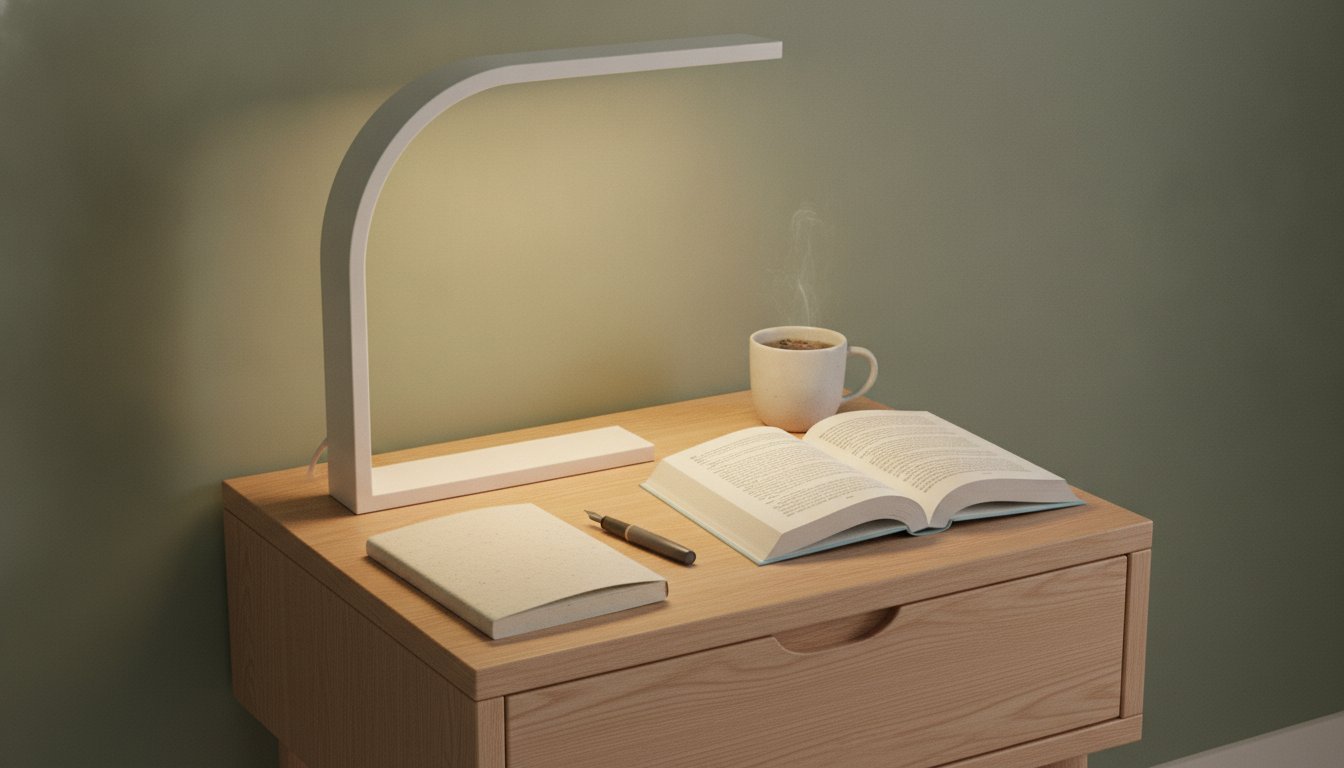
Melatonin production is highly sensitive to light. Bright overhead lighting mimics the midday sun, suppressing melatonin and keeping you awake. One hour before bed, turn off overhead lights and switch to low-wattage lamps, amber-colored bulbs, or candles.
6. Drop the Room Temperature
As your body prepares for sleep, your core temperature naturally drops. You can assist this process by keeping your bedroom cool. Research suggests that the optimal room temperature for sleep is between 65°F and 68°F (18°C to 20°C). A room that is too warm can disrupt your REM sleep and cause frequent awakenings.
7. Charge Your Phone Across the Room
The blue light from screens is notoriously bad for sleep, but the psychological stimulation of scrolling is even worse. Create physical friction by charging your phone on the opposite side of the room or in another room entirely. If you use your phone as an alarm, this also forces you to physically get out of bed to turn it off in the morning.
8. Use Sound Masking
If you live in a noisy city or a busy household, sudden sounds can startle your nervous system. A fan, a white noise machine, or a brown noise playlist can drown out these disruptive spikes in volume, allowing your brain to settle into a deeper state of rest.
9. Sip a Caffeine-Free Herbal Infusion
The act of drinking a warm beverage is inherently soothing. Opt for chamomile, valerian root, or lavender tea. Avoid anything with sugar or caffeine, and try to finish your drink about an hour before bed so you don't have to wake up in the middle of the night to use the restroom.
Phase 3: Calm the Physical Body
Once your mind is clear and your environment is set, it is time to address physical tension. Your muscles hold onto stress from the day, and physically releasing that tension signals your nervous system to relax.
10. Take a Warm Bath or Shower
This seems counterintuitive because a cool body sleeps better, but here is the science: a warm bath or shower dilates your blood vessels, bringing blood flow to the surface of your skin. When you step out of the shower, that heat quickly evaporates, causing your core body temperature to plunge rapidly. This mimics the natural temperature drop that occurs right before sleep.
11. Practice Progressive Muscle Relaxation (PMR)
If you feel physically restless, PMR is an incredibly effective technique. Starting at your toes, tense a specific muscle group as tightly as you can for five seconds, then release it completely. Move up through your calves, thighs, stomach, hands, shoulders, and face. This physical contrast between tension and release helps you recognize what true relaxation feels like.
12. Use the 4-7-8 Breathing Method
Developed by Dr. Andrew Weil, this breathing pattern acts as a natural tranquilizer for the nervous system. Inhale quietly through your nose for four seconds, hold your breath for seven seconds, and exhale completely through your mouth with a "whoosh" sound for eight seconds. Repeat this cycle four times. It forces your heart rate to slow down and activates your parasympathetic nervous system.
13. Read Physical Fiction
Non-fiction, self-help, or work-related books keep your brain in active, analytical thinking mode. Fiction, on the other hand, invites your mind into a different world, allowing your analytical thoughts to drift away. Stick to physical books or e-readers without backlights to avoid blue light exposure.
14. Wash Your Face and Apply Skincare
A simple hygiene routine does more than clean your skin; it acts as a powerful sensory anchor. The feeling of warm water, the scent of a gentle cleanser, and the repetitive motion of washing your face send a physical signal to your brain that the day is officially over.
15. Apply the 10-3-2-1-0 Rule
This classic sleep hygiene framework is a fantastic way to structure your afternoon and evening:
- 10 hours before bed: No more caffeine.
- 3 hours before bed: No more heavy meals or alcohol.
- 2 hours before bed: No more active work.
- 1 hour before bed: No more screens.
- 0 times: The number of times you should hit snooze in the morning.
How to Stay Consistent
Knowing what to do is only half the battle. The real challenge is doing it consistently.
Think about it this way: a perfect night routine that you only do once a month won't improve your sleep. A simple, three-step routine that you do every single night will transform it.
Start by choosing just three habits from this checklist. Perhaps you decide to dim your lights, charge your phone across the room, and do a quick brain dump. Commit to doing just those three things for one week.
As you build consistency, you will begin to notice a shift. Falling asleep will feel less like a struggle and more like a natural progression. Tracking your night routine streak can turn a chore into a satisfying daily win, helping you stay motivated even on nights when you feel tired or distracted. When you see your progress visually, you are far less likely to skip a night and break your momentum.
If you are struggling with chronic sleep issues, anxiety, or insomnia, please reach out to a professional or a trusted person in your life for support.
Key Takeaways
- Sleep is a transition, not a switch: Your brain requires time to wind down and shift from daytime focus to nighttime rest.
- Control your light and temperature: Dimming overhead lights and cooling your bedroom are the fastest biological cues to trigger melatonin production.
- Clear mental loops early: Writing a brain dump and preparing for tomorrow tonight prevents your mind from racing when your head hits the pillow.
- Start small and track your progress: Pick three simple habits to start with, and focus on building a consistent daily streak to make your routine second nature.
Build Better Habits — Track Your Streaks
Set goals, build streaks, and transform your life one habit at a time.