
- Published on
The Power of Visual Streaks: Mastering Habit Tracking
You have probably stared at a blank calendar, waiting for the motivation to finally hit so you can start that new habit. Maybe it’s exercising, writing, or finally cutting out sugar. You wait for the perfect moment, the perfect mood, or the right amount of energy. But here is the secret: that moment rarely arrives. Motivation is a fickle guest; discipline is a reliable roommate.
The real trick to building a habit that actually sticks isn’t finding more willpower. It is about creating a visual feedback loop that makes your progress undeniable. When you track a streak, you are doing more than just marking a box; you are providing your brain with the immediate dopamine hit it craves. You are turning an abstract goal into a tangible, growing reality.
Why Your Brain Loves Streaks
Psychology tells us that we are wired for completion. This is often referred to as the "goal-gradient effect." Essentially, as we get closer to a goal, our efforts increase. When you start tracking a habit, you are visually demonstrating your commitment, and the longer the chain of days becomes, the more your brain wants to protect it.
Think about it this way: if you miss a day early on, it feels like a minor hiccup. But if you have been showing up for 30 days straight, missing a day feels like a loss. That discomfort isn't a bad thing—it is a powerful psychological lever. You aren't just trying to "get better" at something; you are now in the business of not breaking the chain.
Transforming Abstract Goals into Daily Wins
Big goals, like "getting fit" or "learning a language," are often too vague to track effectively. They feel heavy and distant. To make a streak work for you, you need to break those big goals into tiny, repeatable actions. Instead of "getting fit," your habit becomes "doing 10 pushups." Instead of "learning a language," it becomes "practicing five minutes of vocabulary."
By shrinking the task, you lower the barrier to entry. When the task is small, the streak becomes easy to maintain. When the streak is easy to maintain, you show up more often. And when you show up more often, the habit becomes a natural part of your identity. You stop being someone who tries to exercise and start being someone who is an athlete.
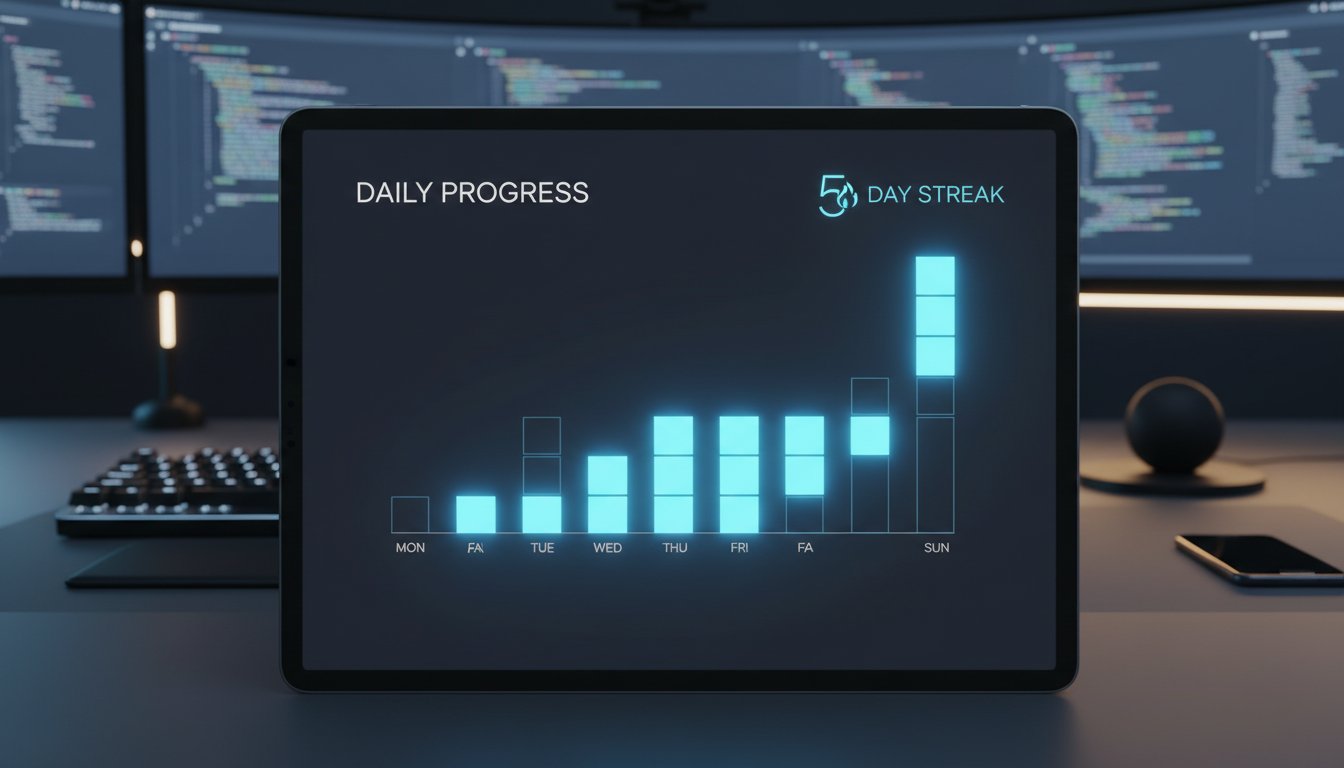
Tracking your daily progress through a visual interface—like a simple chart, a journal, or digital habit tracking apps—serves as a constant reminder of your potential. It allows you to see how far you have come, which is crucial on the days when you feel like you aren't making any progress at all. Seeing a 10-day streak on your screen can be the difference between rolling out of bed to train and hitting the snooze button.
The Danger of the "All-or-Nothing" Mindset
One of the biggest pitfalls in habit formation is the perfectionist trap. Many people believe that if they miss one day, the streak is ruined and they might as well give up. This is a cognitive distortion. In reality, life happens. You will get sick, you will have a busy work week, or you will simply forget.
The goal isn't to be a robot; the goal is to be consistent. Some of the most successful people in habit building follow a simple rule: "Never miss twice." If you break the chain, acknowledge it, and get right back to it the next day. The streak isn't about perfect performance; it's about the commitment to return to the process.

How to Start Your Streak Today
If you want to build a habit that lasts, start by choosing just one thing. Do not try to overhaul your entire life in a single week. Pick one behavior that aligns with the person you want to become.
- Define the action: Make it so simple you can’t say no.
- Choose your tracker: Use a physical notebook, a wall calendar, or digital tools to record your success.
- Set a trigger: Link your habit to an existing part of your day (e.g., "After I pour my morning coffee, I will write for 10 minutes").
- Mark the X: Every single day, mark your progress.
Seeing your streak grow every day can be incredibly motivating, especially when you start to see the cumulative impact of your efforts. When you look back at a month of marked days, you aren't just looking at a pattern; you are looking at evidence of your own discipline.
If you are currently struggling with a habit, remember that you don't need a total life overhaul to see change. You just need to show up today. Then, do it again tomorrow. Small progress becomes visible when you track it daily, and that visibility is what sustains you through the long haul. If you are struggling with deeper issues, please reach out to a professional or a trusted person in your life. You don't have to navigate the path to improvement alone.
Key Takeaways
- Focus on the chain, not the outcome: The goal is to keep your streak alive by performing the small, daily action you’ve defined.
- Shrink the task: If a habit feels overwhelming, scale it down until it is so simple you can do it on your worst day.
- Don't miss twice: A single slip-up is just data. Two days in a row is the start of a new, unwanted habit. Always get back on track immediately.
- Use visual cues: Tracking your progress using habit tracking apps or a simple log makes the invisible work of personal growth feel real and rewarding.
You have the power to change your life, one day at a time. Pick your habit, mark your first day, and start building the streak that will define your future self.
Build Better Habits — Track Your Streaks
Set goals, build streaks, and transform your life one habit at a time.