
- Published on
The 100-Day Reading Challenge: Build a Lifelong Habit
You have probably stared at a bookshelf full of unread titles, promising yourself that "this weekend" you will finally dive into that stack. Then, the weekend arrives, and somehow, the hours vanish into scrolling, chores, or simply feeling too tired to focus. You are not alone in this; the gap between the intention to read and the actual act of sitting down is one of the most common hurdles in personal growth.
The issue isn't a lack of interest, but rather the absence of a structure that makes reading feel like a natural part of your day. Reading is a high-cognitive task, and when your brain is tired, it will naturally gravitate toward the path of least resistance. To bridge that gap, you need to stop thinking of reading as a massive project and start treating it as a daily, measurable habit. That is where a 100-day challenge comes in.
Why 100 Days Changes Your Perspective
The human brain loves progress. When you commit to a specific timeframe, you transform reading from an abstract "should do" into a concrete mission. Research on behavioral psychology suggests that habit formation relies heavily on the "habit loop"—a cue, a routine, and a reward. By setting a 100-day window, you provide your brain with a clear start and end point, making the daily commitment feel manageable rather than like a lifetime sentence.
When you track your progress over 100 days, you aren't just counting pages; you are documenting the growth of your identity. You move from someone who "wants to read more" to someone who "is a reader." This shift is powerful. It stops being about finishing a book and starts being about the consistency of showing up, even if it is just for 10 minutes before bed.
Designing Your Reading Challenge
Success in a 100-day challenge isn't about intensity; it is about sustainability. If you aim to read fifty pages a day, you might succeed for a week, but burnout will eventually set in. Instead, focus on a "floor" goal—the absolute minimum you are willing to do on your worst day.
Start with a Manageable Floor
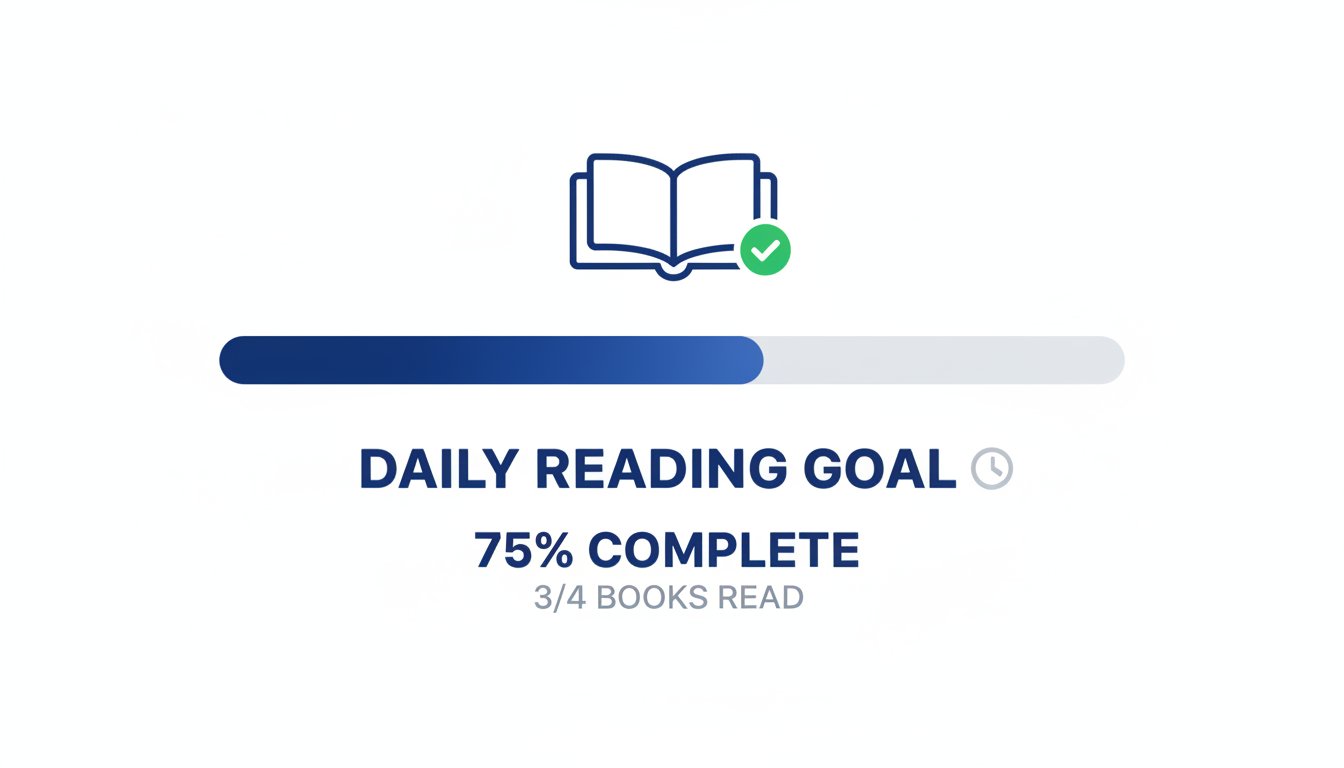
Your floor goal could be as simple as one page, or perhaps ten minutes of reading time. The goal of this floor is to keep the momentum alive on days when life gets chaotic. By ensuring you never miss a day, you build a streak. Seeing that streak grow—day 10, day 20, day 50—provides a psychological boost that makes it harder to skip a session. Tracking your reading streaks using simple digital tools can help you visualize this progress, turning a private habit into a visible achievement.
Choose the Right Material
Don't start your 100-day journey with a dense, thousand-page textbook that makes your eyes glaze over. Pick books that actually excite you. If you are struggling to stay engaged, try alternating between genres. Read something educational for two weeks, then switch to a novel or a biography. Variety keeps the brain curious and prevents the "reading slump" that often happens when you force yourself through material you secretly dislike.
Create a Dedicated Reading Environment
Habits are often triggered by context. If you try to read in bed, you might fall asleep. If you try to read at your desk, you might get distracted by your email. Find a "reading chair" or a specific corner of your home that is reserved for books. By associating a physical space with the act of reading, you train your brain to enter a state of focus the moment you sit down.

Overcoming the Mid-Challenge Slump
Around day 30 or 40, the initial excitement will naturally wane. This is the point where most people quit. The novelty of the challenge has worn off, and the reality of the daily commitment begins to feel like a chore. This is where you need to pivot from motivation to discipline.
Remember that you don't need to feel "inspired" to read. Reading is a skill, and like any other, it requires maintenance. If you find your focus drifting, try reading in shorter bursts. Split your daily commitment into two five-minute sessions—one in the morning with coffee and one before bed. This breaks the friction and makes the task feel less daunting.
If you find yourself missing a day, do not abandon the challenge. The goal isn't perfection; it is persistence. If you miss a day, just make sure you don't miss two. This "never miss twice" rule is a cornerstone of long-term habit building. It allows for human error while preventing a temporary setback from turning into a total abandonment of your goals.
The Power of Tracking Your Milestones
As you approach the final stretch of your 100 days, you will notice something interesting: you no longer need the challenge to remind you to read. The habit has become part of your identity. You might find yourself reaching for a book instinctively when you have a spare moment in line at the store or while waiting for a meeting to start.
Tracking your pages or chapters throughout these 100 days serves as a mirror for your personal growth. Seeing the total number of pages read at the end of the challenge is incredibly satisfying. It provides tangible evidence that you have accomplished something significant. Using countdown tools to see how many days remain in your challenge can also keep the finish line in sight, providing a sense of urgency that prevents procrastination.
If you are struggling with focus or feel overwhelmed, please reach out to a professional or a trusted person in your life. Sometimes, the inability to concentrate on a book is a sign of deeper stress or burnout that requires more than just a habit change to resolve.
Key Takeaways
- Set a low floor: Establish a minimum reading goal, like one page or ten minutes, to ensure you can maintain your streak even on busy days.
- Focus on identity, not just output: The goal of the 100-day challenge is to transform yourself into a reader, not just to finish a specific number of books.
- Use visual tracking: Seeing your progress through streaks or by counting pages keeps you motivated and provides a sense of accomplishment that fuels future action. Small progress becomes visible when you track it daily.
- Embrace the "never miss twice" rule: If life gets in the way and you miss a day, don't let it turn into a week. Jump back into your routine immediately to keep your momentum alive.
- Create the right environment: Reserve a specific spot for reading to help your brain transition into a focused state more quickly. Consistent, small actions are the foundation of a lifelong habit.
Build Better Habits — Track Your Streaks
Set goals, build streaks, and transform your life one habit at a time.