
- Published on
The 100-Day Micro-Journaling Challenge: A Guide
You sit down to write, but your mind goes blank. The page stares back, empty and intimidating. You tell yourself you’ll start a journal, but after three days of trying to write long, introspective paragraphs, you burn out. Life gets busy, the notebook gathers dust, and another potential habit fades away.
Here’s the truth: You don’t need to write a memoir to reap the benefits of self-reflection. You just need a few minutes and a single, focused thought.
Micro-journaling isn’t about documenting every detail of your day. It is the practice of capturing one small, meaningful insight in just a few sentences. By lowering the barrier to entry, you make the habit of reflection sustainable rather than overwhelming.
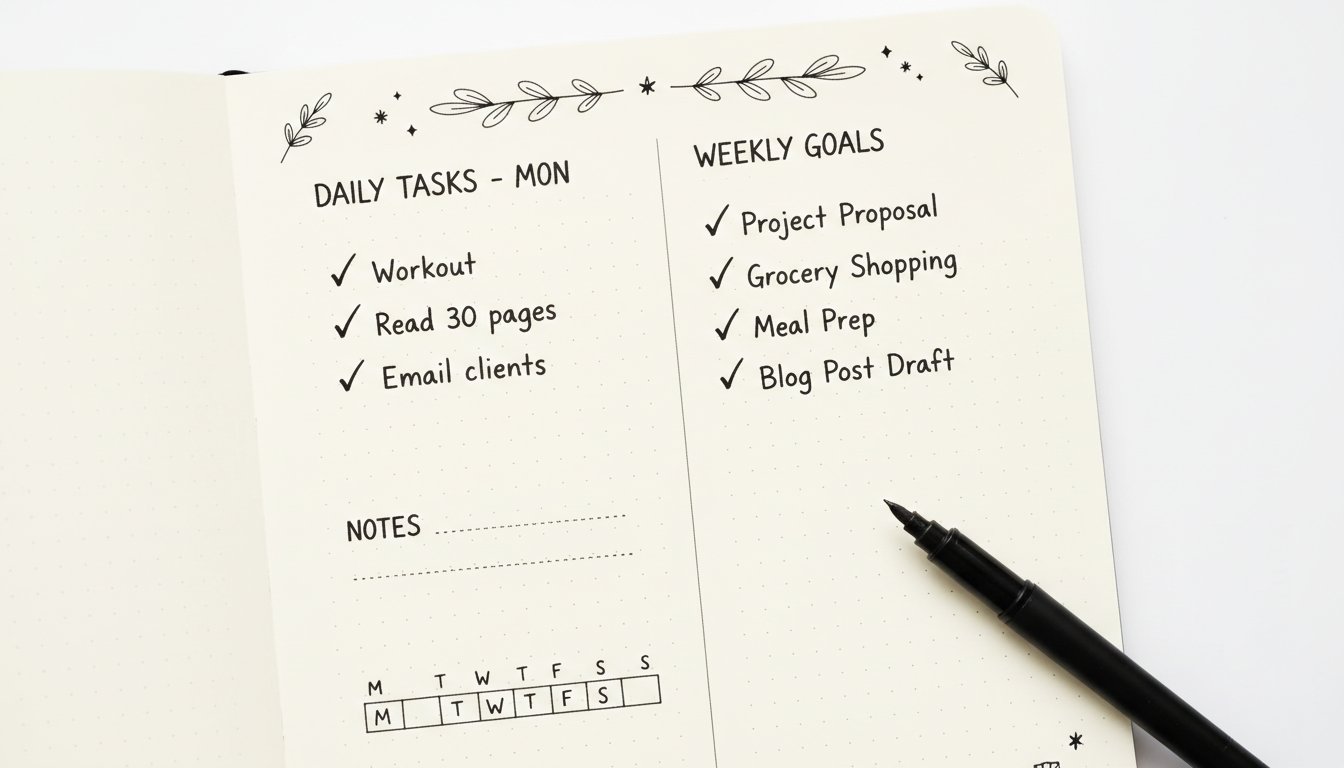
Why Micro-Journaling Works
The human brain loves efficiency, but it also craves clarity. When you force yourself to write a full page, your brain views it as a chore, triggering resistance. Micro-journaling bypasses this resistance by utilizing the principle of "minimum viable effort."
Psychology suggests that the simple act of naming an emotion or identifying a highlight of your day helps regulate your nervous system. By focusing on just one thing—a win, a challenge, or a moment of gratitude—you train your brain to scan for positives throughout the day. It is not just about recording the past; it is about priming your mind for the present.
Setting Up Your 100-Day Challenge
A 100-day window is long enough to cement a new identity, but short enough to feel achievable. To succeed, you need to strip away the complexity.
First, choose a simple medium. Whether it is a physical notebook, a notes app on your phone, or a dedicated tracking tool, the goal is accessibility. If it takes you longer than three minutes to find your journal, you are less likely to do it.
Next, define your "one thing." For this 100-day journey, pick a simple prompt that you answer every night. It could be:
- One thing that went well today.
- One thing I learned today.
- One emotion I felt strongly today.
- One small win I achieved.
By keeping the prompt consistent, you remove the "decision fatigue" that often kills new habits. You aren't deciding what to write; you are simply filling in the blank.
The Power of Tracking Your Progress
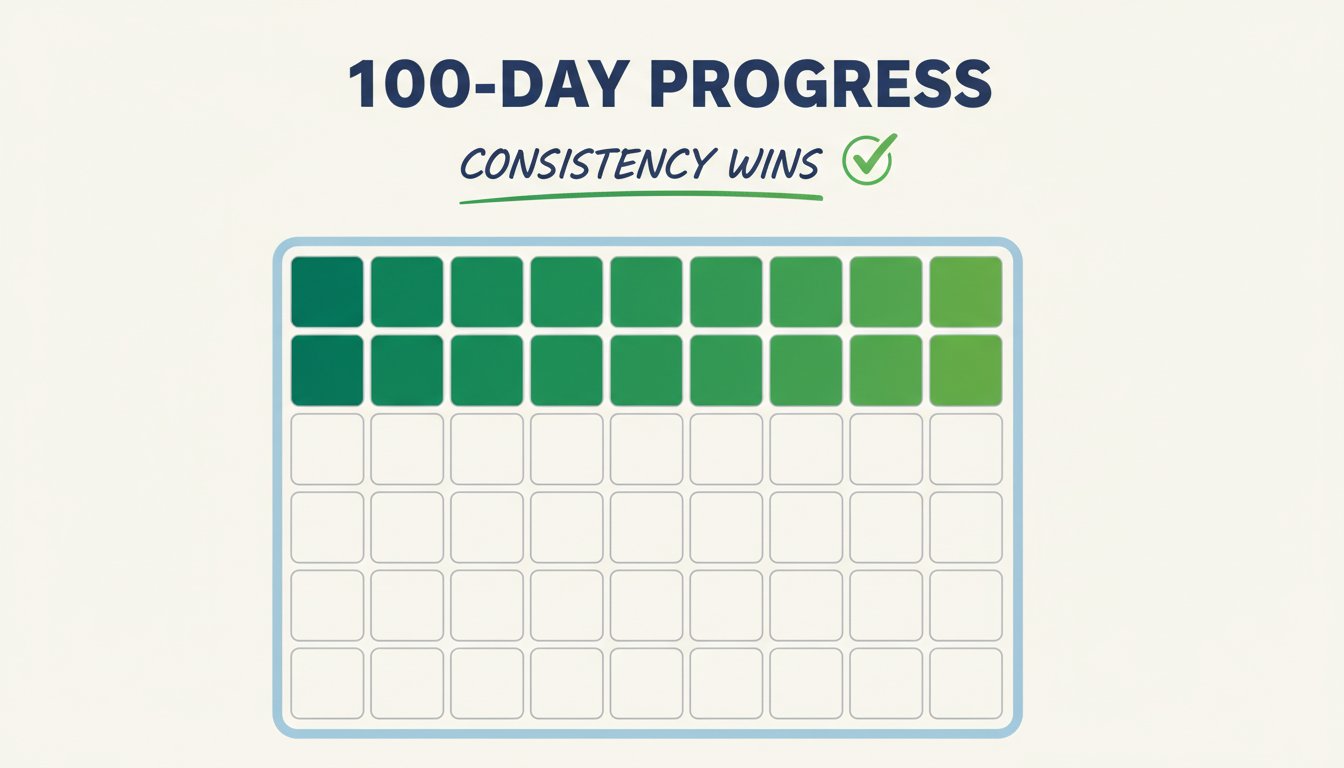
The magic of a 100-day challenge isn't just in the writing—it is in the continuity. When you track your days, you create a visual record of your commitment. Seeing a streak of 10 or 20 days encourages you to keep going, even on the days when you feel like you have nothing to say.
Tracking your progress makes the invisible work of personal growth feel tangible. If you miss a day, don't worry—the goal is progress, not perfection. Simply note the gap and start again the next morning. Most people find that using simple streak tracking tools helps them stay consistent because the visual representation of their effort becomes a reward in itself.
How to Stay Consistent
Consistency is often mistaken for willpower, but it is actually about environment design.
Attach your journaling to an existing habit. This is often called "habit stacking." For example, place your notebook on your nightstand so it is the last thing you see before you turn off the light. Or, if you prefer a digital approach, set a recurring reminder on your phone that triggers the moment you finish your evening meal.
If you find yourself stuck, remember the "two-sentence rule." You are allowed to write more, but you are only required to write two sentences. On your best days, you might write a paragraph. On your worst days, you might just write, "Today was hard, but I stayed calm." Both entries count equally. Both entries move the needle.
Managing the "Messy Middle"
Somewhere around day 30 or 40, the novelty will wear off. This is the "messy middle." You might feel like you’re just repeating yourself or that your entries aren't "deep" enough.
Ignore that voice. The goal of micro-journaling isn't to write a bestseller; it is to build the muscle of awareness. Even a repetitive entry shows that you showed up for yourself. If you feel like your entries are becoming stale, switch your focus to a different prompt for a few days. You could track "one thing I’m grateful for" instead of "one thing I learned."
If you are going through a particularly difficult time, it can be helpful to focus on simple observations. If you're struggling, please reach out to a professional or a trusted person in your life. Journaling is a tool for reflection, but it is not a substitute for support.
Celebrating the 100-Day Milestone
When you reach day 100, take a moment to look back. You don’t need to read every entry, but flipping through the pages will show you exactly how your perspective has shifted. You will likely notice patterns in your mood, your reactions to stress, and the things that genuinely bring you joy.
You started this challenge as someone who struggled to find the time for self-reflection. You ended it as someone who has proven that they can show up for themselves, day after day. That is the true power of micro-habits.
Key Takeaways
- Keep it small: Aim for one insight or two sentences to ensure the habit remains sustainable.
- Stack your habits: Link your journaling to a pre-existing part of your routine, like getting into bed, to make it automatic.
- Track your streak: Using a habit tracker to log your daily progress can provide the motivation needed to push through the "messy middle."
- Prioritize consistency over quality: Showing up is more important than writing something profound; your growth comes from the act of reflecting, not the content of the words.
- Be kind to yourself: If you miss a day, simply reset and continue. Consistency is about your long-term commitment, not a perfect record.
Remember, small progress becomes visible when you track it daily. By the time you hit your 100-day mark, you won't just have a collection of notes—you'll have a new, more aware version of yourself.
Build Better Habits — Track Your Streaks
Set goals, build streaks, and transform your life one habit at a time.