
- Published on
The 10-Day Tech Break: Tracking Screen Time for Focus
You stare at your phone, and suddenly, two hours have evaporated. You were just checking a notification, but then you scrolled, swiped, and tapped your way into a digital abyss. This is a common experience, but it doesn't have to be your default state.
Most of us treat screen time as a passive background activity. We assume we are in control, yet our habits suggest otherwise. The truth is, our brains are wired to seek the immediate hit of dopamine that comes from infinite scrolling, and without a deliberate intervention, we will continue to lose hours to our devices.
If you feel like your attention is fragmented or your focus is constantly being hijacked, a 10-day tech break might be the reset you need. It isn't about becoming a luddite; it’s about reclaiming your autonomy over your own mind.
Why 10 Days?
The number 10 is significant because it is long enough to break the immediate physical itch of constant connectivity, but short enough to feel achievable. Research suggests that habit formation—and breaking—relies heavily on the consistency of the environment you create for yourself. When you commit to a specific timeframe, you change your relationship with your device from "mindless use" to "conscious engagement."
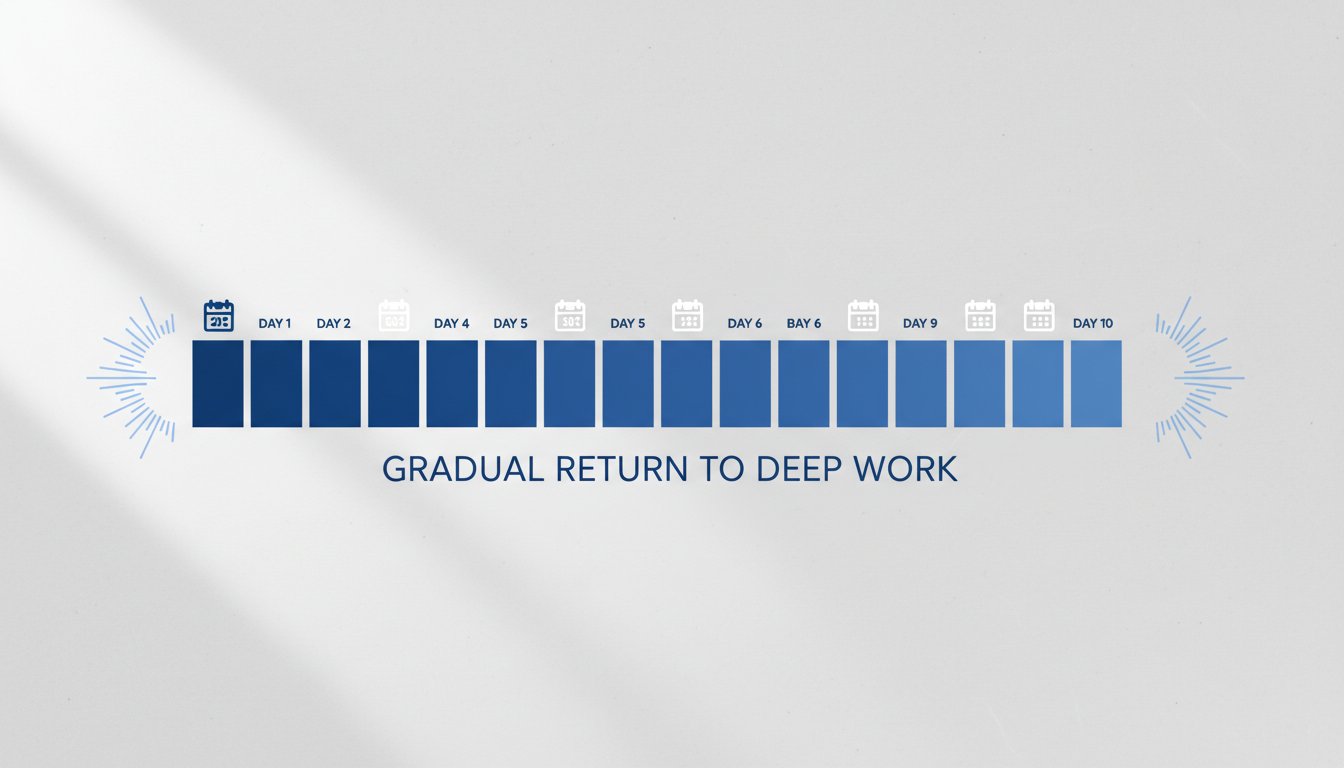
Psychologically, when you set a hard start and end date, you create a psychological "container" for your behavior. You aren't just quitting technology; you are completing a project. This shift in perspective makes it easier to resist the urge to check your phone because you know the 10-day finish line is waiting for you. Many find that keeping a visual record of these days—using a simple tally or a countdown tool—helps maintain momentum when the initial excitement fades around day four or five.

The Anatomy of a Tech Break
A tech break isn’t just about turning off your phone. It is about understanding what you are actually doing with your time. Before you start, perform a simple audit. Check your device's built-in usage statistics to see exactly where your hours are going. Are you using your phone for communication, or are you mindlessly consuming content?
Once you have your baseline, define your rules. A "break" means something different for everyone. For some, it means deleting specific social media apps; for others, it means setting a hard "no-screen" rule after 8:00 PM. The goal is to move from passive consumption to active, intentional living.
Here is how you can structure your 10 days:
- Days 1–3: The Detox Phase. This is when your brain will actively protest the lack of dopamine. You will feel the "phantom vibration" of a phone that isn't ringing. Expect boredom. Embrace it.
- Days 4–7: The Clarity Phase. You will start to notice that your focus stays locked on tasks longer. The internal "noise" of constant updates begins to quiet down.
- Days 8–10: The Integration Phase. Now is the time to decide what healthy habits you want to keep. Do you want to keep your phone out of the bedroom? Do you want to continue a specific app-free streak?
The Power of Tracking Your Progress
If you don't track your progress, you aren't really conducting an experiment; you’re just hoping for a result. When you record each day of your 10-day break, you are creating a feedback loop. Every evening, noting that you successfully navigated the day without falling into a social media trap provides a sense of accomplishment.
Seeing your streak grow on a calendar or a dedicated tracking tool provides a tangible representation of your discipline. It turns an abstract goal—"I want to be more focused"—into a measurable reality. When you have a streak of five or seven days, you are less likely to break it for a fleeting, meaningless notification. The data becomes a mirror, showing you that you are capable of more focus than you gave yourself credit for.
Overcoming the "Digital Itch"
The urge to check your phone is often a response to stress or boredom. When you feel that sudden spike of anxiety that tells you to pick up your phone, pause. Ask yourself: "Am I picking this up because I need information, or because I am uncomfortable with this moment of stillness?"
This is where the practice of being present becomes a skill you can train. If you are struggling with intense feelings of anxiety or an inability to step away, please reach out to a professional or a trusted person in your life. Sometimes, our reliance on technology is a symptom of deeper stressors that need more than just a 10-day break to resolve.
To stay consistent, find a physical space where your phone does not belong. Keep it in a drawer or another room during your morning routine or while you work. By physically distancing yourself from the device, you reduce the "friction" required to stay focused.
Moving Forward After Day 10
Once you reach the end of your 10 days, don't just go back to your old habits. Use the data you gathered to build a new, sustainable relationship with technology. You might realize that you don't miss certain apps at all. You might find that your sleep quality improved significantly when you stopped scrolling before bed.
The goal of this break is not to live in the dark ages, but to be the master of your tools rather than their servant. Use your experience to set new boundaries, like keeping your phone in another room during meals or setting specific times of day to check your messages. Your attention is your most valuable resource; treat it as such.
Key Takeaways
- Define your constraints: A 10-day break is most effective when you have clear, written rules about what is "off-limits" and what is allowed.
- Embrace the boredom: The first few days will feel uncomfortable, but that discomfort is actually the feeling of your brain resetting its baseline for stimulation.
- Track to stay motivated: Using a habit tracking app or a simple manual tracker helps you visualize your progress, making it much harder to break a long-running streak.
- Audit your usage: Use your device's built-in tools to see where you were losing time before you started, so you know exactly what you’re gaining back.
- Build new boundaries: After your 10 days, use the insights you gained to create a more sustainable, intentional daily routine that prioritizes your focus over constant connectivity.
Remember, every day you stay consistent is a day you reclaim your own attention. Small, intentional steps lead to lasting change.
Build Better Habits — Track Your Streaks
Set goals, build streaks, and transform your life one habit at a time.