
- Published on
Build a Weekly Review Habit in 30 Minutes
You finish another chaotic Friday afternoon, close your laptop, and feel a familiar weight sink into your chest. You were busy all week, but did you actually get anything important done?
Most of us spend our days reacting to whatever screams the loudest. Emails, Slack messages, sudden requests, and endless notifications dictate our schedule. We slide into the weekend feeling exhausted but empty, only to wake up on Monday morning already behind.
But there’s a catch. The problem isn’t a lack of time. It’s a lack of perspective.
Without a regular pause to look at the big picture, you are driving a car with a muddy windshield. You might be moving fast, but you have no idea if you are heading toward a cliff. Building a weekly review habit is how you clean that windshield.
What Is a Weekly Review Habit?
A weekly review is a dedicated, 30-minute appointment with yourself to close the loops of the past seven days and map out the next seven. It is not a grueling deep dive into your life's purpose. It is a tactical reset.
Think about it this way. Your brain is a terrible office but an excellent factory. It is designed to process information and create things, not to store a massive, messy list of open tasks. When you do not regularly empty your mental inbox, your brain stays in a state of low-grade panic.
Psychologists call this the Zeigarnik Effect. This is our brain’s tendency to remember uncompleted or interrupted tasks better than completed ones. Every unfinished email, half-read article, and vague promise to "call the dentist" sits in your working memory, draining your daily energy.
A weekly review closes these open loops. By spending just 30 minutes organizing your life, you free up massive amounts of mental bandwidth for the week ahead.
The 30-Minute Weekly Review Protocol
To make this habit stick, you must keep it simple. If your review takes two hours, you will eventually stop doing it. 30 minutes is the sweet spot. It is long enough to get organized, but short enough to fit into even the busiest schedule.
Let's break this down into three simple, 10-minute phases.
Phase 1: Clear the Clutter (10 Minutes)
Before you can plan the future, you must clean up the past. This phase is about gathering all the loose inputs of your week and putting them in their proper place.
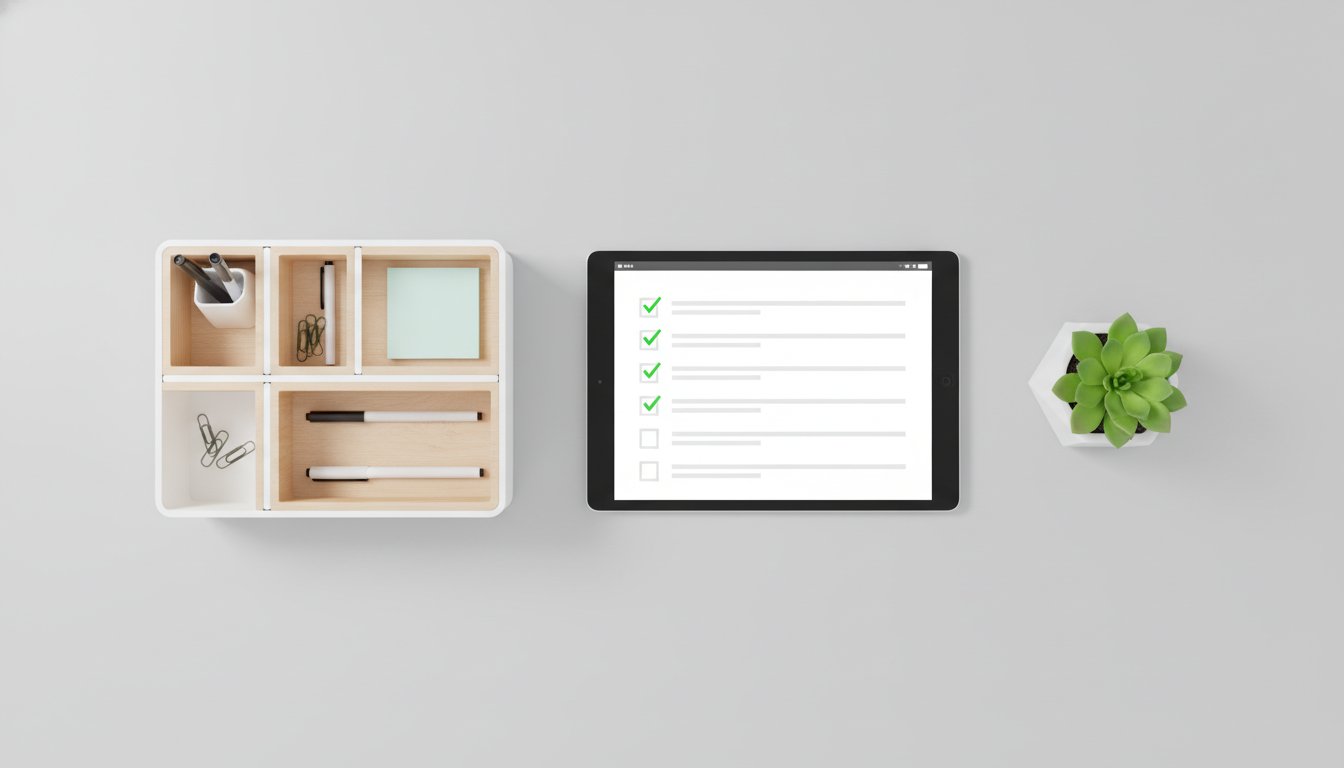
- Empty your inbox: Go through your work and personal emails. Your goal isn't necessarily to answer everything, but to delete the junk and turn actionable emails into concrete tasks.
- Clear your physical space: Clear off your desk. Throw away sticky notes, file loose papers, and put your notebook back where it belongs. A clean desk creates a clean mind.
- Do a mental sweep: Grab a blank piece of paper and write down everything that is swirling in your head. Tasks, worries, ideas, projects you want to start, or people you need to text. Get it all out.
Phase 2: Review the Past Week (10 Minutes)
Now that your head is clear, look back at the last seven days. This step is crucial for building self-trust and recognizing your progress.
- Look at your calendar: Review the meetings and events from the past week. Did you miss any follow-ups? Are there any loose ends you need to tie up?
- Track your habits: Review your daily habits. Did you hit your workout goals? Did you stay on track with your reading? Using a habit tracking app to see your weekly streaks makes this part incredibly satisfying. Seeing a visual record of your hard work builds the momentum you need to keep going.
- Celebrate your wins: Write down three things that went well this week. We are biologically wired to focus on our failures. Forcing yourself to acknowledge your wins rewires your brain to recognize progress.
Phase 3: Plan the Next Week (10 Minutes)
Finally, look ahead. This is where you transition from reactive mode to proactive control.
- Choose your top three priorities: If you could only get three major things done next week, what would they be? Write them down. These are your non-negotiables.
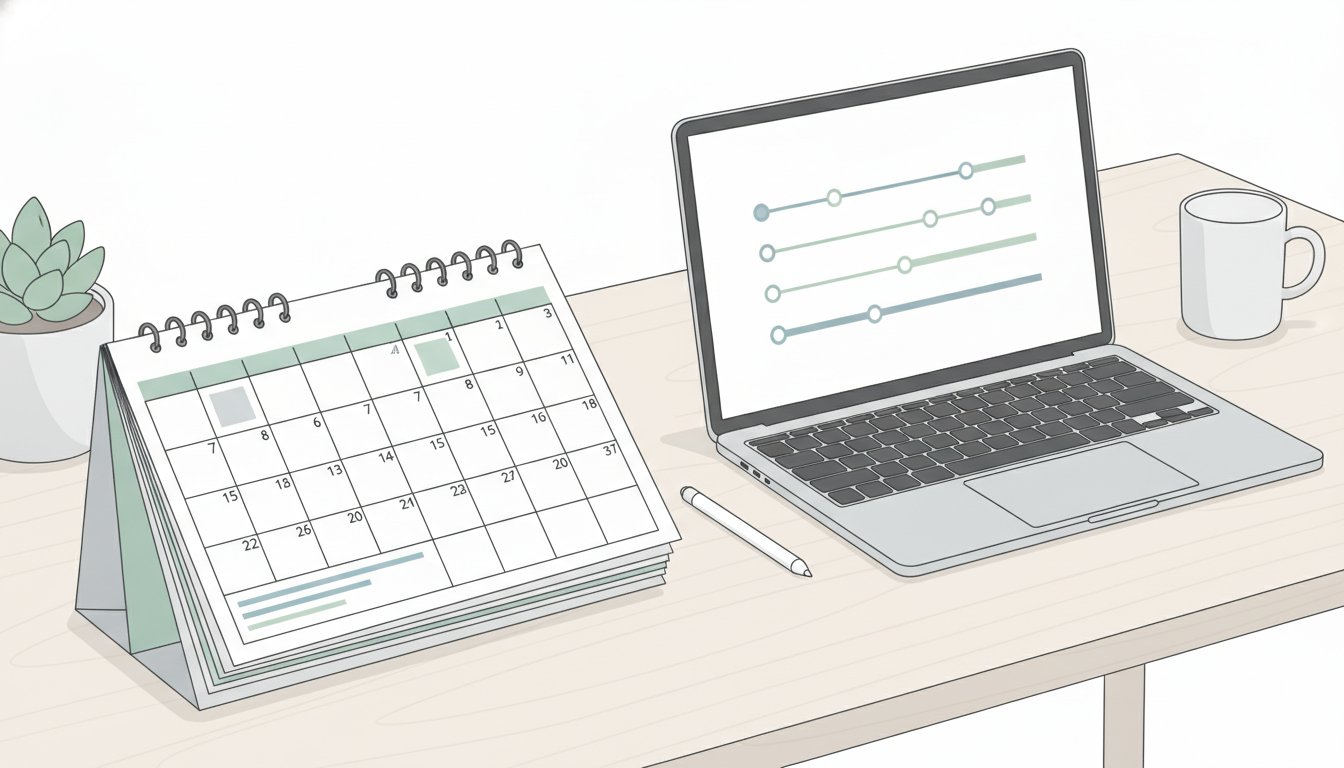
- Review your calendar: Look at the upcoming seven days. Do you have enough time to finish your top priorities? If your calendar is packed with back-to-back meetings, you need to adjust your expectations.
- Map your milestones: Check your long-term goals. Setting a countdown for your most important goals turns abstract deadlines into real, motivating targets. Know exactly how many weeks you have left to finish that major project, prepare for that exam, or save up for that trip.
Common Weekly Review Mistakes
Many people try to start a weekly review habit but give up after a few weeks. If you’ve failed at this before, you likely fell into one of these common traps.
Trap 1: Making it Too Complicated
If your review requires a complex 15-step checklist, database setups, and color-coded spreadsheets, you are setting yourself up for failure. Keep it to a simple notebook or a basic document. The best system is the one you actually use.
Trap 2: Doing It at the Wrong Time
Do not try to do your weekly review on Monday morning when your inbox is already exploding with fresh emergencies. Do not do it late Sunday night when you are tired and dreading the upcoming week.
Pick a low-friction time. Friday afternoons at 3:00 PM are perfect. Your brain is already winding down for the weekend, and doing a review allows you to fully unplug for the next two days. Alternatively, Sunday mornings over a quiet cup of coffee can feel peaceful and grounding.
Trap 3: Turning It Into a Guilt Trip
If you look back at your week and see that you missed your workouts, skipped your habits, and got distracted, do not beat yourself up. A weekly review is not a trial; it is a diagnostic tool.
If a pilot blows off course, they do not yell at the plane. They simply adjust the controls. Treat your weekly review as a neutral course correction.
How to Make the Habit Stick
Building a new habit requires strategy, not just willpower. Here is how to make your weekly review an automatic part of your life.
First, use temptation bundling. Pair your review with something you love. Only listen to your favorite playlist during your review, or buy a premium coffee from your favorite local cafe specifically for this 30-minute block.
Second, schedule it like a doctor's appointment. Put a recurring 30-minute block on your digital calendar. Block the time, turn off notifications, and treat it as a sacred meeting with the most important person in your life: yourself.
Finally, protect your consistency. If you track your weekly review as a recurring streak, you'll protect that 30-minute block like a sacred meeting. There is real psychological power in keeping a streak alive. When you see that you have completed your review for six weeks in a row, you will fight harder to make sure you do not break the chain on week seven.
What Happens When You Commit?
After your first week of doing this, you will notice a subtle shift. You will go into the weekend without that nagging feeling that you forgot something.
After four weeks, you will start to notice patterns. You will see which habits are slipping and why. You will start saying "no" to meetings that do not align with your top priorities.
After six months, your life will look entirely different. You will no longer feel like a leaf blowing in the wind. You will be the one steering the ship. All it takes is 30 minutes a week to stop reacting to life and start designing it.
Key Takeaways
- Keep it to 30 minutes: Divide your time into three simple phases: clearing clutter, reviewing the past, and planning the future.
- Close open loops: Use your review to empty your brain of unfinished tasks, reducing cognitive load and mental fatigue.
- Pick a low-friction time: Friday afternoons or Sunday mornings work best to avoid the Monday morning rush.
- Track your progress: Keeping your weekly review on a streak tracker or habit tracking app creates visual momentum that makes the habit stick.
Build Better Habits — Track Your Streaks
Set goals, build streaks, and transform your life one habit at a time.