
- Published on
30 Days Without People-Pleasing: What Changes
You said yes to helping a coworker move on your only free Saturday in three weeks. As soon as the word left your mouth, your stomach sank. You did not want to go. You were exhausted, your apartment was a mess, and you desperately needed a day to yourself. Yet, the fear of disappointing someone else felt heavier than the weight of your own exhaustion.
This is the classic trap of the people-pleaser. We trade our peace of mind for temporary external approval, only to end up resentful, overworked, and disconnected from our own needs. But what happens if you decide to stop? What happens when you go 30 days without automatic compliance, fawning, and saying "yes" when you mean "no"?
The transition is not easy, but the mental and emotional shifts that occur over a month of prioritizing your own boundaries are profound. Let's break down exactly what happens to your brain, your energy, and your relationships when you commit to a 30-day people-pleasing detox.
The Psychology: Why Saying "No" Feels Like a Threat
To understand why stopping is so difficult, we have to look at how our brains are wired. Psychologists often link chronic people-pleasing to a concept called sociotropy—a strong need for social acceptance and a deep dread of personal rejection.
For many of us, this behavior started as a childhood survival strategy. If you kept everyone happy, you stayed safe. When you attempt to set a boundary as an adult, your amygdala—the brain's threat detector—reacts as if you are facing physical danger. Your heart races, your palms sweat, and a wave of guilt washes over you.
If you are struggling with deep-seated trauma, anxiety, or compulsive behaviors related to people-pleasing, please reach out to a professional or a trusted person in your life.
Here's the thing: boundaries are not selfish. They are the infrastructure of healthy relationships. When you stop pleasing, you stop lying about your capacity.
Days 1 to 7: The Guilt Phase
The first week of choosing yourself is, quite frankly, uncomfortable. You will feel like a bad person.
During these first seven days, your primary challenge is overcoming the automatic "yes." When a friend asks you to feed their cat at the last minute, or a boss asks you to take on extra work without compensation, your instinct will be to comply.
When you finally say, "I can't help with that this time," the silence that follows will feel incredibly heavy. You will want to over-explain, offer five excuses, and apologize profusely.
But there's a catch. The more you explain, the more you invite the other person to negotiate your boundary. During week one, you learn the power of the simple, polite rejection: "I wish I could, but I don't have the capacity for that right now."
By day four or five, you might find yourself tracking your progress just to stay strong. Many people find that using a "days since" counter is incredibly helpful during this initial stage. Seeing that you have successfully maintained your boundaries for five consecutive days can give you the quiet confidence to say "no" on day six.
Days 8 to 20: The Ripple Effect and the Pushback
By the second week, your immediate circle will begin to notice a shift. This is where you encounter the ripple effect of your new behavior.
People who are used to your effortless compliance may become confused, frustrated, or even defensive. You might hear comments like, "You've changed lately," or "You used to be so easygoing."
This is a critical turning point. It is vital to understand that their frustration is not proof that you are doing something wrong. It is simply proof that your old compliance was highly convenient for them.
During this phase, you will start to see your relationships clearly for the first time:
- The Mutual Friends: These people will adapt. They might be surprised at first, but they will respect your "no" and continue to value your company.
- The Transactional Friends: These are the people who only valued you for what you could do for them. When the free rides, constant favors, and emotional labor stop, they may naturally drift away.
Losing these transactional connections can feel painful, but it is actually a massive win for your mental health. You are clearing out the relational clutter that has been draining your energy for years.
Days 21 to 30: The Energy Return
By the third week, something magical happens. The heavy blanket of chronic anxiety begins to lift, replaced by a surge of personal energy.
Think about how much mental bandwidth you used to spend worrying about how others perceived you. You would replay conversations in your head, draft text messages ten times before sending them, and stress about events you never wanted to attend in the first place.
When you stop people-pleasing, that leaked energy returns to you. Suddenly, you have the time and focus to:
- Recommit to your personal health and fitness goals.
- Spend quiet evenings resting without feeling guilty.
- Engage in creative hobbies that you "never had time for" before.
You begin to realize that your time is your most valuable non-renewable resource. Seeing your streak of self-advocacy grow day by day on a habit tracking app can serve as a powerful visual reminder of the self-trust you are actively rebuilding.

What a Typical Week Looks Like: Before vs. After
To see the real-world impact of this 30-day challenge, let's look at how everyday scenarios shift when you stop pleasing others at your own expense.
| Situation | The People-Pleasing Response (Before) | The Boundary-Driven Response (After) |
|---|---|---|
| An invitation to an event you are too tired to attend | "I'd love to go!" (Spends the night wishing they were home, feeling resentful). | "Thanks for thinking of me, but I'm going to stay in and rest tonight." |
| A coworker asks you to do their task | "Sure, I can handle that for you." (Stays late at work, misses dinner with family). | "I can't take that on right now; I have to prioritize my own deadlines." |
| Someone cuts in front of you in a line | Says nothing, fumes silently, and feels angry for the rest of the day. | "Excuse me, the line starts back there." (Said calmly and directly). |
| A friend makes a joke at your expense | Laughs along uncomfortably to keep the peace. | "I don't really appreciate that kind of joke. Please don't say that." |
How to Start Your Own 30-Day Boundary Challenge
If you are ready to reclaim your life, you can start your own 30-day reset today. Here is a simple framework to help you navigate the transition without burning your entire social life to the ground.
1. Identify Your "High-Risk" Areas
We all have specific areas where we struggle most. For some, it is at work with overbearing bosses. For others, it is with romantic partners, parents, or close friends. Write down the top three people or situations where you find it hardest to say "no." Prepare your default scripts for these situations ahead of time.
2. Implement the 24-Hour Rule
When someone asks you for a favor, make it a rule never to answer immediately. Say, "Let me check my schedule and get back to you." This simple delay breaks the automatic people-pleasing reflex and gives your logical brain time to evaluate if you actually have the time and desire to help.
3. Track Your Wins
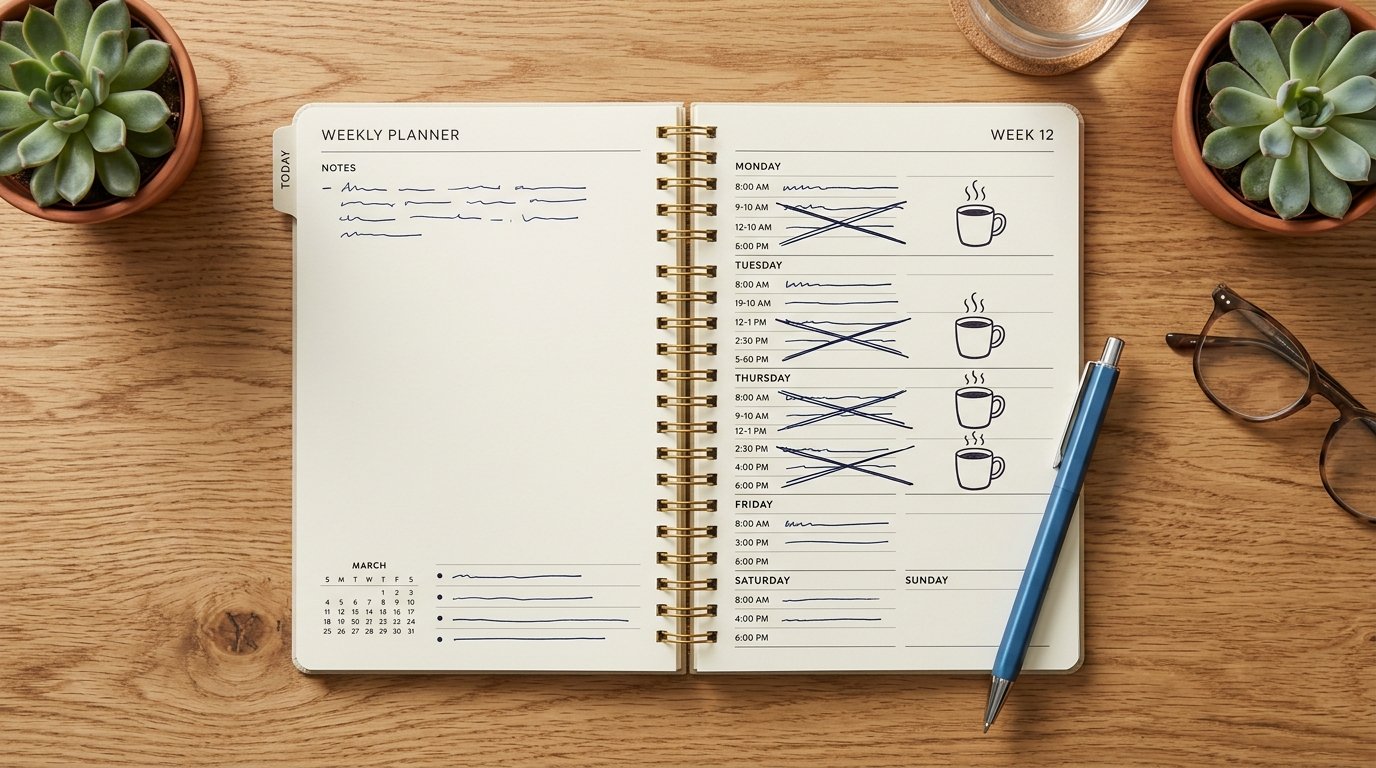
Every time you say "no" to something you don't want to do, you say "yes" to yourself. Keep track of this progress. Whether you use a simple notebook, a streak tracker, or a countdown tool to mark your progress toward 30 days of freedom, keeping a visual record of your victories is essential for rewiring your brain.
Key Takeaways
Going 30 days without people-pleasing will completely change how you interact with the world. Here is what you can expect to take away from the experience:
- Guilt is temporary, but self-respect is permanent: The initial anxiety of setting a boundary passes quickly, leaving behind a deep sense of pride.
- You will lose some connections, but you will keep the right ones: True friends do not require your exhaustion as a price of admission.
- You will reclaim massive amounts of time and energy: When you stop carrying other people's emotional baggage, you finally have the room to grow.
- Consistency is the key to rewiring your brain: Every single day you choose your own peace over external validation, your self-trust grows stronger. Tracking your daily victories with a habit tracking app can help you maintain your momentum and turn boundaries into a permanent lifestyle.
Build Better Habits — Track Your Streaks
Set goals, build streaks, and transform your life one habit at a time.